
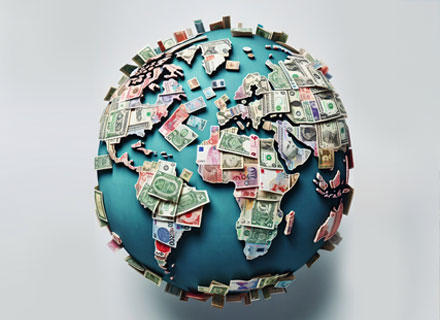

Despite a succession of major shocks since 2020, ranging from a global pandemic to war and supply disruptions, the world economy has, so far, proved more resilient than many feared. But this resilience has come at the cost of an unprecedented buildup in debt, which has left the margin for error perilously thin. Total global debt has surged to record levels, standing roughly 25% higher than it was on the eve of the COVID-19 pandemic.
In absolute terms, global debt exceeded $324 trillion in early 2025, up from around $255 trillion in 2019. This massive debt overhang threatens to undercut every economy’s ability to withstand the latest headwinds, including a return to protectionism in the form of higher trade tariffs. Without urgent course correction, the world could be headed toward a widespread debt crisis with lasting economic and social repercussions.
Global debt overhang and its risks
World Bank Chief Economist Indermit Gill notes that debt is a powerful tool for growth and stability, yet it is also “a form of deferred taxation.”
By borrowing instead of immediately raising taxes, governments can finance long-term investments that benefit future generations or support incomes during a downturn when austerity would be counterproductive.
This strategy makes sense as long as economic growth outpaces the cost of borrowing. Eventually, however, the piper must be paid. If a country’s income does not grow faster than its interest payments, taxes, or inflation, it will inevitably have to increase to service the debt.
In other words, today’s debt is simply tomorrow’s taxes by another name. Persistently high debt, without commensurate growth, thus becomes a drag on development, a barrier to economic progress that grows taller with each passing year of heavy borrowing.
That barrier has seldom been higher than it is now. Over the past 15 years, developing countries have become hooked on debt, accumulating liabilities at a record pace of roughly six percentage points of GDP per year. This debt binge was fuelled by years of ultra-low global interest rates and often justified by optimistic growth projections.
History shows that such rapid debt build-ups often end in tears. Indeed, research indicates that about half of large debt booms in emerging and developing economies have been followed by financial crises. In effect, the odds that the recent developing-country debt surge will trigger a crisis somewhere are roughly 50-50.
With global debt levels at all-time highs, the world is precariously balanced on what Gill calls a “debt time bomb.” Each additional shock, whether economic, geopolitical, or climatic, increases the chances of a detonation.
In May 2025, the International Monetary Fund (IMF) stated that the global public debt could increase to 100% of global GDP by the end of the decade if current trends continue.
According to the IMF report, “The rising ratio of public debt to GDP reflects renewed economic pressures as well as the consequences of pandemic-related fiscal support.”
“This trend raises fresh concerns about long-term fiscal sustainability as many countries face rising budget challenges,” the global monetary body remarked.
The report indicated that approximately one-third of countries, representing 80% of global GDP, now have public debt levels exceeding those recorded prior to the COVID-19 pandemic and are increasing at a faster rate. More than two-thirds of the 175 economies examined in the IMF’s study are carrying heavier public debt burdens compared to the period before the pandemic began in 2020.
In March 2025, the United Nations Trade and Development (UNCTAD) noted soaring interest payments were squeezing budgets, forcing governments to choose between repaying creditors and funding essential services.
“Developing countries are sinking deeper into a debt-driven development crisis. Their external debt, money owed to foreign creditors, has quadrupled in two decades to a record $11.4 trillion in 2023, equivalent to 99% of their export earnings. A mix of factors has fuelled this surge, including increased borrowing for development projects, volatile commodity prices, and widening public deficits. The COVID-19 pandemic worsened the situation, as countries borrowed heavily to offset the economic fallout and fund public health measures,” UNCTAD added.
While debt can be a vital tool for economic growth and development, it becomes a problem when repayment costs outpace a country’s capacity to pay. That is now the case for two-thirds of developing countries. Debt distress now looms over more than half of the 68 low-income countries eligible for the IMF’s Poverty Reduction and Growth Trust, more than double the number in 2015.
Rising interest rates
Exacerbating the danger, the latest debt surge has been accompanied by the fastest increase in global interest rates in four decades. After a long era of cheap money, central banks worldwide applied the monetary brakes in 2022 and 2023 to combat inflation.
The result has been a sharp spike in borrowing costs, as interest rates Monjumped multiple percentage points within months, the steepest rise since the early 1980s. For about half of all developing economies, debt servicing costs have essentially doubled in a short span. On average, the interest payments on government debt in developing countries rose from under 9% of government revenues in 2007 to about 20% of revenues by 2024.
Such a surge in debt service burdens would be daunting even in good times. Amid today’s challenges, it verges on the catastrophic. By 2024, many governments were spending one-fifth of their budgets just to pay interest, resources no longer available for public investments or essential services.
Although the world has so far averted a systemic financial meltdown of the kind seen in 2008 and 2009, too many developing countries are now caught in a “doom loop” of debt and underinvestment. To service their loans, governments are cutting back on the very spending that would boost future growth, slashing funding for education, healthcare, and infrastructure.
This self-defeating cycle undermines human development and erodes the productive capacity needed to escape from debt. Alarmingly, this is not a problem confined to a few outliers; it has become a widespread phenomenon.
Almost half of humanity, about 3.3 billion people, now live in countries that spend more on interest payments than on health or education. In low-income countries, especially, scarce fiscal resources that should be used to build schools, clinics, or roads are instead absorbed by creditors. It is a vicious circle: high debt forces spending cuts, which strangulate growth, which in turn makes the debt even harder to bear.
Debt threat to future workforce
Nowhere is this doom loop more troubling than in the world’s poorest nations. Some 78 low-income countries eligible to borrow from the World Bank’s International Development Association (IDA) are teetering on the brink of a debt disaster. These countries are home to roughly one-quarter of the world’s population, and include a large share of the 1.2 billion young people poised to enter the global workforce in the next 10 to 15 years.
The future of the global labour market, and of these nations’ development, depends on whether this youth bulge can be educated, healthy, and productively employed. Yet high debt threatens to derail that potential. Saddled with onerous debt service, many of these countries cannot invest adequately in their burgeoning young populations.
The result could be a lost generation, where millions of youths are deprived of quality schooling, healthcare, and jobs, sowing the seeds for frustration and instability down the line.
Policymakers, unfortunately, have so far responded with complacency or denial. In what Gill describes as “another triumph of hope over experience,” many governments are effectively gambling that a favourable global environment will somehow rescue them from the debt trap. They bank on global growth suddenly accelerating and interest rates falling just enough to defuse the debt bomb. But counting on a lucky break is a perilous strategy.
In reality, most of these countries are already in deep trouble by any objective measure. According to the IMF, about 60% of low-income countries are now either in debt distress or at high risk of debt distress.
Several have already defaulted or are seeking restructuring of their debts in the wake of the pandemic and other shocks. The world cannot afford another decade of drift and denial on this issue, as the costs in foregone development and human suffering would be staggering.
Low growth, high borrowing costs
If anything, the broader global outlook is making debt burdens harder to manage. Escalating geopolitical tensions and current trade wars, marked by increased tariffs and protectionist measures, have further darkened the economic outlook. Business confidence has been undermined by record levels of policy uncertainty in international trade.
At the start of 2025, private economists expected about 2.6% global GDP growth for the year, but as new data and conflicts emerged, the consensus forecast was downgraded to roughly 2.2%. That is nearly one-third below the average growth rate of the 2010s.
The World Bank likewise projects a significant growth slowdown in 2025 compared to prior estimates. Slower growth directly translates into lower revenues for governments and fewer job opportunities, making it even harder for heavily indebted countries to grow their way out of debt.
At the same time, borrowing costs are expected to remain far higher than they were in the last decade. In advanced economies, central banks have indicated that policy interest rates will average around 3.4% in 2025 and 2026, a level more than five times the ultra-low average that prevailed from 2010 to 2019.
In the United States, for example, the Federal Reserve raised its benchmark rate by over five percentage points in 14 months, the most aggressive tightening in over 40 years. Such moves, echoed by other major central banks, have ended the era of near-zero rates.
For developing economies, the consequences are painful, as higher global rates push up the cost of new financing and often strengthen the US dollar, making dollar-denominated debts harder to repay. In an era of scarce public resources, boosting growth and development will require mobilising private investment, yet foreign capital is unlikely to flow into countries perceived as debt-crippled and low-growth.
Prioritising debt reduction
Given these realities, reducing debt levels is an urgent priority, especially for developing economies with chronically high debt-to-GDP ratios. This must start with responsible national policies, as governments should rein in excessive borrowing and improve their fiscal balances where possible to stabilise debt dynamics.
Some may need to make painful but necessary adjustments to curb non-essential spending and boost domestic revenue. However, the challenge is too large for individual countries to solve alone, especially when many are already insolvent or nearly so.
What is needed is a systemic solution. The global financial community must come together to upgrade the apparatus for assessing debt sustainability and handling debt distress. The current international system for sovereign debt restructuring is widely seen as inadequate, being too slow, too fragmented, and too biased toward kicking the can down the road.
All too often, official lenders and institutions opt to extend new “bridge” loans to tide countries over, when in fact many low-income countries require outright debt write-offs to restore solvency. Procrastination through serial lending ultimately serves neither debtor nor creditor if a country’s debt is unsustainable.
Recent trends underscore the scale of the problem. The number of countries facing high debt levels has jumped dramatically, from 22 countries in 2011 to 59 countries in 2022. As of last count, 52 developing countries, nearly 40% of the developing world, are in serious debt trouble, meaning they either are already in default or face severe financial stress.
Yet progress on mechanisms such as the G20 Common Framework for debt treatment has been disappointingly slow, hampered by coordination problems among traditional creditors, newer lenders, and private bondholders.
To prevent a lost decade for development, the world needs a more streamlined and swifter process for restructuring unsustainable debts. This could involve tougher assessments to distinguish liquidity problems from true insolvency, and bolder action to write down debts that cannot reasonably be repaid without strangling a country’s future.
Returning to prudent debt levels
As the saying goes, when you find yourself in a hole, the first step is to stop digging. The world’s borrowing binge must come to an end. The era of extraordinarily low interest rates that once tempted many countries to live beyond their means is over.
Over the last five years, a series of unprecedented crises, both natural and man-made, made heavy borrowing unavoidable in some cases, as governments acted to cushion their people from harm. Now, however, a return to prudence is essential. Policymakers should re-embrace clear fiscal limits and revert to earlier norms of what constitutes excessive sovereign debt.
One sensible guideline is what Gill calls the “40-60 maximum,” roughly 40% of GDP as an upper debt limit for low-income countries, and 60% of GDP for high-income countries. Middle-income economies would fall somewhere in between those benchmarks.
While these ratios are not necessarily strict thresholds, they hark back to long-standing debt targets, for example, the 60% debt-to-GDP limit in the European Union’s fiscal rules, which were associated with greater stability. Adhering to such limits would give countries more fiscal space to handle shocks and invest in development, instead of constantly teetering on the edge of default.
The looming global debt disaster is not inevitable. It is a man-made crisis, and it can be solved with decisive action. Reining in debt and reigniting growth are difficult tasks, but the alternative is far worse. Without corrective measures, persistently high debt will continue to stall economic progress and heighten the risk of financial crises.
By contrast, a combination of debt relief, sound fiscal management, and growth-enhancing reforms can gradually defuse the debt bomb. The world has arrived at a critical juncture. Having deferred the costs of debt for years, governments and international institutions must now confront them.
The next generation’s prosperity depends on choices made today, on the willingness to restore fiscal discipline, revamp the global debt architecture, and unleash the productive potential of open markets and private enterprise.
The window to act is narrowing, but with clarity of purpose and collective resolve, a global debt disaster can be averted. The lesson of recent years is clear. We can no longer afford another decade of denial and delay on sovereign debt. The time to pay the piper, and to chart a sustainable path forward, is now.