

Long reliant on oil revenues, Oman is undergoing a pivotal economic transformation in the mid-2020s. In a series of unprecedented moves, the Sultanate is rolling out the Gulf’s first personal income tax, earning back an investment-grade credit rating, and witnessing record-breaking real estate deals.
Oman’s ports are bustling with new highs in ship and cargo traffic, and a new salary law is reshaping workplace dynamics. These developments highlight a broader strategy to secure fiscal sustainability and drive diversification under Oman’s “Vision 2040” blueprint. The following section examines each of these shifts in turn and their implications for Oman’s economic outlook.
Gulf’s first income tax on its way
In a historic step for the region, Oman has decided to introduce a personal income tax on high earners, becoming the first Gulf Cooperation Council country to tax individual incomes. On June 22, 2025, a royal decree established a 5% flat tax on personal income above an annual threshold of OMR 42,000. The tax will take effect on January 1, 2028, giving a multi-year lead time for businesses and households to prepare.
According to the Oman Tax Authority, with a very high exemption threshold, approximately 99% of Oman’s population will not be subject to the tax. In practice, only 1% of residents will pay, making this a socially targeted levy aimed at equity and fiscal gain without burdening middle- and low-income groups.
Oman’s move follows years of economic stress from volatile oil prices and the COVID-19 shock, which highlighted the need for more sustainable revenue streams. Oil still influences up to 85% of Oman’s public revenue, a vulnerability the government is keen to reduce. The personal income tax is the latest piece in a broader fiscal reform puzzle that already included a 5% value-added tax, excise taxes, and corporate income tax. By “completing Oman’s tax system,” officials expect the new tax to shore up state finances and fund social programmes.
Importantly, the tax aligns with Oman’s Vision 2040 goals to diversify income sources, strengthen the social safety net, and reduce hydrocarbon dependence.
Minister of Economy Said Al-Saqri noted that the measure will “strengthen fiscal resilience and reduce exposure to oil price volatility,” which currently sways the majority of public revenue.
The law will formally come into force in 2028, with executive regulations expected by 2026 to clarify implementation details. Oman’s Tax Authority has been preparing administrative and IT systems to ensure a smooth launch when the time comes. Notably, no other GCC state imposes personal income tax, relying instead on indirect taxes or fees to raise revenue.
Oman’s decision thus breaks a regional taboo, setting a possible precedent as the Gulf grapples with fiscal reform. By limiting the tax to individuals and keeping the rate low, Oman hopes to avoid denting its investment appeal. Foreign investors will see no corporate impact, and the tax’s narrow scope seeks to balance much-needed revenue diversification with the Sultanate’s traditional tax-free allure for expatriates and entrepreneurs.
The introduction of income tax signals both opportunity and adjustment. For Omani society, it marks a cultural shift: citizens and residents will, for the first time, directly contribute part of their salary to the state. The government has built in generous deductions and exemptions to cushion the impact, and framed the tax as a contribution toward the public good.
Businesses, on the other hand, must gear up for payroll withholding and compliance. Companies will need to upgrade payroll systems and contracts to handle employee tax deductions. Many firms are already reviewing compensation packages and talent strategies, knowing that tax-free salaries were a longstanding draw for expatriate workers.
Still, the impact should be limited: with only high-income staff affected, most employers will see little to no change for the bulk of their workforce. And for the broader economy, experts view the tax as a fiscal safety valve providing a steady revenue stream that can help finance development projects and social services even when oil prices dip.
In short, Oman’s bold tax experiment is a bet on long-term stability. A carefully calibrated sacrifice by the wealthy few today to secure the country’s finances for tomorrow.
Moody’s gives Oman an upgrade
Another vote of confidence in Oman’s economic management came in mid-2025 when Moody’s Investors Service upgraded Oman’s credit rating to investment grade for the first time in years. In July 2025, Moody’s lifted Oman’s long-term sovereign rating from Ba1 to Baa3 (investment grade), citing stronger debt metrics and fiscal reforms. This upgrade reflects a remarkable turnaround from the debt-laden days of the mid-2010s.
“We expect Oman’s debt metrics to remain robust and consistent with a Baa3 rating even under scenarios where oil prices moderate below our $65/barrel assumption,” Moody’s noted, emphasising improved resilience to oil price swings.
The agency changed the outlook to “stable,” acknowledging that despite progress, Oman’s finances are still exposed to oil market volatility, given a heavy reliance on hydrocarbons.
Moody’s decision lauded Oman’s significantly improved fiscal position and reform efforts. Oman’s public finances have been shored up by a combination of high oil revenues in 2022–2023 and disciplined government measures.
According to Oman’s Ministry of Finance, government expenditure has been pared down to 29% of GDP, from an average of over 41% during 2016–2020, indicating much tighter spending control. Oil windfalls were wisely used to pay down debt.
Public debt fell from 37.5% of GDP at the end of 2023 to 35.5% by the end of 2024, and is projected to continue declining. As a result, Oman’s debt-servicing costs have eased (interest payments now 7.2% of revenue, down from 9% in 2021). The fiscal breakeven oil price has dropped below $70, down from about $84 just a few years ago. These metrics point to a more resilient budget that can weather moderate oil downturns.
Moody’s also highlighted that Oman recorded a budget surplus of 2.8% of GDP in 2024, alongside low inflation and a current-account surplus.
Non-oil reforms are beginning to pay off as well. Initiatives to boost non-hydrocarbon revenues (like VAT and soon income tax), the development of a green hydrogen industry, and plans to expand liquefied natural gas capacity by 2030 all signal a strategic pivot to a more diverse economic base. In short, Oman has demonstrated that it can bring its finances back under control through a mix of austerity and forward-looking investments.
Regaining investment-grade status is more than just a gold star for policymakers. First, the upgrade enhances Oman’s attractiveness to global investors. Many institutional investors and funds have mandates that prevent them from buying “junk”-rated bonds; Oman’s Baa3 rating clears that hurdle.
The government should face lower borrowing costs going forward, saving money on any new international loans or bond issuances. A stable outlook from Moody’s also reassures investors that Oman’s progress is likely to hold. Indeed, the rating agency noted that improved fiscal health gives the government “greater fiscal space and time to implement structural reforms” to further reduce oil dependence.
The upgrade can thus feed a virtuous cycle. Cheaper financing and increased investor confidence will help Oman fund its diversification projects and infrastructure, which in turn support long-term growth and creditworthiness.
Domestically, the vote of confidence boosts economic sentiment. Omani authorities touted Moody’s decision as validation of the Sultanate’s reform programme and of the “Vision 2040” path. It’s worth noting that other agencies have echoed this positive trend. S&P Global upgraded Oman to BBB in late 2024, and Fitch has also improved its outlook.
The overarching message is that Oman has escaped the debt trap that loomed in the last decade. However, as Moody’s warned, the job isn’t done and reducing the still-heavy oil reliance remains critical to avoid slipping back if oil markets weaken. For now, though, Oman can celebrate a milestone.
Property sector inspires investor confidence
Oman’s economic upswing is perhaps most visible in its booming real estate sector, which has recently notched record highs in both activity and headline-grabbing deals. After a pandemic-era slowdown, Omani real estate has come roaring back, reflecting renewed investor confidence in the country’s prospects.
Property transactions hit all-time highs in 2024, with the total value of real estate deals surging nearly 30% that year to reach OMR 3.3 billion. This marked one of the strongest performances on record, driven by a mix of foreign investment inflows and government-led market reforms. Oman eased rules on foreign property ownership and rolled out new incentives, encouraging Gulf and international investors to enter the market.
By mid-2025, the Sultanate recorded OMR 613 million in real estate sales contracts in the first half (roughly $1.6 billion), up 12.4% compared to the same period a year prior. Although there were signs of slight cooling in early 2025, the broader trend remains robust.
High-value deals and new developments are grabbing headlines, indicating sustained optimism. In fact, Oman saw its most expensive home sale ever in 2025 — a luxury penthouse in the new Sustainable City — sold for over OMR 2 million, setting a national price record.
The demand for this property was so strong that the project’s Phase 1 sold over OMR 10 million worth of units in its early launch, even before the official sales kickoff. The fact that local and international buyers are willing to pay top dollar for Omani real estate, especially in sustainable and tourism-oriented projects, signals confidence in the country’s future.
Several factors are fuelling Oman’s real estate resurgence. Economic recovery and the credit rating upgrade have improved local sentiment and purchasing power, while wealthy regional investors increasingly view Oman as an attractive, stable market relative to pricier neighbours. Oman’s government has also actively catalysed the sector. It launched a long-term “Investor Residency” visa to encourage foreign buyers of property, and it allows 100% full foreign ownership in designated integrated tourism complexes. Additionally, low inflation and interest rates under 1% have made financing large property purchases more appealing.
The real estate boom has broad implications for Oman’s diversification story. Rising property values and construction activity mean more jobs in construction, real estate, and tourism, helping absorb the growing young workforce. Government revenue also benefits from higher transaction fees and stamp duties. Moreover, big-ticket investments like the “Yiti Sustainable City” align with Vision 2040’s goals of balanced regional development and sustainability.
Yiti, for example, is envisioned as Oman’s first net-zero community, a “green city” flagship that provides housing and tourism attractions and exemplifies Oman’s pivot to environmentally conscious growth. The strong demand for such projects suggests that Oman can position itself as a niche market for sustainable luxury living in the Gulf.
Perhaps most importantly, the confidence driving real estate is self-reinforcing. Of course, prudent eyes will watch for any overheating risk, but so far, the growth appears to be on solid footing backed by genuine end-user demand and long-term investment interest rather than speculative frenzy. For Oman, the real estate record-breakers of 2024–2025 have become visible symbols of an economy shaking off stagnation and moving into a new growth phase.
Oman: A trade and logistics hub
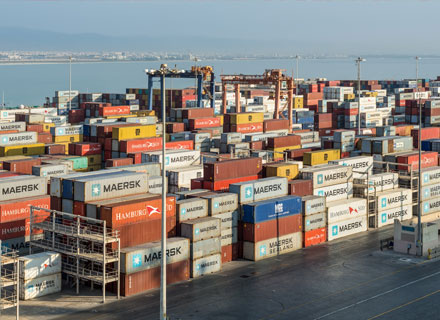
Activity at Oman’s seaports has reached unprecedented levels, highlighting the Sultanate’s emergence as a regional logistics hub. Ship traffic and cargo throughput have hit new highs, buoyed by heavy investment in port infrastructure and Oman’s strategic location on global trade routes. In the first half of 2025, the number of vessels calling at Omani ports jumped by 11.1% year-on-year to 6,586 ships.
Major gateways such as Salalah (a transhipment hub on the Indian Ocean), Sohar (an industrial port near the Strait of Hormuz), and even smaller ports like Shinas all saw upticks in arrivals. This builds on a trend from 2024, when total vessel calls across Oman exceeded 12,000 for the first time.
Alongside more ships, cargo volumes have swelled. Oman’s ports handled 70.1 million tonnes of goods in H1 2025, up 5.2% from 66.6 million tonnes in H1 2024. Container traffic is booming in particular. At the three main container ports (Salalah, Sohar, Duqm), combined throughput reached about 2.43 million TEUs (twenty-foot equivalent units) in the first six months of 2025. It was an 11.7% jump over the previous year. Such double-digit growth in container handling underscores the efficiency gains and expanded capacity resulting from recent upgrades.
Oman’s ports also play a crucial role in importing vehicles, food, and livestock for the nation. For instance, in just six months, they facilitated the import of over 50,000 cars and 2.7 million head of livestock, underscoring their importance to domestic commerce and food security.
Oman’s push to become a logistics powerhouse is rooted in its advantageous geography and heavy state investment aligned with Vision 2040. Unlike some Gulf neighbours, Oman’s coastline opens directly onto the Arabian Sea and Indian Ocean, allowing ships to bypass the choke point of the Strait of Hormuz. The government has capitalised on this by modernising ports and developing free zones.
Duqm Port is a brand-new deep-sea port and special economic zone carved out of the desert, and is a centrepiece of this strategy, attracting international projects and handling growing volumes each quarter. Meanwhile, Port of Salalah has expanded its container terminal and remains one of the region’s busiest transhipment hubs due to its prime location on east-west shipping lanes. Sohar Port, developed in partnership with the Port of Rotterdam, has grown into a major industrial and bulk goods port, serving not just Oman but also acting as an alternative entry point to the nearby UAE.
Government figures attribute the recent performance to infrastructure projects by the Ministry of Transport and Communications; investments in new quays, deeper drafts, cargo equipment, and digital systems are boosting capacity and turnaround speeds. For example, authorities in 2025 commissioned designs for further port expansions (like the Khour Gramma project and upgrades at Shannah and Masirah ports) to keep pace with rising demand.
Additionally, partnerships with private operators, such as Shinas Port’s new fuel storage facility under a public-private deal, are expanding the range of services available at Omani ports.
The booming port metrics are a positive bellwether for Oman’s non-oil economy. Growing throughput means more business for Omani logistics firms, port operators, and associated industries (warehousing, trucking, manufacturing), contributing to GDP and job creation outside the oil sector.
It also cements Oman’s reputation as a reliable trade corridor. At a time when global supply chains are being reshuffled and Gulf states are vying to be logistics gateways, Oman’s performance shows it can compete with the region’s larger ports.
Officials note that these achievements “highlight Oman’s growing competitiveness in the logistics sector and reinforce its ambition to become a leading regional hub for maritime transport.”
Companies are already choosing Omani ports because of their efficiency and strategic location. For instance, some shippers find Salalah port a convenient redistribution point for East Africa and the Indian subcontinent.
The ports’ rise also feeds into Vision 2040’s aim of leveraging Oman’s geography for diversification. A modern logistics sector reduces the economic reliance on oil and integrates Oman more deeply into global trade networks. Challenges remain (global shipping is cyclical, and competition from Gulf neighbours is intense), but the trend is clear.
Oman’s bet on ports and logistics is paying off, turning its harbours into engines of growth. In the long run, this positions the country to capture a larger share of commerce flowing through the region, anchoring one pillar of its post-oil economy.
Balancing oil and opportunity
As these various threads weave together, Oman’s economic outlook in the latter half of the 2020s appears cautiously optimistic and focused on the long game of “Vision 2040.” The developments of 2024–2025 suggest that Oman is gaining economic momentum.
Growth forecasts are positive. The IMF estimates Oman’s real GDP growth will accelerate from 1.7% in 2024 to about 2.4% in 2025 and 3.7% by 2026, buoyed by diversification and an expected easing of OPEC oil production cuts. Notably, the recent growth has been driven mainly by non-oil sectors. This marks a significant shift, and the economy is gradually tilting away from the oil dependency that once defined it.
That said, oil and gas will remain integral in the near term. Oman is a substantial oil producer (around one million barrels per day in recent years) and a rising liquefied natural gas exporter. Hydrocarbons still account for the majority of government revenue and export earnings in 2025. The challenge facing Oman is to use the current period of stability to future-proof the economy before the global energy transition catches up. “Vision 2040,” the national development masterplan, explicitly calls for a “diversified and sustainable economy, less reliant on oil.”