
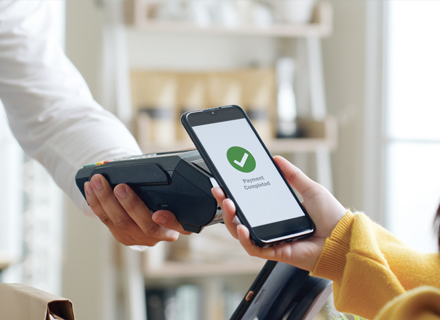

Real-Time Payments (RTP) is known as a payment processing network used to send money electronically between banks. The method deals with the transfer of funds between two bank accounts instantaneously, throughout the year. RTP even processes transactions on bank holidays and weekends, and after business hours.
RTP has major commercial applications in payroll, utility bill payment, insurance and even retail payments, to name a few. With instant funds settlement, it has the potential to improve the payment experience and reduce transaction risk.
Knowing RTP up close
RTP was first launched in 2017 and is the newest electronic bank payment method available. The network is managed by “The Clearing House,” a membership organisation owned by all the major American banks. It has also become the first new payment rail to be launched in the United States in the last 40 years. Any federally insured depository institution can join the RTP network. They don’t need to be a member of The Clearing House.
RTP has increased the speed of bank transfers cost-effectively, apart from reducing transaction risk by eliminating payment reversals and returns, and supporting a richer context for payments. Unlike ACH, RTP only supports credit or ‘push’ payments. The user can not ‘pull’ or debit another bank account using RTP.
RTP also allows for more data to be attached to each payment. For example, a marketplace like Airbnb could include details about the reservation, like duration and reservation ID, on payments made to hosts, or an accounts payable solution could include the invoice number on payments sent.
RTP have been a game-changer in terms of enabling businesses to move their money in a much faster manner, apart from offering near-instant transfers that enable greater liquidity management and operational efficiency.
Once primarily the domain of consumers, RTPs are increasingly becoming a critical tool for businesses looking to optimise cash flow, reduce reliance on costly intermediaries, and gain a competitive edge in an era of digital finance.
According to Juniper Research, despite reaching $22 trillion in turnover in 2024, the high cost of digital transfers has kept many businesses on the sidelines. However, that is about to change, with global RTP volumes projected by Juniper to more than double to $58 trillion by 2028, driven by regulatory changes, technological advancements, and evolving business needs.
Also, factors like growing corporate demand for instant liquidity, advancements in payment technology, and government initiatives aimed at promoting cashless economies will make RTPs the new normal in our formal economy.
Matthew Purnell, a senior research analyst at Juniper Research, said, “Businesses are beginning to realise the strategic benefits of real-time payments: not just speed, but enhanced control over working capital, and reduced counterparty risk.”
The Single Euro Payments Area (SEPA) Instant Credit Transfer regulations, which took effect in the European Union (EU) in January 2025, are poised to accelerate RTP’s business adoption by mandating that eurozone transactions be priced the same as standard credit transfers. Meanwhile, in the United States, networks such as the “Clearing House RTP” and the Federal Reserve’s “FedNow” are increasing transaction limits to accommodate larger business payments.
“While RTP adoption in developed markets has been gradual due to entrenched reliance on traditional payment systems, emerging markets such as India, China, and Brazil have experienced explosive growth. India’s Unified Payments Interface (UPI) processed an astonishing 172 billion transactions in 2024, valued at nearly $2.9 trillion, a 46% increase in the number of transactions and a 35% increase in value over the previous year. The surge in RTP adoption in developing economies is largely due to the absence of widespread debit and credit card penetration, offering businesses and consumers alike an accessible digital-payment solution. RTP provides an accessible payment solution for a population that is becoming increasingly banked,” Purnell added.
Factors fuelling RTP adoption
As per Purnell, three major factors are driving the adoption of RTP. One of the factors was the COVID-19 pandemic, which accelerated demand for digital transactions as businesses sought alternatives to in-person payments and cash handling.
Then came advances in technology, such as smartphones equipped with digital wallets like Google Pay, and the proliferation of 5G wireless coverage, thereby making RTP more widely available. Also, governments worldwide are implementing policies to encourage the transition to cashless economies.
Meanwhile, in February, the Clearing House’s RTP network processed a $10 million real-time transaction, the largest instant payment in the world’s largest economy to date. With the transaction cap now at $10 million (as of March 2025), up from $1 million, corporations can transfer high-value funds instantly. This will unlock new possibilities for treasury management, supply chain financing and interbank settlements.
Financial institutions are also strengthening their real-time infrastructure. FIS secured full send certification for the “FedNow Service,” supporting the full payments life cycle and enabling partner banks to offer instant payments for loans, rent and utilities. The development marks a critical step toward a financial system where real-time money movement is the norm, not the exception.
“Beyond the US, real-time payments continue to advance. Brazil’s Pix Automatico, launching in June, will introduce automated recurring payments. This will make it easier for businesses and consumers to manage subscriptions, utility bills and other regular expenses. By removing the need for multiple banking agreements, Pix Automatico simplifies cash flow for businesses while improving convenience for consumers. With higher transaction limits, deeper digital wallet integrations and global adoption accelerating, these faster payments are reshaping finance,” PYMNTS reported.
Cost hurdle for businesses
According to Purnell, “Consumers have until recently been the primary beneficiaries of RTP, with apps like Venmo in the US and Alipay in China allowing customers to pay for a Starbucks Frappuccino or split the cost of a meal with a half dozen friends. However, businesses have been relatively slow to utilise the technology for making business-to-business payments due to several hurdles, primarily cost. As a result, less than 10% of RTP transactions in Europe, for example, originate from companies.”
“The one thing that’s holding back business adoption is differential pricing. Real-time payments are anywhere from three to five times more expensive for a business than a traditional payment rail,” said Uzayr Jeenah, a Toronto-based leader in the global payments practice at consulting firm McKinsey, while referring to the term for digital payment infrastructure.
Jeenah says the implementation of the European Union’s “Instant Payments Regulation,” adopted in March 2024 and encompassing SEPA, will be a “big catalyst for change” in RTP pricing in 2025.
“In most of the Eurozone, there is no charge for a standard credit transfer. I think in the near future virtually all business payments in the EU are going to be real-time because the system is going to be free, or virtually free,” says Scott McInnes, a partner in the Brussels office of Bird & Bird who specialises in payment questions. He further added that this probably means RTP for most businesses in Europe will have no cost.
McInnes says the EU was motivated in part by a desire to offer a European alternative to credit and debit card issuers such as Visa and Mastercard, American card services corporations that charge high transaction fees to merchants.
The EU RTP regulation, SEPA Instant, will begin affecting outgoing payments in October 2025 for Eurozone payment providers, including banks and fintech companies. Payment providers outside the region will have until 2027 to comply, allowing time to address settlement challenges related to different currencies.
The EU rules will also affect foreign banks that have branches in the Eurozone, potentially creating opportunities for RTP expansion beyond the euro. For example, a UK bank with a branch in Paris could receive instant payments through the UK Faster Payment system and could conduct euro-denominated RTP transactions via its European branch. Additionally, Australia’s New Payments Platform (NPP) does not impose any upper limit on transaction amounts, a trend aimed at accommodating large businesses that handle significant transactions for settling invoices.
Challenges remain
Existing RTP systems have a common drawback: their domestic focus, with limited capabilities for cross-border transactions (except in the Eurozone, where the euro provides a common currency). This limitation also presents a significant challenge for companies with global supply chains that require rapid payment transfers to overseas vendors.
According to Statista, the total value of cross-border payments was approximately $190 trillion in 2023 and is projected to reach $290 trillion by 2030, highlighting the sector’s rapid expansion and the growing demand for innovation.
Currently, most cross-border transactions rely on the Society for Worldwide Interbank Financial Telecommunication (SWIFT) network, which does not transfer funds directly but rather facilitates payment orders between banks using intermediary correspondent banks to settle transactions. However, SWIFT transactions are costly and can take several days, thereby posing a challenge for businesses operating in fast-paced international markets.
Several fintech companies, such as London-based Wise (formerly TransferWise), and Harbour & Hills, based in Hong Kong, have entered the market to provide faster, lower-cost alternatives to SWIFT. By using their internal networks to transfer money locally instead of depending on interbank transfers, these fintechs enable cross-border payments. Although this lowers expenses, these services don’t always result in appreciable speed gains.
The BIS is also working to connect domestic RTP systems globally through “Project Nexus,” a central hub that allows payment networks to link to a single platform rather than integrating individually. Project Nexus involves central banks from Singapore, Malaysia, Thailand, the Philippines, and India, with Indonesia as a special observer, aiming to enable seamless cross-border transactions among these nations by 2026.
In October 2024, JP Morgan introduced Wire365, a 24/7-dollar settlement system that allows businesses to settle transactions globally at any time. On the other hand, distributed ledger technology, such as blockchain, has the potential to become an alternative for real-time cross-border payments.
Ripple Labs, a fintech based in San Francisco, has developed its own cryptocurrency, XRP, to facilitate near-instant global transactions. Before being settled in the recipient’s local currency, funds are first converted to XRP as an intermediate currency. However, some companies have been discouraged from implementing cryptocurrencies due to their volatile nature.
Ripple launched the US dollar-pegged stablecoin RLUSD to combat volatility. This might provide a more alluring cross-border payment option by enabling companies to transfer money without being exposed to currency changes.