
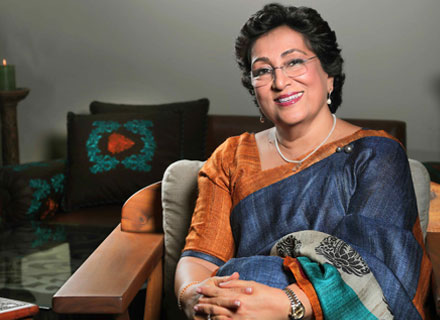

While the UAE is considered an important global centre for wealth and legacy planning, Ma’an has become a reliable partner for families seeking clarity, structure, and continuity across generations. Founded by experienced financial advisor Nazneen Abbas, Ma’an combines technical knowledge with personal insight. It recognises that effective legacy planning involves relationships and values as much as it does assets and governance.
Nazneen Abbas is a certified financial advisor from the Chartered Insurance Institute of London, and brings more than four decades of experience in navigating the complex intersection of wealth, family relationships, and long-term planning. Through Ma’an, she assists families across the Gulf, including high-net-worth individuals and multi-branch business households. She helps them create intergenerational structures based on empathy, purpose, and foresight.
In an exclusive interview with International Finance, Ma’an founder Nazneen Abbas discusses the changing priorities of legacy planning in the UAE. She highlights the unique challenges faced by first-generation entrepreneurs and the increasing need for governance, clarity, and structured continuity. She explains how Ma’an helps families navigate legal reforms, cross-border complexities, and multi-generational dynamics, ensuring that wealth, values, and intent are preserved across branches and future generations.
IF: What unique challenges do first-generation entrepreneurs in the UAE face when planning to transfer their wealth across generations?
Nazneen Abbas: In the UAE, many of today’s business owners are pioneers who built their enterprises from scratch, often without inherited structures or precedents to follow. Their focus was growth, not governance. The most unique challenge they face is accepting that legacy planning must be treated as a formal part of their business plan. They are often unable to step back from the business and look at it as a family enterprise. To them, it remains my business, built through their own discipline, focus, and hard work.
They often believe that the next generation will naturally follow the same discipline, focus, and systems they relied on. But the coming generation will not mirror their journey, and that is precisely why structured governance, continuity frameworks, and defined responsibilities must be put in place. The challenge often lies in accepting that their families genuinely need those frameworks.
How can Ma’an help guide the UAE’s first-generation business owners through the complexities of ensuring their legacy is passed down successfully?
Our work at Ma’an begins with clarity. We bring families together to understand what legacy truly means to them beyond ownership and valuation. For most first-generation entrepreneurs, the business is their identity. So we help them separate emotional attachment from strategic planning without losing either.
We create frameworks that allow founders and their heirs to discuss everything from governance to liquidity, and from succession roles to shareholder protection. It’s never about telling them what to do; it’s about facilitating a process where they themselves arrive at their own unique solutions.
For instance, when families own multiple entities, we help them design continuity plans through structured financial solutions that account for valuation, liquidity, and tax implications. The goal is to preserve both the business and the relationships that sustain it.
How have recent changes in inheritance laws in the UAE impacted legacy planning for families, especially those with international connections?
The UAE has made remarkable progress in building legal clarity around inheritance and succession. Expat families, both non-Muslim and Muslim, now have multiple avenues to register Wills and structure estates in alignment with their home jurisdictions. For families with global footprints, these changes have been transformative. They can now align UAE assets with offshore trusts, foundations, and holding companies. That harmony between local and international structures is what gives true continuity.
What are some of the most significant legal hurdles that families in the UAE still face when planning for succession, and how can these be overcome?
The main challenge is fragmentation. For instance, families can tend to have real estate under one name, corporate holdings under another, and life’s savings scattered across jurisdictions.
Another hurdle is understanding how inheritance laws interact across borders. At Ma’an, we bring this coordination into one framework to ensure that every legal structure speaks to the others. It’s what prevents future conflict and ensures that the founder’s intentions hold long after they are gone.
How does Ma’an approach multi-generational wealth planning, particularly in the context of extended family structures common in the Middle East?
Most established business families in the Middle East are rarely nuclear. Many come from South Asian and Southeast Asian cultures where extended families traditionally live together, and it is common to find multiple family members involved in the same enterprise.
Our approach begins with acknowledging that we are not here to advise families on what to do. We act as mediators. We provide the infrastructure to bring the decision-making members of the family together around one table. From there, we work to understand the shared vision of the family, because our aim is not just to distribute wealth, but to carry forward the family’s values and intent.
As we often say, clarity at the top prevents confusion at the bottom. By helping the key members articulate what the family stands for and where they want to go, we establish a foundation that guides leadership transition, participation, and continuity across generations. Ultimately, our aim is not just to redistribute wealth but also wisdom.
What are the key considerations for families with diverse branches when planning for wealth transfer in the Middle Eastern context?
The more diverse the family branches, the more important the framework becomes. When several members, entities, or assets are involved across generations, the structure must be designed thoughtfully and specifically for that family.
Since no two families are alike, the solutions we offer differ markedly. For some, it may be a foundation, for others, holding companies, for some, it may be well-structured Wills, and for others, family constitutions or even perpetual family banks. Every family’s needs, culture, and vision are different, so the continuity framework must reflect their unique reality.
Our role is to provide the right mechanisms for the right family to ensure that their wealth, values, and governance evolve cohesively across branches and generations.
How do you ensure that the needs of children of determination are fully integrated into a family’s legacy planning strategy?
This is one of the most sensitive and deeply human parts of our work. For families with children of determination, legacy planning goes beyond inheritance and ventures more into security and dignity.
We design special frameworks that ensure these children are financially protected for life while maintaining their rights within the broader family structure. This may involve setting up dedicated financial solutions or trusts that safeguard long-term care, education, and medical needs. More importantly, we help parents communicate these provisions to siblings so that there’s awareness, empathy, and inclusion. The most sustainable plan is one that the whole family understands and supports.
What are some of the common misconceptions families have when planning legacies for children of determination, and how does Ma’an address these?
Contrary to common assumptions, families are generally well aware of their responsibilities. They come prepared, often having already drafted Wills, appointed trustees, and documented care instructions.
The real misconception lies in placing too much burden on siblings. So we help families move beyond the basics of naming trustees or allocating responsibilities. We create detailed financial plans, often in the form of structured, recurring income streams, so that funds reach the sibling supporting the family in a timely and responsible way. This avoids the challenges of easy lump-sum access, which can be mismanaged even without bad intent, especially in emergencies.
What makes the UAE an attractive destination for international families seeking to structure their estate plans, and how does Ma’an assist them in this process?
The UAE has positioned itself as one of the most progressive jurisdictions globally for estate and succession planning. The legal infrastructure provides flexibility for expat families with various solutions. In addition to the civil-law system used by UAE courts, there are internationally recognised financial free zones like DIFC and ADGM, independent jurisdictions with their own common-law frameworks, regulators, and courts.
For us, it is a case of creating a bridge between intent and implementation. We help families align their UAE structures with global ones. Our role is to make sure the entire ecosystem functions seamlessly, without conflict or duplication.
What are the key cross-border challenges you encounter when dealing with international estate planning, and how can these be managed effectively?
The most common challenge is jurisdictional overlap, where assets, heirs, and governing laws exist in three or four countries. A Will valid in one jurisdiction may be contested in another, or tax treatment may vary dramatically.
We manage this by building collaboration across disciplines. Our framework integrates legal, financial, and tax perspectives from the start. We make sure the framework doesn’t wait for problems to arise but has already accounted for what’s to come. The goal is to ensure every document, every Will, trust, or foundation, works as part of one living plan rather than isolated pieces.
What do you believe is the most important factor in building a successful legacy plan that truly reflects a family’s values and vision?
Authenticity. A family’s legacy must mirror who they are, not what others think they should be. Too often, families replicate structures they’ve seen elsewhere without asking whether those structures reflect their own values.
When we work with clients, we start by asking questions that have nothing to do with money: What principles guided your journey? What values should your name carry forward? Once those answers are clear, the structures follow naturally. A successful legacy plan is a translation of a life’s purpose into continuity.
As someone with decades of experience in financial advisory, what message would you give to young entrepreneurs just starting to think about their legacy?
There are two parts to this. For young entrepreneurs who are second or third generation, their journey often depends on what the family elders have put in place. If a patriarch or matriarch has already created strong structures such as a family constitution, governance frameworks, or estate plans, the younger generation benefits from clarity and continuity. Their responsibility is to understand and follow the systems laid out before them.
For those who are first-generation creators, legacy is not something they typically think about early. But as they begin their professional journey, they should consider simple preparatory measures such as basic structures that keep their finances clean, organised, and future-ready. As life progresses and their enterprises grow, they can transition to more sophisticated solutions. Legacy planning does not need to start big. It just needs to start with intention.