
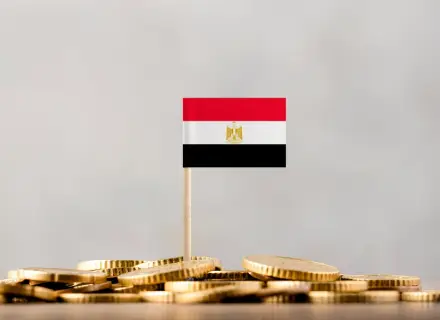

While the continent of Africa witnessed declining investment throughout 2025, Egypt emerged as the top destination for foreign direct investment (FDI), attracting an estimated USD 11 billion in inflows. According to UNCTAD’s (UN Trade and Development) latest “Global Investment Trends Monitor,” the North African country ranked ahead of other major regional peers despite a sharp regional slowdown.
The performance underscores Egypt’s relative resilience at a time when FDI inflow into Africa has normalised following an unusually strong 2024, which UNCTAD said was inflated by a single large project. As a result, the 2025 data reflects a return to more typical investment levels across the continent.
“Among African economies, inflows to Angola reached an estimated USD 3 billion, marking a return to positive values after nine consecutive years of net divestments. Egypt, with inflows of USD 11 billion, remained the largest FDI host country in Africa,” the report stated.
While Egypt solidified its position as Africa’s leading FDI host, other notable performers on the continent included Mozambique, where inflows surged 80% to USD 6 billion, driven by renewed activity in major liquified natural gas projects. Angola too saw a positive shift, recording an estimated USD 3 billion in FDI after nine consecutive years of net divestments.
As per UNCTAD, Egypt’s strength extended beyond headline inflows, with the country also contributing to an increase in greenfield investment activity across Africa. While the number of greenfield projects fell globally and across lower-income economies, Africa recorded a 5% increase in project numbers in 2025, supported in part by growth in Egypt and Côte d’Ivoire.
“Globally, FDI flows rose by 14% in 2025 to approximately USD 1.6 trillion, though growth was heavily concentrated in developed economies, which saw a 43% increase. In contrast, flows to developing economies declined by 2%, with the least developed countries particularly affected; three-quarters experienced stagnant or falling investment,” reported the Arab News.
The report highlighted that new project announcements remained weak globally amid elevated policy uncertainty, with international project finance declining for the fourth consecutive year.
Looking ahead, UNCTAD sees geopolitical tensions, regional conflicts and economic fragmentation continuing to suppress real investment activity in 2026, even as financing conditions are expected to ease. For Africa, sustaining steady FDI inflows will require navigating persistent challenges such as financing constraints, risk perceptions, and structural vulnerabilities.