
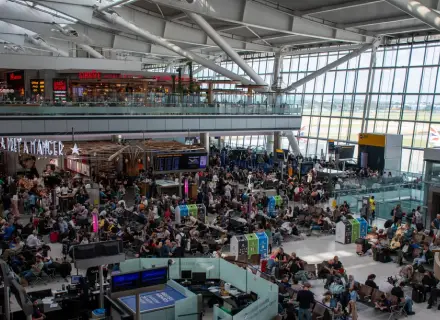

Over 84 million passengers passed through Heathrow Airport in 2025, a record for the London gateway that is about to undergo a significant expansion.
Heathrow Airport, the busiest airport in Europe by passenger volume in 2024, will begin construction of a new runway to “unlock even more of that connectivity, trade and economic growth for the United Kingdom,” according to a statement from the airport’s chief executive, Thomas Woldbye.
Istanbul Airport took second position, as it handled 84.4 million passengers last year, slightly less than Heathrow Airport’s 84.5 million. In December alone, nearly 7.2 million travellers passed through the hub. The good news comes amid the Keir Starmer government recently authorising the airport’s 49-billion-pound (USD 66 billion) expansion plan, as authorities endured years of legal struggle regarding the project.
While Heathrow Airport holds the annual record, Istanbul Airport actually surpassed Heathrow Airport in monthly passenger volume for much of the second half of 2025. This shift was driven by Istanbul Airport’s implementation of a world-first “triple runway” simultaneous operation system in April 2025, which increased the facility’s hourly capacity from 120 to 148 flights.
Unlike Heathrow Airport, which is physically limited by its current two runways and a 1,300-flight-per-day cap, Istanbul Airport’s purpose-built infrastructure allowed it to handle over 272,000 passengers on a single day in July, breaking the previous European daily record held by Heathrow.
This creates a narrative of “Old World vs New World” aviation, where Heathrow’s expansion is a race to regain a structural advantage that Istanbul Airport already possesses. Heathrow Airport claims that the project will boost capacity to up to 150 million passengers annually.
In Europe, where nations are divided between efforts to cut greenhouse gas emissions and the demands of a vital industry whose demand has skyrocketed since the COVID-era lockdowns, this would be an uncommon growth.
With flights anticipated to begin within ten years, the runway would cost 21 billion pounds. The remaining privately funded investment would be used to modernise and expand the airport.