

Sri Lanka’s economic recovery gained significant momentum in 2024, underpinned by a return to political stability and consistent policy implementation. After going through a severe financial crisis in 2022, which saw abnormally high inflation, interest rates, and sharp currency depreciation, the country has started to turn the corner.
It recorded its first quarter of economic growth in Q3 2023, following six consecutive quarters of contraction, and maintained a positive trajectory into 2024 with a GDP growth rate of about 5% (albeit from a low base).
Crucially, the presidential and parliamentary elections in 2024 unfolded with a smooth transition of power, reinforcing confidence in the nation’s stability. The new government’s steady policies helped tame the once runaway inflation and stabilise interest and exchange rates by late 2023. At the same time, exports, tourism, and worker remittances have rebounded, boosting foreign currency inflows and supporting the recovery.
This improving macroeconomic landscape has been bolstered by important fiscal and monetary measures. The restructuring of Sri Lanka’s international sovereign bonds, alongside the International Monetary Fund’s Extended Fund Facility (EFF) programme, which released its third tranche of funds in late 2024, strengthened the economy’s fundamentals.
By the end of 2024, gross official reserves had risen to cover about 3.9 months of imports, marking an improvement from the precarious lows. Rating agencies responded by revising the country’s default rating upwards, signalling a gradual restoration of creditworthiness and renewed optimism among businesses and the public.
Continuing its comeback, the island country’s economy expanded by 4.9% in Q2 2025. According to the Department of Census and Statistics, GDP at constant 2015 prices reached Rs. 2,883 billion, compared with Rs. 2,749 billion in 2024. Growth was driven by a 5.8% rise in industry, a 3.9% expansion in services, and a 2% increase in agriculture.
However, the World Bank stated in October that, although Sri Lanka’s recent economic performance has been strong, the recovery remains incomplete.
The global financial institution further commented, “With growth still below pre-crisis levels and poverty significantly elevated, strengthening the recovery will require continued macroeconomic stability, urgent structural reforms, and more efficient, better-targeted public spending.”
The World Bank also projects Sri Lanka’s economy to grow by 4.6% in 2025, supported by a modest rebound in industry and steady growth in services, before slowing to 3.5% in 2026.
According to David Sislen, World Bank Division Director for Maldives, Nepal, and Sri Lanka, “To build a stronger, fairer economy that benefits all households in a fiscally constrained environment, Sri Lanka needs the private sector to invest, create jobs, and ensure that every rupee of public money is well spent.”
Despite strong recent growth, low inflation, and robust external inflows, food prices remain high, and reserve accumulation has slowed. Economic output is still below 2018 levels, and although poverty is declining, it remains twice as high as in 2019. To support long-term growth and reduce poverty amid fiscal constraints, the World Bank advocates for a broad package of reforms aimed at enabling private sector-led growth.
The South Asian nation must focus on priority areas such as easing barriers to trade and investment, improving the business environment, and modernising tax administration and regulations related to land and labour markets, and must ensure inclusive development that benefits the most vulnerable.
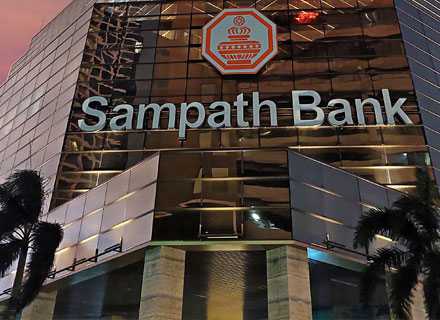
While Sri Lanka is indeed a comeback story in the making, one that economists are closely monitoring, it still has some way to go on the road to full recovery. In this context, Sampath Bank has played a key role in supporting the national resurgence, aligning its strategy to bolster the country’s revival and drive much-needed innovation in the banking sector.
The financial inclusion goal
From its inception in 1986, Sampath Bank has been an innovator in Sri Lanka’s banking industry, using technology and novel products to promote financial inclusion. A concept that had not even been coined at the time. As early as 1988, the bank became the first in Sri Lanka to operate a multi-point network of automated teller machines (ATMs), bringing 24/7 banking convenience to customers.
It was also the first in South Asia to introduce debit cards, launching them in 1997 when cashless payments were still a rarity in the region. Through these pioneering moves, Sampath Bank sought to democratise access to banking, making financial services more accessible and affordable for the broader population.
These early technological advancements laid the groundwork for what we recognise as financial inclusion, which refers to the principle of extending banking services to all segments of society. Staying true to this legacy, Sampath Bank has continually aligned its priorities and innovations to support the wider economy’s growth and needs.
One recent example of this commitment is the bank’s focus on reviving struggling businesses due to Sri Lanka’s downturn. Recognising that small and mid-sized enterprises were especially hard-hit by the crisis, Sampath Bank established a dedicated Business Revival Unit to provide hands-on financial advice and management tools to companies facing cash flow constraints. Rather than simply classifying such loans as non-performing, the bank proactively worked with borrowers to nurse these ventures back to health.
The impact has been tangible. Over 74 businesses were rescued and stabilised, successfully graduating from the bank’s watch-list of high-risk loans (the Stage Two and Stage Three loan portfolios, in banking parlance) back into performing status.
These enterprises have since returned to stability, benefitting from improved management practices and practical repayment plans with sufficient breathing room for growth. The success of this initiative speaks to its effectiveness in safeguarding the bank’s assets and preserving jobs and economic value in the community.
Another pillar of Sampath Bank’s recovery-era strategy has been to stimulate economic activity by expanding lending in sectors with high growth potential. In 2024, the bank’s loan book grew by 10%, a sharp turnaround from the 4.7% contraction recorded the year before. This expansion was no accident; it was driven by targeted support to key active sectors of the Sri Lankan economy.
Notably, the bank directed credit to the rejuvenated tourism industry, which is bouncing back strongly after pandemic-related setbacks. It also increased lending to the information and communication technology (ICT) sector, an area that holds promise for export earnings and high-skilled employment as Sri Lanka seeks to become a regional tech hub.
Healthcare was another focus, with financing provided for medical services and pharma companies, recognising the critical importance of health infrastructure, especially after the lessons of COVID-19. By directing credit to these vital sectors, Sampath Bank spurred its own growth and helped stimulate broader economic recovery.
In parallel, Sampath Bank leveraged its strengths in foreign currency services to support the national recovery. The bank retained its market leadership in worker remittances, a lifeline of foreign exchange for Sri Lanka’s economy. By reimagining its remittance offerings with customer-friendly benefits and extending its global reach, the bank made it easier and more rewarding for Sri Lankan’s diaspora to send money home.
This included developing more convenient digital remittance channels and forging partnerships abroad to widen its network, steps that assisted a growing migrant workforce in supporting their families back in Sri Lanka.
Additionally, Sampath Bank doubled down on its legacy of technological innovation to promote financial inclusion in the modern era. The volume and value of digital transactions handled by the bank have continued to surge as more Sri Lankans embrace online and mobile banking for their daily finances.
By investing in user-friendly digital platforms and services, the bank has been integrating Sri Lankans into the digital economy and ensuring they can access opportunities and financial services anytime, anywhere. In effect, the bank’s digital drive is the contemporary extension of its original mission to democratise banking, using the latest technology to broaden access and convenience for all.
Targeted sustainability initiatives
Even as Sampath Bank pursues financial growth, it continues to enhance the sustainability of its business model and invest in the country’s future. In fact, a cornerstone of the bank’s philosophy is that long-term financial success goes hand in hand with environmental stewardship and social responsibility. To this end, the bank has implemented several targeted sustainability initiatives that integrate with its core operations.
One key step has been institutionalising an Environmental and Social Management System (ESMS) to rigorously assess the potential environmental and social impacts of any large loan projects the bank finances. Under this system, every proposed loan above Rs 100 million is screened for environmental footprint, community impact, and compliance with social safeguards.
By embedding these checks into the credit approval process, Sampath Bank ensures that its lending supports sustainable development and does not inadvertently fund harmful practices. In essence, growth is pursued with mindfulness of ethical and environmental standards.
Complementing this, the bank actively promotes financial inclusion through many programmes and subsidiary Siyapatha Finance, which helps extend financial services to underserved segments and rural communities. For example, Siyapatha Finance and the bank can cater to micro-entrepreneurs or provide leasing facilities to individuals who might not qualify for traditional bank loans.
Additionally, Sampath Bank is preparing to adopt the new Sri Lanka Financial Reporting Standards (SLFRS) sustainability reporting framework in 2025. By aligning with these standards, which are on par with emerging global norms, the bank is committed to ensuring that its sustainability reporting is as rigorous as its financial reporting, with robust controls and transparency. This move will allow stakeholders to objectively verify the bank’s environmental, social, and governance (ESG) performance using reliable data, just as they do its financial results.
On the environmental front, Sampath Bank has taken concrete action to reduce its carbon footprint. The bank has significantly cut Scope One and Scope Two emissions (direct emissions and those from purchased energy) by investing in renewable energy installations on its properties.
It has expanded in-house solar power generation capacity, which produced 664.6 MWh of clean electricity in 2024. This is a substantial amount of energy, sufficient to power several branches and offices, and it directly offsets what the bank would otherwise draw from fossil-fuel-generated grid power.
By greening its energy consumption in this way, Sampath Bank is lowering operating costs over the long run and setting an example in Sri Lanka’s corporate sector for transitioning to renewable energy.
Moreover, the bank has been greening its loan book by financing sustainable projects. In 2024 alone, it lent Rs 1,440 million (about $4.9 million) to renewable energy ventures, supporting projects with a total installed capacity of 10 MW.
This means the bank is helping fund new solar, wind, or small hydropower plants that add 10 megawatts of clean energy to the national grid, contributing to the reduction of Scope Three emissions (which are indirect emissions in its value chain) by enabling cleaner power generation for the country. Alongside energy initiatives, Sampath Bank has introduced measures to minimise and manage waste.
This includes reducing paper use through digital banking solutions, encouraging recycling in its offices, and ensuring proper e-waste disposal. By transforming internal workflows to be more sustainable, for instance, by moving customers to e-statements and digital forms instead of paper, the bank reduces waste and creates awareness among employees and customers about eco-friendly practices. These internal changes are reinforced by awareness campaigns and training, ensuring that everyone in the organisation understands the importance of collective action on sustainability.
Sampath Bank’s sustainability efforts are strategic in nature, designed to nurture environmental and social ecosystems that ultimately support each other and the bank’s long-term viability. A shining example is the bank’s flagship corporate social responsibility (CSR) programme: Wewata Jeewayak (a Sinhala phrase meaning “Life to Tanks”). This initiative, now in its 24th year, is dedicated to rehabilitating and rebuilding Sri Lanka’s ancient irrigation reservoirs (locally known as “tanks”), which are crucial for agriculture and rural livelihoods.
Over the decades, Wewata Jeewayak has restored 30 reservoirs across the country. These irrigation tanks are vital for the country’s food production, as they store rainwater and supply it to paddy fields and villages, particularly in Sri Lanka’s dry zones.
By reviving these water bodies, the bank’s programme has supported the livelihoods of more than 3,700 farming families, enabling them to cultivate their lands and sustain their communities. In 2024, Wewata Jeewayak achieved a record milestone by completing the restoration of nine tanks in a single year, the highest number of reservoirs rejuvenated in any given year since the project’s inception.
The impact of this work is profound. Collectively, these reservoirs irrigate roughly 3,400 acres of paddy fields, which means farmers in those areas can now grow two cultivation seasons instead of one each year, thanks to a reliable water supply. The increased agricultural yield boosts farmers’ incomes and contributes to the nation’s food security.
Additionally, restoring the tanks has positive ripple effects on local ecosystems, as the revived reservoirs and their surrounding wetlands help rejuvenate flora and fauna, restoring biodiversity that had dwindled when the tanks were silted up or broken.
What makes Wewata Jeewayak particularly noteworthy is its holistic approach. The programme does not stop at brick-and-mortar renovation of irrigation systems; it actively involves community partners and experts to broaden its scope.
Through these partnerships, the initiative has been extended to promote financial inclusion, for example, by educating farmers about savings and providing them access to microloans, encouraging entrepreneurship development in farming communities, such as training on food processing or marketing techniques, and disseminating good agricultural practices, including efficient water usage and sustainable farming methods.
Beyond freshwater conservation, Sampath Bank has also launched initiatives to preserve Sri Lanka’s marine and forest environments, recognising that sustainability has many fronts. One such initiative is ‘A Breath to the Ocean,’ which focuses on protecting and rejuvenating marine ecosystems. Through this programme, the bank supports activities such as mangrove restoration along coastal lagoons, coral reef replanting in damaged reef areas, and turtle conservation efforts on nesting beaches.
Mangroves are a key focus because they act as natural buffers against coastline erosion and are excellent carbon sinks, while also serving as nurseries for fish and other marine life. Coral replanting helps revive coral reefs that have been bleached or harmed, thereby preserving marine biodiversity and supporting fisheries and tourism.
Turtle conservation activities, such as protecting turtle nests or conducting rescue efforts, ensure that endangered sea turtles, which are part of Sri Lanka’s natural heritage, have a better chance of survival. Meanwhile, the bank’s ‘Gasai Mamai Pubudu Pothai’ programme, which translates to “The Tree, Me and My Savings Book,” takes a creative approach to instilling environmental consciousness in the next generation. This initiative typically engages school children, encouraging them to plant and nurture trees while cultivating the habit of saving money.
By linking tree planting with the idea of a savings book, the programme teaches youngsters two valuable lessons: the importance of caring for the environment and the benefits of financial responsibility. Participants often receive a tree sapling to plant and a children’s savings account or a savings booklet, symbolically tying together the growth of their tree with the growth of their savings.
It is an innovative way to educate youth about sustainability, both ecological and financial, in a manner that is hands-on and memorable. In addition to these, Sampath Bank has been involved in forest restoration projects. Notably, it has undertaken reforestation efforts in the Kanneliya Forest Reserve, one of Sri Lanka’s biodiversity-rich rainforests, and in areas around Udawalawe, as well as a Mangrove Restoration Project in the Anawilundawa Wetland, which is a protected Ramsar wetland of international importance.
These CSR projects typically involve planting indigenous trees to expand forest cover, removing invasive species, and working with local environmental groups to ensure the long-term survival of the saplings. The restoration of Anawilundawa’s mangroves, in particular, helps protect a critical wetland habitat that is home to numerous bird species and aquatic life, underscoring the bank’s commitment to safeguarding diverse ecosystems.
Investing in the future
Sustainable banking is not only about external projects or green initiatives; it is also about investing in the people who drive the bank’s success. Sampath Bank understands that its employees are its greatest asset, especially in a service-driven industry like finance. As such, the bank continues to invest heavily in its people, supporting their career progression through focused training and ensuring their health and well-being are looked after.
In 2024, a renewed emphasis was placed on staff development and welfare, recognising that a motivated, skilled workforce will be the engine of the bank’s growth. Over 16 different programmes were implemented during the year to promote employees’ health and wellness, ranging from physical health initiatives such as medical check-ups, fitness and sports activities, to mental health support such as stress management workshops and counselling services.
These programmes reached more than 23% of the bank’s employees in this initial roll-out, and the bank aims to expand its coverage in the coming years so that an even greater share of staff can benefit.
Looking ahead, Sri Lanka entered 2025 on an optimistic note, and Sampath Bank is poised to be both a beneficiary and an enabler of the next chapter of growth. A convergence of positive factors has created a favourable outlook, as the country enjoys ongoing political stability, a recently improved sovereign credit rating, and continued growth in key inflows such as trade exports, tourism, and remittances.
Forecasts indicate that business confidence is rising, positioning Sri Lanka to achieve around 5% GDP growth by 2025. The banking sector is expected to play a catalytic role in this scenario, since banks will provide the financing for new investments and consumption that drive GDP, while also reaping the rewards of increased economic activity in the form of higher credit demand, transaction volumes, and financial inflows.
Sampath Bank’s current multi-faceted growth strategy will guide its direction within this landscape. The initiatives described above, ranging from the five-pillar focus to the digital transformation and sustainability agenda, will guide the bank’s quest to become the best bank in the country. Its approach is confident and purposeful.
Ajantha de Vas Gunasekara, Sampath Bank’s Executive Director and CFO, said, “We remain confident about realising our aspirations as we build on solid foundations with a motivated team.”
Indeed, with a revitalised economy, a clear strategic roadmap, and an empowered workforce, Sampath Bank’s blueprint for sustainable banking appears well-positioned to deliver enduring value to its shareholders, customers, and Sri Lanka.