

The Asia-Pacific area (APAC) is leading a tremendous worldwide change. Once thought of as only an industrial base or a developing consumer market, the region is likely to lead global economic growth over the next 15 years.
Comprising 4.3 billion people and accounting for more than 60% of world output, APAC is changing under the influence of four key forces: urbanisation, digital transformation, green infrastructure, and demographic changes.
APAC has a unique opportunity to shape the direction of economic growth thanks to the mix of young labour markets, advanced tech centres, hyperconnected megacities, and digital finance innovation.
This promise, however, has restrictions. If structural disparities, climate vulnerabilities, and geopolitical pressures are not handled quickly and foresightedly, those factors could limit or distort such growth.
Urbanisation and geographic rebalancing
Unprecedented in scope and speed, APAC’s urban growth is expanding. Megacities such as Jakarta, Bangkok, Manila, and Ho Chi Minh City are generating a boom in infrastructure investment, estimated at over $1.7 trillion yearly across the region.
Attracting foreign direct investment (FDI) has resulted in new economic zones, satellite cities, and logistics corridors that strengthen regional supply chains.
The World Bank predicts that the region’s urban population will rise from 2.3 billion in 2020 to over 2.8 billion by 2040. Another pillar of change is the emergence of a middle-class, tech-enabled customer base. APAC is currently the main driver of global consumption growth. Millions are rising into the middle class annually in nations such as Indonesia, Vietnam, and the Philippines. Domestic demand, not only exports, is driving GDP.
Southeast Asia’s digital economy is projected to grow from $300 billion in 2024 to $1 trillion by 2030. From healthcare and education to tourism and fintech, local consumption, on which dependency on export markets wanes, is generating strong new businesses.
A rebalancing is undoubtedly needed here. Countries like Vietnam and Malaysia historically depended on outside demand, especially from China and the United States.
APAC is already heading toward a self-sustaining ecosystem of demand, investment, and innovation as regional trade agreements like RCEP and the development of intra-Asian value chains take hold.
Tokenised finance and the digital economy
APAC’s forward momentum is most evident in its digital transformation. Comprising some of the highest mobile penetration rates and more than 2.6 billion internet users, the region is a powerhouse of digital adoption.
Since 2016, digital payment volumes in India have increased twentyfold, largely due to the growth of fintech. Currently, over 70% of people in Southeast Asia engage in digital commerce or mobile banking.
One of the most transformative developments is the rise of tokenised finance. Singapore, Hong Kong, and Japan are leading the way in developing regulated systems for digital asset trading.
With tokenised green bonds issued in many currencies totalling HK$6 billion, the Hong Kong government set a global first in sovereign tokenisation. Meanwhile, the Monetary Authority of Singapore (MAS) has tested initiatives to tokenise mortgages, private credit money, and other real-world assets (RWAs).
Institutional investors are embracing this change. A 2024 SBI Digital Asset Holdings research report indicates that approximately 70% of Asian institutional investors now possess digital assets, compared to only 40% in the United States. Family offices, sovereign wealth funds, and corporate treasuries looking for adaptable, real-time asset management drive this trend.
By launching tokenised bond offerings in Singapore, OCBC enables customers to trade bond tokens with daily liquidity, replicating the behaviour of conventional securities but with faster settlements and lower costs.
Technical and regulatory obstacles still exist, particularly in guaranteeing legal clarity and interoperability between countries, especially regarding decentralised finance and tokenised capital markets. But the momentum toward these markets is unstoppable. This positions APAC at the forefront of the next stage of global financial innovation.
Sustainable funding
The economic future of the Pacific depends largely on its climate resilience. Megacities like Jakarta, Manila, and Bangkok are facing existential risks from rising sea levels and extreme weather. The region has 15 of the 20 most climate-vulnerable nations.
However, APAC is also becoming a centre for green finance and climate innovation.
Investment in green infrastructure is sharply rising. Vietnam’s solar explosion has positioned it as a regional leader in sustainable energy. Indonesia’s energy transformation roadmap calls for the closure of 118 coal-fired reactors by 2040.
BloombergNEF claims that by 2030, the Asia-Pacific region will account for nearly half of global renewable energy investment. As part of their decarbonisation plans, nations including Australia, Japan, and South Korea are also investigating hydrogen and carbon capture technologies.
Speaking financially, APAC’s green bond market has grown exponentially. In 2023, ASEAN countries issued a record high of nearly $40 billion in green and sustainable bonds.
Regulatory changes can help drive the shift to climate-aligned portfolios. For all listed firms, Japan’s Financial Services Agency now requires TCFD-aligned climate disclosures, setting the standard for market-wide transparency.
Still, challenges persist. China and India still rely largely on coal, and many Southeast Asian nations have limited financial capacity to support greener changes.
Furthermore, lagging far behind mitigation efforts are climate adaptation, investments in water management, coastal defences, and disaster readiness. The climate issue could undo APAC’s development successes without faster finance and regional cooperation.
Human capital, labour, and demographics
The demographic landscape of APAC is both a fault line and a benefit. Young countries like the Philippines, India, and Indonesia have a sizable and growing workforce on the one hand. Conversely, ageing nations, including Japan, South Korea, China, and Singapore, deal with declining fertility rates, smaller workforces, and growing pension liabilities.
According to UN projections, India and Southeast Asia will account for more than half of the global new labour force by 2040. This offers a historic opportunity, if productivity and skills improve in line. Often touted as a model is Vietnam’s success in upskilling manufacturing workers to meet the needs of the electronics and renewable industries.
Offering adult workers government credits for upskilling in artificial intelligence, cybersecurity, and fintech, Singapore’s SkillsFuture programme has also become a global benchmark in ongoing education.
Still, digital and educational gaps remain sharp. Teacher shortages continue, and internet connectivity is still erratic in rural Indonesia and Cambodia. According to a World Bank analysis, more than 60% of students in emerging APAC nations lack basic digital skills, which is a major obstacle as automation and artificial intelligence transform sectors.
In South Asia, a growing gender disparity exists in labour force participation. Programmes aimed at including women in the formal sectors are becoming popular through microfinance, digital literacy, and parental leave incentives, but development is not uniform.
Coordinated policy action, such as investing in early childhood education, extending vocational training, and developing flexible labour regulations supporting both gig and formal employment, will determine the workforce of APAC going forward. Not only inexpensive labour but also human capital will dictate the direction of future growth.
Risk, control, and fragmented regions
The path for the Asia-Pacific region is filled with challenges, even though it is full of hope. Three main hazards loom large: geopolitical conflict, overly concentrated markets, and inconsistent government policies. Geopolitics remains a risky wildcard.
Strategic rivalry between the United States and China continues to change trade paths, tech alliances, and financial flows. Ongoing flashpoints include North Korea, Taiwan, and the South China Sea. The Belt and Road Initiative (BRI), the Indo-Pacific Economic Framework (IPEF), and trade treaties by ASEAN all mirror overlapping domains of influence that can split regional unity.
Moreover, domestic government challenges persist. Although nations like Singapore and Japan are known for their policy consistency and openness, others (like Myanmar or Cambodia) have ongoing problems with corruption, poor institutions, and inconsistent policies. Investors increasingly distinguish between “safe harbour” economies and those with opaque legal systems or political instability.
Market concentration also poses concerns. While some countries like Mongolia, Laos, and Brunei remain dependent on a limited range of exports or single international markets, making them sensitive to demand shocks and price volatility, economies like Vietnam and India are diversifying.
Pandemic-era nationalism and supply chain concerns have led certain APAC nations to re-impose tariffs and tighten capital restrictions, resulting in increased protectionism. This threatens the region’s historical advantage of unrestricted trade, free international financial movement, and deep integration.
Still, organisations like ASEAN and venues like the RCEP continue to provide frameworks for communication, standardisation, and conflict resolution. If used well, these can shield the region from global turbulence.
Different perspectives, but same goal
To ground the region-wide analysis, it’s instructive to look at key member states (Vietnam and Singapore), each illustrating different facets of ASEAN’s opportunity and risk profile. These country spotlights highlight how the common themes play out in specific national contexts, from growth strategies to unique vulnerabilities.
Vietnam has been one of Southeast Asia’s standout success stories. Often dubbed the “next Asian tiger,” it has transformed from a largely agrarian, post-war economy in the 1980s into a manufacturing dynamo and rising middle-income nation today.
Vietnam’s formula has centred on political stability, export-led growth, and a willingness to embrace globalisation. By offering investors a stable environment (under its one-party system), relatively low wages, and an industrious workforce, Vietnam became a magnet for foreign direct investment, attracting factories in electronics, textiles, and more. Global brands like Samsung, Intel, Nike, and Apple suppliers have set up large operations there.
This boosted manufacturing to account for about a quarter of Vietnam’s GDP and drove exports to surpass 100% of GDP, indicating that Vietnam exports more goods than the size of its economy, a clear sign of its deep integration into global supply chains.
As mentioned, Vietnam’s GDP growth has been vigorous, topping 7% in 2022, and is projected to remain in the mid-6% range for the coming years, among the fastest in Asia. Even during the COVID-19 pandemic in 2020, Vietnam managed positive growth thanks to effective virus containment and strong exports.
The country leveraged trade deals to its advantage, joining agreements like RCEP, the CPTPP, and a bilateral FTA with the EU, giving its exporters preferential access to major markets. This has buttressed industries from furniture to smartphones.
Notably, Vietnam has carved a niche as an alternative manufacturing hub to China; companies looking to diversify production (due to tariffs or to mitigate concentration risk) found Vietnam’s scale and improving infrastructure attractive. Vietnam’s rise has also challenged China’s dominance in certain sectors and is drawing comparisons to “the next China” for factory relocation.
Now, Vietnam is eyeing the next stage, which is moving up the value chain. It doesn’t want to remain just a workshop for low-cost goods. The government is pushing for the development of high-tech parks, encouraging sectors like software services, renewable energy technology, and higher-end electronics.
There’s also an ambition to emulate India’s success in IT services, turning Vietnam’s growing cadre of IT graduates into a force in software outsourcing and digital innovation. Cities like Danang and Hanoi have budding tech scenes, and Vietnamese startups in fintech and games have gained global recognition.
However, Vietnam faces a confluence of risks as it develops. Infrastructure, while improved, is still playing catch-up: ports are congested, the energy supply is stretched as power blackouts hit manufacturing in 2023 due to heatwaves and hydroelectric shortages, and roads and logistics need upgrading to sustain growth.
Vietnam’s youthful population is also ageing gradually. It needs productivity gains to compensate. Environmental issues are pressing: the Mekong Delta, Vietnam’s rice bowl, is under threat from climate-induced saltwater intrusion and upstream damming, which could hit agriculture and fishing livelihoods.
Industrialisation has also brought pollution. Hanoi and Ho Chi Minh City suffer severe air pollution at times, and industrial waste management is a growing issue.
The country’s rapid growth has also led to inequality between booming coastal cities and rural hinterlands, as well as corruption challenges in its bureaucracy.
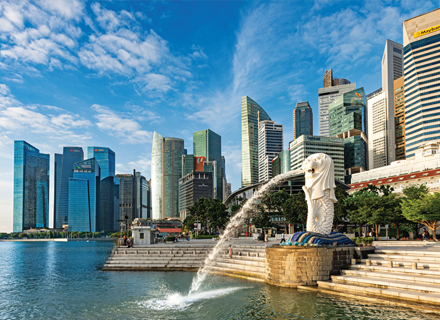
Singapore presents a very different, but equally instructive, case—a high-income oasis in the region, known for its exceptional governance and innovation-driven approach. As a small city-state with 5.6 million people, Singapore leapfrogged into developed economy status (with per capita income on par with Western Europe), and established itself as a global financial and trading hub. For investors, Singapore often serves as the gateway to ASEAN. Its rule of law, stable politics, and ease of business provide a secure base.
Singapore’s economic model emphasises continual upgrading and diversification. Lacking natural resources or hinterland, it has invested heavily in human capital and infrastructure to stay competitive. The government’s foresight in policy planning is a hallmark. Through its national plans, it identified electronics, petrochemicals, and finance as pillars in the late 20th century, later moving into biotech, precision engineering, and now digital tech and green finance.
Today, Singapore is pushing frontiers in fintech, biomedical sciences, and smart city technologies. It has positioned itself as a leader in fintech regulation, enabling innovations such as digital banks and a vibrant startup scene in blockchain and payments.
It’s also a regional leader in AI and robotics research; universities and government labs are working on AI applications ranging from port logistics to healthcare. As noted, Singapore’s aggressive automation, such as building the world’s largest automated port, demonstrates its drive to mitigate labour constraints through technology.
That said, Singapore faces its own challenges as a mature economy. Growth has slowed to typically 2%-3% in recent years (aside from the volatile pandemic swing). An ageing population is a pressing issue, fertility rates are extremely low, and the workforce is ageing, requiring the country to rely on productivity gains and selective immigration to sustain growth. This is partly why automation and productivity are emphasised; Singapore sees technology as the key to doing more with a lean workforce. The city-state also must continue innovating to justify its high-cost base. It can’t compete on cost with neighbours, so it must provide higher value.
This includes positioning itself as a hub for high-tech manufacturing, such as semiconductor fabrication. Singapore is a global player in chipmaking, hosting companies like GlobalFoundries and Micron. Additionally, it aims to be a centre for services like wealth management and medical tourism.
Inequality and the cost of living are the talking points in Singapore. It has some of the world’s richest people, highly paid professionals, and a sizeable low-income immigrant worker population in construction and domestic work.
The government mitigates inequality through heavy subsidies in housing, healthcare, and education, with over 80% of Singaporeans living in subsidised public housing, and a progressive fiscal system. Still, wealth gaps have drawn more attention in recent years domestically, prompting policies like higher taxes on luxury properties and cars, and more social support for the elderly poor.
Considering the environmental and climate matters, Singapore is unique: a tiny island nation extremely vulnerable to sea-level rise. It has committed to net-zero emissions by 2050 and is investing in climate defences.
It’s also driving green initiatives like becoming a carbon trading hub, mandating sustainability reporting for companies, and electrifying its vehicle fleet (to phase out petrol vehicles by 2040). Given its limited land, it’s exploring importing renewable energy from neighbours. Plans are underway to import solar or hydro power from Malaysia, Indonesia, and Australia via subsea cables.
Singapore plays a crucial role in ASEAN as both an innovator and intermediary. It channels global capital into the region through its banks, funds, and investors such as Temasek and GIC, which are sovereign funds that invest across Asia. Additionally, Singapore shares its technical expertise with neighbouring countries by providing advice on urban planning and governance.
However, Singapore’s high level of development also means it sometimes has different interests. For example, it champions high-standard trade agreements and IP protection, which some developing ASEAN members are slower to adopt.
Singapore continues to be an appealing destination for investors seeking stable, although relatively lower, returns. This includes sectors such as real estate and high-end manufacturing, and serves as a hub for regional operations.
The Singapore government also provides incentives for emerging industries, particularly in areas like green technology, digital technology, and high-value manufacturing, which currently receive substantial support.
The country also has a stable currency, which eliminates the foreign exchange risks often seen in emerging markets. Essentially, this makes Singapore a low-risk option for investors looking to benefit from the high-growth potential of the ASEAN region.