
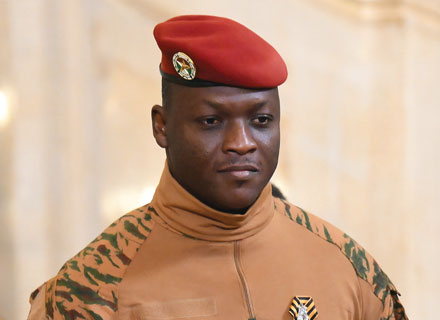

In early 2025, Burkina Faso’s young junta leader, Captain Ibrahim Traore, set out an ambitious economic agenda that captured global attention. In a televised address, he announced that the country had “cleared its external debt” of roughly $4.7 billion and simultaneously moved to take full control of its gold mining industry. These bold moves, which included paying off all foreign creditors at once and nationalising a key export sector, signalled a radical break with the past.
Traore described the debt repayment as reclaiming the country’s financial independence, while pledging to redirect mining profits to finance schools, hospitals, and other public projects. Together, these actions set Burkina Faso on an unprecedented path, specifically a journey toward economic self-reliance and resource sovereignty. The immediate response was mixed, as jubilant rallies by supporters at home were contrasted with cautionary voices abroad, yet the direction of change remained unmistakable.
Burkina Faso’s external debt had long weighed on its budget. By January 2025, Traore’s government reported that the last penny of this burden was gone. Officials credited a mix of prudent fiscal measures, higher export revenues, and renegotiated deals with creditors for making this possible.
In effect, the country shed decades of loans used for development projects and balance-of-payment support. Traore cast the move as more than economics. It represented a statement that Burkina Faso would no longer be shackled by foreign conditionality. With debt service gone, the government freed up funds for domestic needs.
As Traore put it, “We have reclaimed our financial independence.”
Analysts point out that a significant factor in this situation is the country’s mineral wealth, especially gold, which is now generating higher revenue because loans are no longer draining government earnings.
Another key aspect of Traore’s plan was to gain control over the gold sector. Traditionally, Burkina Faso’s gold mines were owned and operated by foreign companies, resulting in limited benefits for local communities.
Traore announced that those major mines would be nationalised and placed under state management. In practical terms, the government insisted that the profits from gold extraction would finance public services instead of enriching multinational firms.
The official rationale was strikingly populist, as Traore told the nation that it was unacceptable for outsiders to “extract and exploit” the country’s wealth while ordinary Burkinabe struggled.
In concrete terms, cabinet statements pledged that mining revenues would now go directly into improving citizens’ lives, such as by funding infrastructure, schools, and clinics. Early budget plans indeed earmarked mining profits for key sectors, including agriculture, education, and renewable energy projects, which are high on the list. Nationalising gold was not only about symbols; it was intended to fuel real social investments.
Domestically, these moves generated enthusiasm. Ordinary Burkinabes poured into the streets of the capital, Ouagadougou, waving flags and cheering the speech with chants of support. In a country where many feel left behind by past governments, Traore’s rhetoric of sovereignty and self-help struck a chord. One news report noted that citizens saw “the moves as a long-overdue step toward economic independence.”
Yet abroad, the reaction was more cautious. International financial institutions like the World Bank and IMF publicly urged restraint, warning that abrupt nationalisations might scare off investment. Global mining firms and investors, already skittish after similar seizures elsewhere, warned that such policies could make doing business in Burkina Faso risky.
In private, some investors said they were watching closely to see if the state could run the mines efficiently and fight corruption. Thus, while many in Burkina Faso had reason to celebrate debt freedom and promises of new schools, external observers advised caution, creating a tension that Traore’s government must now manage.
Behind these dramatic reforms lies a clear political logic, which reflects a conscious turn away from Burkina Faso’s traditional Western partners and toward a model of self-reliance. Traore has framed much of his agenda in anti-colonial terms. He openly blames France and other former colonial powers for the country’s problems, and he has demanded that French troops, who had long been stationed to help fight enemies, leave the country.
In the past two years, he has broken with regional institutions as well, leading Burkina Faso out of the West African bloc ECOWAS and into a new “Alliance of Sahel States” with Mali and Niger. This new alliance explicitly shuns the old colonial-led order.
In practical terms, Traore has repeatedly promised to “develop our country on our own terms,” for example, by refusing outside loans. He has publicly spurned new IMF and World Bank assistance, insisting Burkina Faso can grow without foreign aid.
Putting things into perspective, the debt payoff and resource nationalisation are two sides of the same coin, as both are meant to reduce dependency on the West.
According to the Financial Times, Traore’s rise has been powered by “anger over democratic dysfunction and western meddling,” an anger that he channels into policies of independence.
This ideological reorientation also extends to new strategic partners. Almost immediately after taking power, Traore hinted that Russia, which has long been regarded as an anti-Western ally in Africa, would replace France in the counterinsurgency fight. Russian military contractors, especially the Wagner Group, have quietly entered Burkina Faso to protect the new regime, although their numbers remain limited to a few hundred.
At the same time, Russian-linked media campaigns have gone to work spreading Traore’s message. International observers report that online networks and fake social media accounts tied to Russian influence efforts are blaming France for the country’s security crisis and promoting Traore’s cause.
In short, Burkina Faso is reorienting eastward, as the junta talks openly about strengthening ties with Russia and China while cutting French ties. Economically, this means new deals may be struck. For example, reports suggest Burkina Faso is seeking Russian investment in mining and agriculture, but it also carries the risk of alienating old Western partners and investors.
Inside Burkina Faso, the implications of these policies are felt everywhere. On the positive side, paying off the debt has immediately eased the budget outlook. Instead of servicing foreign loans, the government can spend more on local priorities. Public sector salaries, which had been in arrears, are now being paid; plans are underway to build dozens of new schools and health clinics using mining revenues.
Electricity shortages have even become a focus, as government announcements mention new solar projects aimed at powering rural areas. In the gold sector, state firms are being set up to run the mines and a new national refinery is being built to process gold on-site, rather than exporting raw ore. These steps could gradually create mining jobs, boost skilled employment, and keep more value in the country.
Even Burkina Faso’s textile industry is getting attention, as the authorities have supported artisanal cotton processing so farmers can sell cloth instead of raw cotton. The economic programme is about retaining profits at home and extending the supply chain within Burkina Faso. If it succeeds, ordinary Burkinabe stand to gain from better services and possibly more local jobs in mining and industry. But the flip side is formidable. Nationalising industries and rejecting the old economic order pose serious risks.
Foremost, there is the danger of scare tactics working, as foreign investors may decide that investing in Burkina Faso is too uncertain and choose to turn elsewhere. Already, some mining companies have paused projects or begun legal challenges, recalling that in 2024, Traore’s government controversially seized two major gold mines from a Western firm.
While authorities argue these moves will eventually pay off, any disruption to production or export could hurt revenues in the short term. The International Monetary Fund has explicitly warned that such seizures could deter the very investment Burkina Faso needs.
Another challenge is administrative capacity. Running big mines efficiently requires expertise and transparency, and newly emboldened state managers may lack experience. Veteran economists caution that oil and mining rents have often been mismanaged in other African states. They point out that corruption or nepotism could creep in unless strong oversight is maintained.
Recognising this, Traore’s team publicly emphasises the need for accountability and anti-corruption measures in the new state-owned enterprises. Yet scepticism remains, as some question whether a military-led government can truly build robust new agencies and banks to replace the private sector, or whether bureaucracy and graft will undermine the plan.
The social consequences are also uncertain. In the short term, many Burkina Faso citizens cheer the vision of sovereignty, but others fear an economic slowdown. Consumers may face inflation if the currency is pressured. It must be noted that Burkina Faso still uses the CFA franc tied to the euro, a legacy issue that nationalist leaders have already begun debating. Rural farmers worry that uncertainty in gold and cotton markets could spill over into credit availability or infrastructure spending.
And all this happens amid a humanitarian crisis, as the violence continues to displace people and strain budgets. Traore has tried to link his economic nationalism to security, arguing that controlling resources will eventually help fund a stronger army and police force. But so far, security has worsened since his takeover, raising the question of whether political independence can solve a conflict driven by complex social and ideological forces.
To some observers across Africa and even in Europe and the Middle East, Traore has become an unlikely icon of anti-Western defiance.
Reports note that he has received a warm welcome at regional summits, and even country leaders who do not endorse his methods applaud his nationalist tone. If he delivers growth and stability, other resource-rich governments may take heart, as Ethiopia, Kenya, and Tanzania, for example, have longstanding debates about how much to tax or partner with multinational miners.
Traore’s model, which emphasises full national control and rapid debt repayment, could appeal to any government chafing under external debt or foreign corporate presence. Indeed, analyst projections in late 2025 suggest Burkina Faso’s moves are already encouraging talks in neighbouring Niger and Mali about similar policies.
However, critics point out that government promises must quickly translate into jobs, schools, and clinics if support is to hold. They ask whether Burkina Faso’s bureaucracy can handle such an ambitious agenda.
Some economists worry that cutting ties with Western institutions could mean losing lines of credit or aid at the very moment large military and social spending are needed. Meanwhile, the massive cost of fighting militants, including expenditures that Traore has redirected a significant portion of gold revenue toward, leaves less for civilians.
Looking ahead, the verdict will hinge on results. If Burkina Faso’s debt-free budget delivers visible improvements in living standards, Traore’s economic approach could gain lasting legitimacy. The fact that the junta abolished a predecessor’s pay raises for generals and kept Traore himself on low military pay has already burnished its credibility with many citizens.