
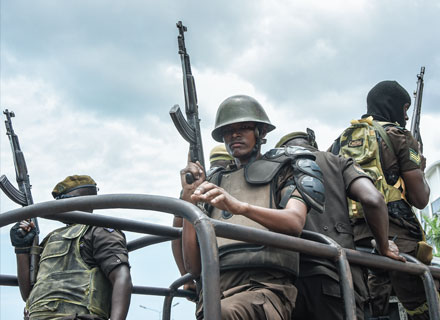

The decades-long catastrophe unfolding in the eastern Democratic Republic of Congo is a crime of calculated policy, a geopolitical masterclass in profit-driven plunder, sustained by neighbouring state actors who have perfected the art of weaponising proximity.
Why must we accept the premise that a nation so unbelievably rich in gold, coltan, and tungsten, a nation that should be an economic powerhouse, is instead condemned to perpetual, bloody volatility? Tell me why, when the answer is staring us directly in the face, who profits?
The chaos you observe in Eastern DRC is manufactured, financed, and a guaranteed revenue stream for the powerful patrons operating just across the border, using their immediate geographical advantage as an economic tool.
Look at the resurgence of the March 23 Movement, the M23, a powerful armed group whose very origins are rooted in the devastating aftermath of the 1990s Rwandan genocide, confirming that this cycle of conflict is deep, historical, and externally driven.
The M23 claims to fight against systemic discrimination of ethnic Tutsis, a convenient political fiction designed to provide cover for their true, brutal objective, the military and economic control over the vast mineral wealth of North Kivu.
Their security claims are merely a shield, a flimsy pretext for securing lucrative, unregulated artisanal mining sectors, ensuring that external patrons can deny responsibility while the resource drain continues unabated.
The M23’s latest offensive is the most damning evidence of their capabilities and their explicit state-level backing. This was a sophisticated military campaign culminating in the seizure of Goma, the provincial capital of North Kivu, in January 2025, a decisive military and logistical victory.
Immediately after the conquest, the M23 plunged hundreds of thousands of civilians into chaos, creating a humanitarian siege by severely restricting crucial aid access and consolidating territorial control through sheer terror.
This pattern is clear: M23 advances directly correlate with spikes in resource extraction and export by neighbouring states, proving that state policy is deliberately designed to maintain chaos just across the border, creating a vast, lawless, and profitable extraction zone disguised as a conflict zone, a war sustained by calculated, cold-blooded design.
Who truly arms the proxy
How can we continue to describe the M23 as a local rebel force operating independently or on scraps of local funding? It is an absurdity. How can a decentralised militia repeatedly defeat a national army, capture strategic cities like Goma, and even push towards Bukavu, utilising military tactics and resources only available to a sovereign state? The answer is laid bare in the explicit and absolutely damning findings of the United Nations Group of Experts.
The evidence presented by the United Nations (UN) is conclusive, it is undeniable, and an indictment. As far back as December 2022, the UN Group of Experts provided clear, verifiable evidence that a neighbouring state, specifically naming the Rwandan Defence Force, provided material, operational, and logistical support to the March 23 Movement.
This is a documented indictment of state sponsorship of an armed group involved in systematic atrocities, representing a serious violation of international law and the sovereignty of the DRC, is it not?
The final 2024 report of the Group of Experts, S/2024/432, confirmed the profound and continuing external involvement, noting the unauthorised presence of external forces operating in the Eastern DRC in a manner inconsistent with the sovereignty and territorial integrity of the DRC.
The most crucial, most strategically significant detail confirming this state-level involvement is the documented deployment of sophisticated weaponry, including surface-to-air missiles, by this neighbouring state, alongside occurrences of GPS jamming and spoofing activities.
It confirms only one thing: the M23 is acting as a fully integrated, heavily armed proxy force, directly challenging DRC sovereignty and escalating the conflict far beyond traditional guerrilla warfare. This is a professionalised, state-sponsored military project, where the M23 is used as a shield to test advanced military doctrines and technologies, all while the sponsoring state denies direct involvement to avoid international sanctions and accountability.
Despite these explicit UN findings detailing state sponsorship, the deployment of SAMs, and sovereignty violation, effective international sanctions targeting the sponsoring state have been conspicuously absent, sending a clear, criminal signal that the financial benefits of the war economy currently outweigh the political will to enforce accountability. What an outrage.
How conflict minerals escape
The core motivation for sustaining this violence is simple: it is rapacious, it is entirely about resources. Eastern DRC holds some of the world’s most extensive deposits of critical raw materials, minerals essential to global electronics and high-end consumer markets, including gold and the so-called 3Ts, Cassiterite, Coltan, and Wolframite, the sources of tin, tantalum, and tungsten.
These minerals move through supply chains that are intentionally opaque, beginning in isolated artisanal mines and ending up in your smartphones, your medical devices, and your aircraft components, illustrating the direct, bloody connection between Congolese suffering and global consumption.
The structure of this resource extraction maximises profit while minimising local benefit. The majority of mining in Eastern DRC is artisanal, conducted with minimal mechanisation, existing either in a legal grey area or entirely outside government control.
This extra-legal status is fundamentally critical because it leaves the miners, who have no recourse to legitimate government protection, completely open to ruthless exploitation by armed groups. The M23 and other militias enforce systemic exploitation and what the UN refers to as modern slavery, subjecting miners, including children, to inhumane working conditions to secure their revenue streams, the hidden human cost of your digital life.
Once extracted, these resources, which include gold generating millions of dollars yearly for armed groups, are immediately moved through local sales agents, negociants, and trading houses, comptoirs. This is the moment of laundering, the critical juncture where the Congolese blood mineral is washed clean by being deliberately blended with minerals sourced from other, supposedly conflict-free sources.
Neighbouring countries, including Rwanda, Uganda, Burundi, and Tanzania, play a significant and necessary role in these routes, acting as jurisdictional laundering hubs, providing the final, sanitised export receipt.
Groups like the FDLR and other armed factions obtain millions of dollars yearly from gold alone, gold that is immediately trafficked through neighbouring countries like Uganda and Burundi. The M23, leveraging its state backing, taps directly into this immense resource drain, ensuring its substantial war chest remains perpetually full regardless of international outcry.
Resource extraction and re-export constitute a core, illicit component of the economic policy of M23’s patrons, designed to capture and monetise Congolese wealth under the convenient cover of legitimate commodity trading.
Despite international mandates like the US Dodd-Frank Act requiring due diligence for these minerals, the system is demonstrably porous and totally ineffective, allowing countries with advanced processing capacity, like Rwanda with its gold refinery, to act as essential hubs, meaning global consumers are unwittingly subsidising the M23’s campaign of terror. Is that not a sickening reality?
Statistical evidence of economic fraud
If the political pronouncements of neighbouring capitals are built on systematic denials, then the trade statistics are the hard, quantifiable evidence of their deep economic deception. We must confront the trade figures directly.
How, we must ask, do countries with relatively small-scale domestic mining operations suddenly become disproportionate global exporters of high-value Congolese minerals? The data consistently reveals an undeniable economic fraud, a Great Mineral Mirage constructed solely to mask massive resource theft from the DRC.
Look at the stark contradiction evident in Rwanda’s coltan exports. Coltan is essential for capacitors in mobile devices, and its trade is subject to international scrutiny. Since 2022, the precise period that coincides with the M23’s latest, most destructive offensive, Rwanda’s coltan exports have increased sharply, yet its domestic tantalum production has demonstrably stagnated, an impossible economic feat without illicit imports.
This is a statistical confession, mirroring patterns from the 1990s when Rwandan forces controlled much of the DRC, and Rwanda became a leading coltan exporter despite mining none of the mineral themselves at the time. The M23 provides the military mechanism, and Kigali provides the legally sanitised export documentation.
The gold trade offers an even more egregious statistical disparity that quantifies the sheer scale of the theft. Rwanda exported an enormous $555.7 million in gold in 2022. Contrast this enormous sum with the official bilateral trade figures from the DRC, which show that it exported only $3.5 million in gold to Uganda in 2023.
This massive, hundreds of millions of dollars gap in highly liquid, untraceable wealth demonstrates conclusively that the vast majority of Congolese gold, forcibly extracted by armed groups, is being illegally funnelled directly into neighbouring states’ official export ledgers.
Rwanda also holds disproportionate global market shares in other key Congolese minerals, reporting 31% of total global tungsten exports and 14% of total tin exports in 2022, confirming Rwanda’s role as the primary consolidation and re-export hub for 3Ts forcibly sourced from the DRC. The figures confirming the reliance on laundered resources are indisputable.
The toll of unchecked violence
We have established the financial incentives and the geopolitical machinations fuelling this conflict, but we must never, ever allow the statistics of trade to overshadow the staggering human price paid for every illicit ounce of gold and every illicit shipment of coltan that leaves the Congo. This is an escalating human rights catastrophe, where the M23’s advances translate directly into mass death, displacement, and systematic terror, confirmed by the evidence.
The humanitarian landscape in Eastern DRC was already dire, with over 21 million people requiring humanitarian aid, one of the highest figures worldwide. The M23’s renewed offensive has exacerbated this crisis to unimaginable levels. Between January and February 2025 alone, the M23’s expansion displaced over 1.15 million individuals across North and South Kivu.
Critically, 660,513 of these were people who had already been displaced, confirming that the M23 specifically targets vulnerable populations to maximise territorial clearance and control. Approximately one million people have been forced to seek refuge in neighbouring countries, an entire population dispossessed.
The M23’s method of conquest involves war crimes and atrocities utilised as a systematic tool of control, not accidental collateral damage. Reports from Amnesty International and Human Rights Watch confirm summary executions, arbitrary killings, and the widespread use of gender-based violence, constituting war crimes and potentially crimes against humanity.
In Goma, following the January 2025 occupation, Human Rights Watch documented the summary execution of at least 21 civilians in the Kasika neighbourhood, emphasising that these were deliberate acts carried out to solidify control through sheer terror. Witnesses recounted M23 fighters going house-to-house, summarily killing every adult male they found and subjecting scores of women to rape, heinous, unspeakable crimes.
The deliberate targeting of infrastructure and aid demonstrates the clear intent to maximise civilian suffering and create a humanitarian siege. Humanitarian infrastructure and warehouses have been systematically looted, severely compromising the necessary humanitarian response, with large quantities of food, medicine, and essential medical supplies lost in targeted attacks on UN agencies and non-governmental organisations.
With the Goma airport closed and most roads connecting the city inaccessible due to M23 restrictions, the control exerted by the proxy force effectively isolates vulnerable populations, weaponising hunger and disease to drive displacement and secure unpopulated mineral zones. It is monstrous.
Global accountability is essential
The narrative is now undeniably clear. The evidence, presented by the United Nations and confirmed by trade statistics, is overwhelming. The M23 conflict is a sophisticated, self-funding economic enterprise, a cycle of violence deliberately orchestrated by state patrons and fuelled by the illicit profits of gold and coltan. We have seen the UN indictments, we have seen the quantifiable statistical anomalies, and we have documented the devastating human cost, so why, why does the world remain silent? It is a question of profound moral failure.
The international paralysis is fundamentally geopolitical, driven by the very interests that profit from the conflict. Regional diplomatic efforts intended to broker peace, such as the Luanda and Nairobi processes, have repeatedly collapsed under the weight of vested interests and profound mistrust between Kinshasa and the neighbouring capitals.
When the DRC government insisted that the Luanda Process remain strictly between sovereign states, refusing to commit to dialogue with the M23, the sponsoring state effectively cancelled a scheduled peace agreement, demonstrating that the proxy force itself is utilised as the central obstruction to a durable peace, a cynical display of power.
The failure of regional mechanisms, coupled with the lack of decisive international action following the UN’s explicit findings of external state support and the deployment of sophisticated weaponry, creates an environment of absolute, total impunity.
The operational nexus of the war economy is undeniable. External state support enables M23 operations, which secures artisanal mines through systematic terror, which funds the armed groups, which funnels resources through neighbouring export hubs, and this entire, horrific cycle is successfully shielded by global diplomatic inertia. How can we stand for this? The current system of supply chain due diligence, designed to prevent conflict mineral trade, has failed spectacularly, demonstrably. What more proof do we need? We must recognise that until the financial lifeline of the M23 is severed, the violence will continue unabated. Therefore, the international community has a profound moral and legal obligation to act decisively, to stop hiding behind process, and to impose targeted accountability. This requires immediate, verifiable sanctions targeting the specific corporate entities, the trading houses, and the smelters operating in neighbouring states that participate in mineral blending and laundering.
We must move beyond the abstract notion of “conflict minerals” to target the concrete financial structures that monetise the violence, directly targeting the estimated millions of dollars yearly that bankroll this war. The world must starve the war economy, impose rigorous accountability upon the state patrons who enable it, and demand that the flow of blood minerals stops funding the conflict that continues to condemn one of the world’s richest nations to absolute poverty and ceaseless violence. We must break this cycle, or we will remain eternally complicit in the crime.