

Despite its weak economy, Latvia is establishing itself as a major entry point to the European Union (EU), with foreign investment pouring into strategic industries and recent reforms highlighting its aspirations to become the Baltics’ investment hub.
According to projections from the IMF, Latvia’s GDP is expected to grow by 2.3% in 2025, followed by 2.5% in both 2026 and 2027. This optimistic outlook is attributed to increased domestic demand, lower inflation, and foreign investment in Latvia’s fintech, defence, and banking sectors. As a result, the Bank of Latvia is forecasting a more favourable growth rate of 3 percentage points for both 2026 and 2027.
The government is reaping the rewards of its 2022 decision to streamline the laws and policies governing both domestic and foreign companies. This initiative has enhanced Latvia’s ability to offer better support packages to investors in the Baltic region. With a bold plan to establish its capital, Riga, as a low-cost, high-value banking hub in the Baltics, Latvia aims to attract more foreign investment. The country is also focusing on sectors such as biomedicine, pharmaceuticals, fintech, artificial intelligence, and smart consumer electronics.
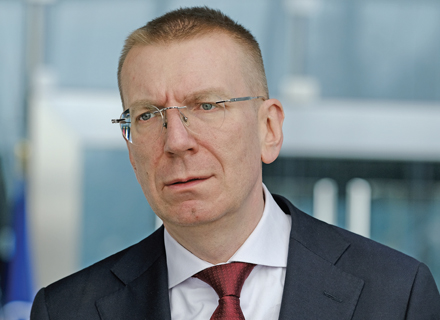
When Latvia’s largest-ever trade mission to the United States took place in September 2024, it expected to reap the benefits. The eight-day event featured investor briefings in Houston, San Francisco, and Denver and was led by Latvian President Edgars Rinkevics and Minister of Economics Viktors Valainis.
A meeting was held with representatives from Google, NASA, Groq, OpenAI, and Meta. In December, Microsoft and Latvia signed a memorandum of understanding (MoU) to establish an AI hub. Within three to five years, the trade mission hopes to double Latvia’s exports to the US to $2 billion.
In April 2024, the Latvian government authorised changes to the Coordination Council’s Regulation for Major and Strategic Investment Projects. With the amendments, funding applications were screened more quickly, and projects with an investment volume of at least €10 million (roughly $10 million) or an export volume of €5 million were eligible for state support. Additionally, the nation draws interest from international investors in projects requiring a lot of capital.
The most ambitious regional transportation infrastructure investment in the Baltic region is Rail Baltica. As part of the project, two European Transport Corridors (ETC) will be built. By 2030, the ETC1 will link Poland, Latvia, Lithuania, and Estonia’s upgraded rail systems to the continental European rail transportation network.
Following confirmation from the Baltic states and the European Union that outside investors could help finance ETC1 and ETC2, international interest in Rail Baltica grew significantly. In November 2024, the project secured an additional €1.4 billion from the EU’s Connecting Europe Facility (CEF), which is covering up to 85% of eligible expenses.
In total, Rail Baltica has obtained more than €4 billion through the CEF. According to an analysis published last June, the project is expected to generate €48 billion in direct and indirect economic benefits for the region—an amount that exceeds its estimated capital cost of €15.3 billion. This funding will support the first phase of construction, aimed at delivering an operational Rail Baltica line across the three Baltic states and linking it to Poland’s rail network by 2030.
With extended rail line connections to Ukraine and Moldova, ETC2 will increase the project’s long-term potential value to the security of the Baltic states and Europe by connecting nations in the region surrounding the Baltic, Black, and Aegean seas.
Marko Kivila, acting CEO of RB Rail, the management company for Rail Baltica, said, “The project’s perspective has been radically altered by geopolitical changes. Rail Baltica is now essential to NATO’s military mobility, enhancing its strategic significance.”
A magnet for FDI
The Latvian government authorised more than €644 million in additional funding in January to fortify its border with Russia. Some 42% of the nation’s €1.6 billion defence budget goes toward purchasing weapon systems. By 2026, the goal is to increase the defence budget to at least 4% of GDP. The government also hopes that Riga will become a major banking centre.
The government implemented a temporary solidarity contribution (TSC) on credit institutions in January to assist with the costs of national security. Some 60% of a credit institution’s excess net interest income from 2025, 2026, and 2027 is subject to the TSC. It is anticipated to generate $100 million.
A stable monetary policy, up-to-date infrastructure, and a strategic location between the EU and the Commonwealth of Independent States (CIS) all contributed to the country’s FDI stock increasing by 44.4% to $26 billion in 2024. In that year, over 82% of all FDI that was accrued came from investments made by other EU countries.
According to the FDI breakdown by industry, the majority of foreign investors made investments in manufacturing, banking, real estate, and technical services.
During the January meeting of the Latvian Investment and Development Agency Coordination Council, Economics Minister Valainis said, “Latvia’s foreign investment results in 2024 have been impressive—from just under €619 million in 2023, the amount of attracted investments last year grew to over €655 million. Latvia’s 2025 target for large investments is €790 million, and given the strong groundwork and growing interest from investors, I am confident we may even exceed this goal.”
The EU’s funding role keeps SMEs working in industries like exports, energy efficiency, and digitisation innovative and growing. To help small-to-medium-sized (SMEs) businesses become more competitive, the Ministry of Economics is making €250 million in State and EU funding available in this year’s budget. Support for SMEs accounts for about 61% of the funds.
As foreign investment grew, Latvia’s active investment project volume increased from slightly over €4 billion in 2023 to approximately €11 billion in 2024. Two free ports are among five special economic zones (SEZs) that provide financial and tax incentives that are crucial for drawing in foreign investors. The SEZs provide corporate income tax refunds of up to 80%. For both domestic and foreign businesses, the property asset rebates reduce the effective tax rate to 0.3%. Until 2035, the tax refunds will be available.
Additionally, the nation’s EU membership and business-friendly policies are drawing in more Asian investment. Approximately 500 jobs were created when the Indian IT company Tech Mahindra established a Baltic business processing services (BPS) hub in Riga in 2024.
Similarly, Riga was chosen to house Uzinfocom’s European headquarters. Uzinfocom is the biggest provider of biometrics and facial recognition technologies in Uzbekistan. Aleksandrs Petrovs, chairman of Uzinfocom Europe, claims that the choice “was not difficult. We also want to consider developing strong collaboration alliances with Latvian public and private businesses.”
In the meantime, the Bank of Latvia is formulating a plan to make Riga the biggest fintech hub in the Baltics. The central bank is promoting innovation and wants to encourage investment and expansion in the fintech sector.