
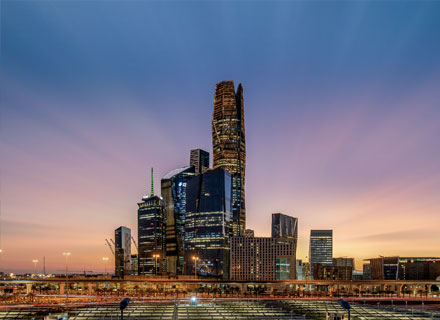

Imagine waking up to the cool, crisp air of an upland Saudi town, surrounded by green hills. Your commute is a short, traffic-free drive through scenic streets, and by evening, you’re enjoying a family outing in a calm park, far from the congestion of Riyadh or Jeddah.
This vision is increasingly becoming a reality as Saudi Arabia reimagines its economic future by developing smaller, secondary cities into vibrant economic centres. Under the Kingdom’s ambitious “Vision 2030” diversification blueprint, cities like Taif, Abha, Jazan, and Hail are taking on new roles as engines of growth, helping to geographically diversify the economy and improve the quality of life across the country.
The rise of secondary cities
In partnership with programmes like the Future Saudi Cities Programme (a Ministry of Municipal Affairs and UN-Habitat initiative), Saudi Arabia is working to enhance the liveability and sustainability of 17 cities across the Kingdom.
The idea is simple: rather than having most jobs and industries clustered in a few big cities, spread opportunities across many cities and towns. Vision 2030 explicitly calls for developing special economic zones in different regions to leverage each area’s strengths.
The government has been revamping earlier “economic city” projects, such as the industrial city in Jazan, so that these smaller urban economies can attract investment, create jobs, and draw talent. As the Vision 2030 plan itself indicates, the goal is for these cities to contribute to national growth and attract quality investments and skilled workers in line with national priorities.
Crucially, the drive to boost secondary cities has top-level support. In 2022, Crown Prince Mohammed bin Salman launched the Saudi Downtown Company (SDC) to develop modern downtown areas in 12 smaller cities, including Taif, Jazan, Hail, and others. This Public Investment Fund (PIF) initiative will invest in retail, tourism, entertainment, housing, and infrastructure in those city centres, creating jobs and business opportunities for locals.
These efforts align with Vision 2030’s objective of unlocking the potential of promising sectors in each region and contributing to non-oil economic growth. The Kingdom is planning for a future where it’s not just Riyadh or Jeddah on the global stage, but a network of thriving cities, each contributing something unique.
Why geographic diversification matters
For decades, young Saudis flocked to the big three metros, namely Riyadh, Jeddah, and Dammam, in search of education and employment. This led to rapid growth in those cities, but also congestion, high living costs, and regional imbalances.
Meanwhile, many smaller cities saw talent drain away, and their economic potential remained underdeveloped. Geographic diversification aims to correct that by spreading growth more evenly. By turning secondary cities into viable economic centres, Saudi Arabia can reduce the pressure on overburdened metros and offer citizens the choice to prosper in their hometowns.
When a major company opens a branch in, for example, Hail or Abha, it creates good jobs locally, which means young professionals don’t have to relocate to find careers. These employees then spend their salaries locally, which supports neighbourhood shops, restaurants, and services, creating a virtuous cycle of growth.
New industries setting up in town also bring fresh expertise, entrepreneurial energy, and cultural vibrancy, helping diversify the local economy. Over time, this translates to a better quality of life, where residents enjoy good employment without the downsides of mega-city life, such as long commutes or crowded neighbourhoods. And unlike the breakneck urbanisation of major cities, development in smaller cities can be planned smarter and greener, avoiding sprawl and preserving the environment.
A country with multiple economic centres is better able to withstand regional challenges, for instance, if one city faces an industry downturn or environmental strain, others can pick up the slack.
By developing smaller cities alongside big ones, Saudi Arabia is tapping into the talents and resources of the whole nation. This approach creates more equitable, inclusive growth that reaches remote provinces as much as the capital.
Connecting every city
Over the past few years, the government has digitised thousands of services and built robust e-government platforms as part of Vision 2030’s drive for an “Ambitious Nation” and efficient governance. As of early 2023, more than 6,000 government services, ranging from business licensing to health and education services, have been put online.
This is a monumental shift that allows citizens and businesses to access government resources from anywhere, reducing the need for in-person trips to Riyadh or other administrative centres. Vision 2030 emphasises expanding digital services to cut red tape and ensure fast, transparent access for all, regardless of location.
This digital revolution has been a game-changer for smaller cities. Today, an entrepreneur in Taif or Jazan can register a new business, apply for permits, pay fees, and even attend virtual meetings with officials, all of which are online.
In practical terms, this means a company no longer has to base its offices in Riyadh just to be near regulators or ministry offices. As long as there’s a good internet connection, a firm can operate from Abha or Hail and still get its paperwork done electronically.
This e-government push enables decentralisation by liberating businesses from geographic constraints. It also encourages talented people to work from their hometowns if they wish, since they can interact with employers or the government digitally.
Saudi Arabia’s investment in nationwide broadband and 5G networks further supports this connected future. High-speed internet is reaching remote areas, and smart city technologies are being introduced to smaller municipalities.
Investing in infrastructure
Of course, a city needs more than just digital access to thrive. That’s why Saudi Arabia is heavily investing in hard infrastructure and livability improvements in secondary cities. New highways, railway expansions, and airport projects are knitting the country’s regions closer together.
For instance, a new Taif International Airport is being developed to boost that city’s connectivity and tourism potential, aligning with Vision 2030’s goal of enhancing regional transport hubs. Upgrading transport links makes it easier to move goods and people between cities, which is a critical factor if businesses are to operate in multiple locations. Likewise, logistics infrastructure like ports (in Jazan) and industrial zones are being expanded to support local industry and export capacity.
The “Quality of Life” Programme under Vision 2030 sets targets for parks, cultural and sports facilities, and entertainment options across the Kingdom. The Saudi Downtown Company’s projects, for example, will introduce modern mixed-use developments, such as pedestrian-friendly downtown districts with shops, offices, housing, and leisure venues, which are all designed with local character and sustainability in mind.
Families in smaller cities should have access to excellent schools, hospitals, clean public spaces, and recreational activities right at their doorstep. This attention to livability not only improves citizens’ well-being but also makes it easier to attract and retain talent in regional areas.
Another aspect of infrastructure investment is ensuring reliable utilities and digital infrastructure. Secondary cities are seeing upgrades in power supply, water and sewage systems, and the full rollout of fibre-optic internet.
These may not be glamorous projects, but they lay the foundation for businesses to operate smoothly and for residents to enjoy modern conveniences. By enhancing infrastructure and quality of life in tandem, Saudi Arabia is essentially future-proofing these cities, which means they can grow sustainably as their populations and economies expand.
Local industries and new opportunities
Saudi Arabia’s regions are diverse, each with its own resources and cultural heritage, and Vision 2030 seeks to capitalise on these strengths.
For example, Taif, long known for its pleasant climate and agriculture (famous for its rose farms and fruit), is now positioning itself as a hub for tourism, hospitality, medical services, and agribusiness through initiatives like the New Taif project. The idea is to build on Taif’s historic role as a summer retreat and agricultural centre, turning it into a year-round economy that attracts both tourists and professionals.
Down in the southwest, Jazan (Jazan City) has a strategic location on the Red Sea near trade routes. It has been designated as a special economic zone to draw international investors. This zone offers incentives for industries including logistics, manufacturing, and energy, by leveraging Jazan’s port and the nearby refinery and agricultural lands.
The Saudi government’s approach is similar for other locales, with Tabuk province in the northwest being home to the mega-project NEOM, which includes futuristic developments like The Line city and Trojena resort.
Abha, nestled in the Asir mountains, is being uplifted by tourism and culture-driven projects; it is one of the cities in the Future Saudi Cities Programme focused on sustainability and urban quality.
Up north, Hail, which has been historically a trading crossroads, is seeing renewed attention. Hail was earmarked in the past for an “economic city” project due to its location along transport corridors, and today it benefits from projects like the Saudi Downtown Company’s plan to revitalise its city centre. Hail’s local economy, known for agriculture and an annual international rally race, can grow further with new logistics and mining initiatives as the government improves rail and road connectivity.
Vision 2030 highlights the importance of public-private partnerships (PPPs) and incentives to spur businesses into expanding beyond the big cities. Companies are being offered benefits, including tax breaks, subsidised utilities, and preferential access to government contracts, if they set up operations in targeted regions.
The expectation is that once a few anchor investors establish a presence, a cluster effect will follow, with suppliers, service providers, and small businesses emerging around the new industry, creating an ecosystem.
In practical terms, what’s emerging is a Saudi Arabia with strong regional cities connected by modern infrastructure and digital networks, each city specialising in industries that suit its character. The benefit of this approach is not just economic numbers; it’s also social. Families can stay closer together instead of scattering to distant metros, cultural heritage in different provinces gets a chance to shine, and people all over the country can enjoy a high quality of life.
As one commentator put it, Vision 2030’s economic diversification is “not only sectoral, but it should also be geographical.” The opportunity is here, and Saudi Arabia is seizing it by moving beyond the big cities to build a more balanced, inclusive, and dynamic future for all its citizens.