
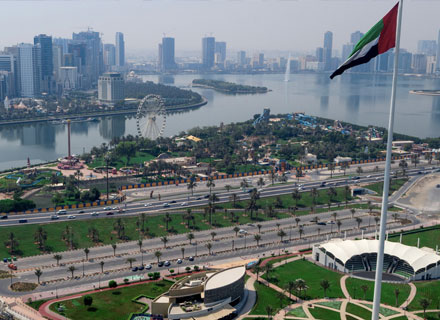

Sharjah is making headlines as the UAE’s fastest-growing Emirate for foreign direct investment (FDI) in the first half of 2025. As the country’s third-most populous city, Sharjah is attracting a surge of investments that are fuelling new projects, generating jobs, and strengthening its industrial foundation.
Breaking down Sharjah’s economic momentum through the numbers, capital investment surged to $1.5 billion during the first six months of 2025, a 361% jump from $325 million during the same period in 2024. The Emirate welcomed 74 new projects, up 57% from 47 in Q1 2024. Some 2,578 new jobs were created (a 45% increase), mostly in fields like production and services.
Sharjah’s path forward is unmistakably clear—centred on accelerating infrastructure development, fuelling innovation, and driving GDP growth. The rise in employment improves purchasing power and drives further investment, especially in the small and medium-sized enterprise (SME) sector.
What is fuelling the growth?
Saud Salim Al Mazrouei, Director of HFZA (Hamriyah Free Zone) and SAIF (Sharjah Airport International Free Zone Authority), during an interview with Gulf News, saw the arrival of record FDI as a confirmation of Sharjah’s standing as a global investment hub. For him, “Free Zones” have become the primary growth engines for the Emirati city, providing businesses with top-tier support in their pursuit of expanding regionally and internationally.
Take Sharjah’s free zones, for example, which marked major achievements and milestones in 2024, reinforcing their pivotal role in establishing the city as one of the most attractive investment destinations. HFZA and SAIF attracted over 1,600 companies from various countries, including the United States, Africa, India, Japan, the United Kingdom, Spain, Belgium, and others.
HFZA attracted 900 companies and corporations across diverse sectors, with the iron and steel manufacturing industry in the Middle East and Africa being the main player. In fact, if we call Hamriyah Sharjah’s “Steel Hub,” it won’t be wrong, given the strong presence of global powers like Belleli Energy, ArcelorMittal, Lamprell, Eversendai, Technomak, Ungersteel, and Zink Power in HFZA. The authority also clinched prestigious international awards at the 2024 iteration of the Global Free Zones of the Year Award by fDi Intelligence, for the second consecutive time.
SAIF, on its part, attracted over 700 businesses from diverse sectors while consolidating its position as a regional investment destination for the gold, jewellery, and gemstone industries. Its Gold, Diamond, and Commodities Park has established itself as one of the Gulf region’s largest gold refinery hubs, accommodating over 55 gold refineries and hosting over 250 companies specialising in gold, platinum, silver, and titanium manufacturing and trade.
Also, these two free zones have adopted cutting-edge digital technologies to create flexible and inclusive work environments. The duo now has a comprehensive portfolio of 600 smart services that seek to optimise operational efficiency, streamline business activities, and deliver an investor experience that relies on efficiency, speed, and excellence. HFZA and SAIF have further developed innovative strategies to build an integrated system of eco-friendly services.
This included signing a strategic partnership agreement with “Bee’ah Group” and organising initiatives, including events and workshops, to encourage businesses and investors to embrace effective environmental solutions that focus on energy efficiency, natural resource preservation, and emission minimisation.
Why are free zones so special?
Apart from offering industrial and commercial land supported by advanced infrastructure and modern facilities that support the international expansion plans of its investors, these hubs also boast competitive advantages, including a streamlined single-window operations system for enhanced efficiency and ease of doing business, multiple tax exemptions, free repatriation of capital and profits, full foreign ownership of businesses, and seamless connectivity to regional and global markets.
As the Gulf region eyes itself to become the new global tech hub, the Sharjah administration in 2024 announced the formation of a Communication Technologies Free Zone in Kalba city. To attract players from sectors like telecom, deep tech, and data centres, the Emiri decree stated that companies, institutions, individuals, and employees in the free zone will be exempt from taxes imposed on their business activities for a renewable period of 50 years. Also, the free zone will be exempt from all local taxes and fees, except consumption duties.
Al Mazrouei sees Sharjah’s free zones strengthening their developmental role and furthering their contributions to the Emirate’s economy in 2025 and beyond. On a broader scale, the city’s economy is driven by the diversity and complementarity of its sectors and their alignment with the Emirate’s strategic ambitions and development plans.
This growth is evident in Sharjah’s 2025 general budget, where the economic development sector accounts for 27% of the new budget, while the infrastructure sector ranks first, comprising 41% of the total general budget for 2025. The figure rose to AED42 billion ($11.4 billion), the largest in the northern emirate’s history. In addition to boosting financial sustainability, upholding a decent living standard, and promoting social welfare, the budget also focuses on strengthening the Sharjah administration’s capacity to fund strategic initiatives and projects, ensuring appropriate housing for citizens, and enhancing the tourism infrastructure.
For 2025, the infrastructure sector took the lead, accounting for 41% of the total general budget, marking a 7% increase compared to the 2024 budget. Simultaneously, the policy document envisioned infrastructural upliftment as a key pillar for sustainable development, to attract investments across various vital sectors.
Sharjah: The diversified hub
While capital investment surged to a record $1.5 billion in the first half of 2025, it was matched by a rise in new project activity, with 74 new projects launched in H1 2025, a 57% increase from 47 projects during the same period in 2024. This will only benefit Sharjah’s production and service-based sectors, which are aligned with the Emirate’s vision for a high-value, knowledge-based economy.
During the first half of 2024, 2,578 new jobs were created, representing a 45% increase from the 1,779 jobs generated in the same period last year. This growth boosted the region’s purchasing power, enhanced local consumption, and created momentum for additional investments, especially among SMEs.
As per the new data, specific sectors are emerging as front-runners in Sharjah’s transformation journey. Among them is the consumer segment, where a 53% increase was seen in project count, backed by another 188% rise in capital investment, making it one of the key contributors to Sharjah’s diversified economic portfolio. With a 112% jump in new projects and a 25% increase in employment, Sharjah is also consolidating its role as a regional food security hub.
Another key performer in Sharjah’s growth journey has been business services, which experienced a staggering 500% rise in capital investment and an 1100% increase in job creation, helping the Emirati city to emerge as a modern, service-oriented economy. The industrial equipment segment experienced a remarkable 100% increase in project count and a 45% rise in capital expenditure. This particular landmark sent a strong signal of Sharjah’s growing manufacturing base.
During an interaction with Gulf News, Hamad Ali Abdalla Al Mahmoud, Chairman of the Sharjah Economic Development Department (SEDD), stated that the FDI surge reflected the strength of Sharjah’s economic fundamentals and its ability to pursue excellence and leadership across business sectors.
“This momentum directly supports Sharjah’s vision for smart and sustainable economic development,” he said, noting that the department will continue to scale its initiatives in line with the Emirate’s growth strategy.
Chairman of the Sharjah Chamber of Commerce and Industry (SCCI), Abdallah Sultan Al Owais, saw the strong FDI results as an indicator that highlights Sharjah as a safe and attractive destination for investors, under the able leadership of His Highness Sheikh Dr. Sultan bin Mohammed Al Qasimi.
Ahmed Obaid Al Qaseer, CEO of the Sharjah Investment and Development Authority (Shurooq), termed the latest growth figures as a guarantee of massive job creation, stronger industries, and sustainable value for the Emirate’s communities.
Sharjah Economic Development Department Chairman Hamad Ali Abdalla Al Mahmoud noted that rising FDI demonstrated the Emirate’s ability to achieve sustainable growth while maintaining high standards.
Ahmed bin Rakkad Al Ameri, CEO of the Sharjah Book Authority, highlighted the role of culture and knowledge in driving economic growth, pointing to “Sharjah Publishing City Free Zone” as a hub for creative industries. Dr. Abdelaziz Saeed Almheiri, Chairman of Sharjah Healthcare City Authority, noted that the Emirate’s appeal in healthcare investment, including pharmaceuticals and AI integration, further reinforces Sharjah as a high-quality investment destination.
Why Sharjah’s growth journey is special?
The UAE Central Bank projects national GDP growth of 4.9% in 2025 and 5.3% in 2026. In comparison, Sharjah is expected to outperform with a robust 7.5% growth in the current financial year.
Executive Chairman of the Department of Government Relations, Sheikh Fahim bin Sultan bin Khalid Al-Qasimi, during the Sharjah Ramadan Majlis 2025 (held in March this year), highlighted that the expected expansion will be driven by progressive policies, increased economic integration, and rising foreign investment in strategic industries.
The 361% jump in FDI inflow proves the official projections correct. In fact, Al-Qasimi sees Sharjah’s private sector further strengthening the Emirati city’s core industries, such as manufacturing, trade, agriculture, and environmental sustainability.
As per Al-Qasimi, Sharjah’s economy is evolving at an impressive pace, with the GDP now over 145 billion dirhams ($39.47 billion), and a growth of 6.5% registered in 2023, surpassing the global average by 3.5 percentage points. He also talked about the role of continued integration, smarter policymaking, and collaboration with the private sector in keeping the growth pace ranging between 6.5% and 7.5% in the coming years.
While the automotive industry and vehicle parts trading accounted for 24% of the city’s economy, followed by agriculture (19%) and manufacturing (17%), Al-Qasimi also pointed to the potential growth in the real estate sector in 2025, citing major developers like Alef Group and Arada, which are making significant investments in the Emirati city.
Tech-oriented innovative policymaking
By offering flexible investment opportunities and advanced infrastructure (including six specialised free zones), Sharjah has emerged as a key destination for manufacturing, services, and finance, with 96% of its economy non-oil-based, perfectly aligning with the UAE’s broader diversification agenda.
The Sharjah administration has also introduced an “instant license” service, which enables investors and entrepreneurs to issue a commercial license immediately without attaching a written contract or lease agreement for the first year.
Issued by the Sharjah Economic Development Department, the service will cover all office activities that do not require approvals from other authorities, with the license allowing up to three employees. The instant license, issued within a day, will enable investors to conduct their business immediately, speeding up procedures and increasing economic growth rates in the Emirate.
Eliminating the procedure that applies to regular licenses, the new service is now helping investors set up their businesses in the first year and then fulfil the special licensing conditions in the second year. However, Sharjah’s tryst with innovative policies is not new. In 2024, Sharjah launched the world’s first AI-powered trade license in collaboration with Microsoft and the Sharjah Publishing City Free Zone. This initiative, launched during the Sharjah Investment Forum (SIF) 2024, aimed to align with economies driven by autonomous systems and digital data. Additionally, this process helps entrepreneurs and investors finalise the licensing procedure in under five minutes.
The new service, which started through the Sharjah Investor Services Centre (Saeed) and SPC Free Zone, will be extended to other free zones across Sharjah. This innovation firmly established “Invest in Sharjah” as the world’s first investment promotion agency to use AI technology for issuing trade licenses, underscoring its dedication to enhancing collaboration and investment between regional and global markets.
This new AI-powered licensing system will expedite the launch of new enterprises and strengthen Sharjah’s status as a prime destination for FDI and innovation in the coming years. It will further boost the flexibility and efficiency of the business environment across sectors. The policy reform came just at the right time, as Sharjah, which till 2024 ranked fifth globally in FDI project growth and fourth in the Gulf region for startup ecosystems, will be able to position itself as a leader in integrating technology into core sectors like agriculture, healthcare, and logistics, while reducing bureaucratic red tape further. It will help diversify the regional economy and cultivate a business environment that supports sustainable growth, aligning with the administration’s long-term development objectives.
With tech-assisted policy reforms, Sharjah is on its way to becoming a “Smart Economy” in its truest sense, where cutting-edge solutions like AI are being used to improve operational efficiencies and promote a culture of innovation that contributes to GDP growth and attracts global investments. Sharjah is now well-placed to become a key hub for sustainable, future-focused business practices.
In May 2025, the Sharjah FDI Office launched “Sharjah AcquireHub,” the region’s pioneering government-backed digital platform designed to streamline mergers and acquisitions (M&A) within the Emirati city. Developed through a strategic partnership with Transworld Business Advisors, a global leader in business advisory services, this platform will accelerate economic growth, strengthen market resilience, and attract high-calibre investments to Sharjah by providing a transparent and secure environment for M&A transactions.
Sharjah AcquireHub will cater to stakeholders, including international investors, SMEs, entrepreneurs, and local businesses, by connecting capital with high-potential opportunities in the Emirate. It will enhance market liquidity and offer flexible solutions for growth, strategic exits, or corporate restructuring. Sharjah AcquireHub’s comprehensive process features seamless online registration, tailored advisory support, and post-transaction assistance. This secure, structured ecosystem will empower investors, buyers, and financiers with the clarity and protections essential for confidently pursuing acquisitions or strategic partnerships, while also providing a trusted platform for entrepreneurs seeking to exit, enabling them to list their companies for potential acquisition.
“Sharjah AcquireHub serves as a strategic gateway for investors looking to access high-potential opportunities in the emirate, particularly within the dynamic and lucrative mid-market segment. It provides advanced tools and clear pathways to engage with the global M&A landscape, which reached a value of $3.5 trillion in 2024, representing a 15% increase over the previous year,” stated global management consulting firm Bain & Company, reacting to the news.
Sharjah AcquireHub also presents a strategic opportunity for SMEs and entrepreneurs to integrate into a broader growth environment through partnerships and alliances that promote development, secure exits, or repositioning.
The SME sector, which comprises over 94% of businesses in the UAE, is expected to stabilise through the platform. Sharjah has experienced significant growth in business establishment and sustainability, with 71,320 new and renewed licenses issued in 2024, reflecting a 7% increase.
Building Sharjah’s global competitiveness
Sharjah’s long-term goal is to facilitate an integrated investment environment supported by a futuristic economic vision. Anchored by a knowledge-based, diversified economy and consistent support for key sectors such as industry, technology, and healthcare, and upheld by its strategic geographic position, Sharjah is uniquely positioned to serve as a regional hub for high-impact M&A activity.
Understanding this, the Sharjah Chamber of Commerce and Industry (SCCI) has laid down a three-year strategic roadmap to drive transformative improvements in performance, operations, and service excellence. The strategy focuses on supporting business sustainability and growth, anticipating future business trends, shaping the business landscape, and enhancing its competitiveness and leadership during the 2025-2027 timeframe.
Apart from strengthening Sharjah’s economic landscape, the roadmap will promote entrepreneurial excellence and support businesses across key fields, including commercial, industrial, professional, agricultural, and digital sectors.
The Sharjah Chamber’s new strategy emphasises delivering world-class services to enhance competitiveness, enabling local enterprises to expand internationally and unlocking new global trade opportunities, while focusing on enhancing economic and social sustainability, facilitating investment-driven economic projects that reinforce the city’s economic framework, and supporting initiatives to ensure a viable and sustainable economy.
On the other hand, the Sharjah Investment and Development Authority (Shurooq) has announced that its 15-year journey of sustainable development culminated in the completion of 52 projects and cultural tourism experiences spanning over 60 million square feet across Sharjah, with a total investment value of AED7.2 billion through strategic partnerships.
These initiatives encompass three real estate projects with a total investment of AED5 billion, 10 distinctive hospitality projects valued at AED850 million, 18 projects in the retail and entertainment sectors with investments exceeding AED870 million, and five projects in the arts and culture sectors worth AED447 million.
All these developments reflect that Sharjah has truly emerged as the UAE’s new growth engine, with unstoppable momentum.