

Dutch tourist Tom Grond uploaded a brief video to his Instagram account in December. He wrote, “In Sri Lanka, I discovered Bali 2.0.” The video showed a thatched-roofed beachside eatery with tables on the sand, happy locals, a resident puppy, coconuts on the counters, and white visitors sitting on beanbags.
The $2 coconuts and $3 kombucha on the menu represented more than half the daily salary of a worker who handpicks the tea leaves used to make this fermented beverage. Two fishermen were sitting on stilts in the sea, their fishing rods in hand. Waves ebbed. The sun became redder.
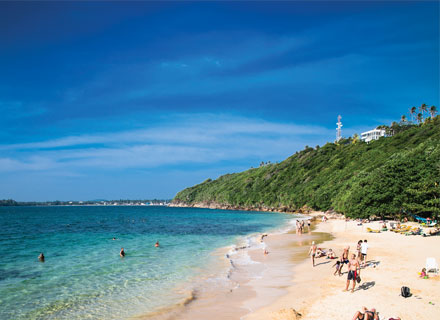
Grond’s video featured a cafe in Ahangama, a small town located 88 miles south of Colombo, the capital of Sri Lanka. Once a fishing town, it is now one of Sri Lanka’s most popular tourist destinations.
It is well-known for its shoreline lined with coconut palms and is marketed as a surf destination and a hotspot for digital nomads during the busiest months of December through April.
Restaurants, hotels, and cafes
Many of Sri Lanka’s cities and towns are changing as the island nation strives for a robust tourism sector after its worst economic crisis in 2022. The trendy cafes, restaurants, and yoga studios that most residents cannot afford are taking the place of small grocers and neighbourhood food stands. Instead, these establishments primarily serve foreign tourists who have more money. Additionally, foreigners are increasingly occupying local spaces, sometimes illegally, operating businesses and providing services that are nearly exclusively targeted at Western tourists. Finding local cuisine in these gentrified areas is difficult.
Foreigners and Sri Lankans working in the industry are increasingly hostile toward locals, who feel marginalised and alienated in their own country.
A local owner was seen in a recent viral video on X denying entry to a group of local tourists at a souvenir shop in Galle Fort, a popular tourist destination in southern Sri Lanka. This action is illegal, as businesses, restaurants, hotels, and public entertainment venues in Sri Lanka cannot deny entry based on race, religion, caste, or sex.
To prevent foreign visitors from noticing the discrimination locals endure, social researcher Amalini De Sayrah reported seeing “foreigners only” signs at lodging facilities, spas, and party flyers. Such signs are sometimes written exclusively in Sinhala. According to De Sayrah, when she and her friends spoke in Sinhala, the small-to-mid-budget eateries and bars turned them away.
“It forces locals to either restrict their travels or to go to fancy, expensive places that don’t explicitly say locals aren’t allowed, though from their design and price point, you can say they were not designed for locals. Although a fraction of locals may afford these places, for those on a tighter budget, it often means paying more to be in spaces where they don’t feel welcome,” De Sayrah added.
In January, photographer Tashiya de Mel observed that foreign visitors had their own parking lots, entrances, ticket booths, and restrooms when she and her parents visited the Lion’s Rock, an old rock fortress in Sigiriya that was named a UNESCO World Heritage Site. Local visitors had their own facilities, but the elderly and disabled found it challenging to reach the well-known site due to the distance between the parking lot and the entrance.
Later, on a busy public holiday, local tour guides told foreigners to skip the line while elderly Sri Lankans had to wait in the sun to climb the Lion’s Rock. One of her followers shared this experience when de Mel posted it on Instagram and asked if they had had a similar experience. Some responded with stories of paying for beach parties when foreign guests weren’t required to or of being turned away from restaurants.
Tourism in Sri Lanka only started to increase in 2009, following the end of the nearly 30-year-long civil war, despite the establishment of the Ceylon Tourism Board in 1966. Sri Lanka was marketed as a ‘paradise island’ despite allegations of war crimes by the state, drawing hundreds of thousands of tourists seeking beautiful tropical beaches, train trips to tea country, and historical sites. These attractions were affordably priced compared to many other travel destinations worldwide.
Nonetheless, separate restrooms for domestic and international passengers were maintained at train stations even back then. While the “foreigners only” restrooms were much cleaner, the locals’ restrooms were musty, with stained walls, cracked doors, wet floors, and overflowing bins.
The distinction between domestic and foreign visitors is now much more obvious as more and more visitors enter the nation. De Sayrah claimed that while young white backpackers, who typically spend less than locals, are more “welcome,” travellers of colour—even those who spend a lot of money—face prejudice and scrutiny. She said that if this keeps up, it might deter people of colour from visiting Sri Lanka.
Nabila Ismail, a Pakistani-American content creator, shared a video on Instagram earlier in January that showed how Sri Lanka’s tourism sector catered to white tourists.
According to the video, she was frequently the only person of colour in outdoor areas or wellness centres where white tourists were “surprised” to see someone of colour.
“I did not receive the same treatment as other travellers, especially in southern Sri Lanka. Apart from Ahangama, backpacker-friendly Unawatuna and surf hotspot Weligama in Sri Lanka’s south follow the same trends. Sometimes, people thought I was Sri Lankan. White tourists were greeted with smiles, while I had to flag down the staff several times for them to take my order. They did not greet me the same and never came to check on me like they did with other tables,” she said.
This belief that white foreign visitors should be treated better than residents and visitors of colour is the result of internalised racism and lingering colonial-era norms. White foreign visitors who can afford such wellness retreats are perceived as wealthier than the typical Sri Lankan, who earns in local currency.
“When I’m the only person of colour in a luxury hotel or a wellness space, it feels like I need to justify it or provide an explanation… about what I do for work, I must live abroad, I must not be Sri Lankan, but white tourists don’t have to explain themselves,” Ismail said.
“Our generosity is truly heartwarming, but the perception that locals are not deserving of that hospitality or that foreigners are more deserving of it is informed by things like the gamble that is the tourism economy. Foreign revenue is seen as essential to Sri Lanka’s economy, and when it comes to attracting it, anything goes,” De Sayrah said.
A significant contributor to Sri Lanka’s $84 billion economy is tourism. According to the Sri Lanka Tourism Development Authority, in 2018, tourism was the third-largest source of foreign exchange for the country, following remittances and the export of clothing.
Tourist arrivals hit a record high of over 2.33 million visitors. However, the industry did directly contribute just $4.3 billion, or 4.9% of the $88 billion national GDP that year. Just over two million tourists visited the nation in 2024.
However, successive administrations and industry leaders frequently promote Sri Lanka to the world and emphasise the number of visitors, portraying tourism as the island’s only hope.
The government started a global tourism marketing campaign in 2023 with the tagline “You’ll come back for more,” providing free visas to tourists from several nations, including China, India, and Russia. The tourism promotion bureau in Sri Lanka organised a $5 million campaign.
Athula Gnanapala, a professor of tourism management at Sabaragamuwa University of Sri Lanka’s Faculty of Management Studies, stated that although tourism generates revenue for the nation, local communities currently receive very little benefit from it.
According to Gnanapala, the most successful companies in the island nation are run by Colombo businesspeople, who typically employ locals. It doesn’t benefit the local community outside the capital if the hotel is owned by someone from Colombo and the employees are also from Colombo.
Menial, low-paying jobs are frequently held by locals who have little to no access to formal education and training in the hospitality industry.
“But if there is a proper mechanism to encourage, empower, and broaden their capacities, anyone—rich or poor—can be involved in tourism and benefit from it,” Gnanapala added.
Concerns have also been raised about the drive to draw in more tourists. The Sri Lankan government hopes to see three million visitors this year, and by 2028, it hopes to have five million.
According to Gnanapala, “I’m not sure if we really need to aim for that number.”
He believes that the strategy should concentrate on how many visitors the nation can handle annually, given the supply of hotels, services, and personnel, all without packing the attractions to capacity.
Sri Lanka’s limited resources make an unplanned and sudden increase in tourism potentially harmful. For example, the government’s ambitious plans do not include waste management and crowd control.
According to a University of Kelaniya study, hotels, guest houses, and restaurants in Unawatuna, a well-known southern tourist destination, discharge their waste into bodies of water without adequate drainage systems, contaminating both surface and groundwater.
Scholars have frequently mentioned the detrimental impacts of tourism, such as foreign visitors stealing jobs from locals and working illegally. With varying degrees of success, governments worldwide are enacting laws and policies to combat illegal employment.
For example, when Sri Lanka saw a spike in Russian and Ukrainian tourists following the 2022 conflict, there were rumours that individuals from both nations were allegedly bribing immigration officials to get resident visas and operating unlicensed, unregistered hotels and restaurants that avoided paying taxes. If not, a long-term tourist visa is only good for six months.
Working as a tourist is prohibited in Sri Lanka, although many foreign visitors work as therapists, DJs, bartenders, surfers, and photographers. Many Russian visitors frequently spend their money in Russian-owned establishments, which then send the money home.
The public was outraged by a Russian-run cafe’s “whites-only” party in 2024. Russians and Ukrainians were ordered to leave the country or apply for new visas by the Department of Immigration and Emigration, but then-President Ranil Wickremesinghe resisted the order.
In 2024, the number of Israeli tourists visiting Sri Lanka doubled to 20,000, with many of them being off-duty soldiers seeking refuge from the ongoing conflict in Gaza.
Arugam Bay, a small surf town in eastern Sri Lanka with 4,000 residents, mostly Muslims, is now home to about 1,000 Israelis. Surfing etiquette disputes between local surfers and visitors have been reported.
According to Gnanapala, while foreign visitors are establishing businesses in the country, locals are searching for employment overseas. Brain drain is still a major problem in the travel and tourism sector.
Every year, thousands of locals, including highly qualified professionals with industry training, depart Sri Lanka because living in these tourist-heavy areas is difficult for them due to the low pay and unfavourable working conditions.
According to the Sri Lanka Bureau of Foreign Employment, over 311,000 Sri Lankans looked for work overseas in 2024.
Additionally, local tourists are being priced out more and more. Locals can no longer afford the limited hotel rooms available because high tourist demand drives up prices, Gnanapala noted.
Real estate costs gradually rise in tandem with the cost of goods and services, pushing residents from their homes. This has also discouraged local tourists from visiting the southern part of the country.
In his explanation of the future, Gnanapala stressed the value of integrating locals in the growth of tourism and offering strategies that would directly benefit them while lessening the negative effects on the environment, culture, and natural resources.
“Their primary concern is to make profits,” he said, referring to outsiders, including foreigners and Sri Lankans from other regions, who open hotels. However, for the locals, it is their birthplace, their home, and their land.
“The local economy can benefit greatly from tourism, but it can also suffer negative effects,” Ismail stated.
The island’s identity is being eroded, in her opinion, by the growing number of foreign visitors.
She claimed that qualities like health, Ayurveda, and a relationship with nature are “marketed as foreign concepts…making Sri Lankans feel like outsiders in their own country.”
Instead of displacing local culture, tourism should enhance it.
“At the moment, I think [tourism] is taking away a lot more than it’s giving,” photographer de Mel continued.
She stated that Sri Lanka must “think about the type of tourists we attract, the type of tourism we want,” and strategically position itself.
Activist Riz Razak recently expressed similar worries on Instagram, highlighting the necessity of improved planning, infrastructure, and regulations to stop the increase in undocumented foreign labour.
“What do we gain by letting outsiders in and losing everything natural, historical, and cultural?” he asked.
In a critical move towards securing the next payout of a $2.09 billion programme with the International Monetary Fund (IMF), Sri Lanka’s power regulator has announced a 15% increase in household power tariffs.
According to KPL Chandralal, the chairman of the Public Utilities Commission of Sri Lanka, businesses in the tourism sector, which is a major source of foreign exchange earnings for the island nation, will see a 202% increase in power prices, while industries will see a 205% hike. The new tariffs will take effect at midnight.
In January, President Anura Kumara Dissanayake’s new government in Sri Lanka slashed power prices by 20%, which caused the state-run Ceylon Electricity Board, which controls the nation’s power monopoly, to face cost recovery issues.
A crucial first step Sri Lanka took to gain board-level approval for a fifth tranche of $344 million from the IMF was to raise power rates. Following a bailout from the international lender in March 2023, Sri Lanka’s economy recovered more quickly than anticipated after collapsing under a severe foreign exchange crisis in 2022 and expanded by 5% in 2024.