
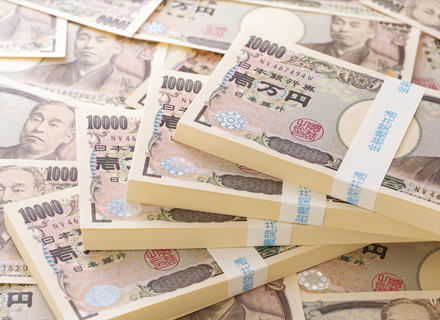

In the last week of February 2025, the Japanese Yen (JPY) witnessed a slight retreat after touching its highest level since December 2024 against its American counterpart, the dollar. Yields on Japanese government bonds (JGB) retreated further in the wake of comments by Bank of Japan (BoJ) Governor Kazuo Ueda, showing readiness to ramp up government bond buying if long-term interest rates rise sharply.
Now, talking about the yen, the Japanese currency has lost about a third of its value since the end of 2019, driven mainly by the wide gap in interest rates between Japan and the United States. There are reports about a weak yen cutting into Japanese travellers’ ability to spend abroad, as rising overseas prices and lower interest in international travel among younger generations appeared to be factors behind declining passport ownership in the Asian country, preventing a full rebound from pandemic-era lows.
Talking about the yen, the Japanese currency is the world’s third most traded one, accounting for 13% of global foreign exchange transactions in 2022.
“From March to August 2024, the yen experienced a rollercoaster of fluctuations, reflecting the high sensitivity of currency markets to both domestic policy changes and global geopolitical events. Key drivers included Japan’s shift away from its negative interest rate policy, interest rate hikes, and uncertainties surrounding a potential US recession. These fluctuations represent a new normal for the yen and explore its potential implications for the economic and geopolitical landscape in the Indo-Pacific region,” stated Dr Seohee Park, a postdoctoral research fellow at the Department of International Politics and Economy, Graduate School of International Cultural Studies, Tohoku University.
A turbulent 2024
Yen’s recent movements have been heavily influenced by geopolitical events like the Russia-Ukraine war and tensions in the Asia-Pacific region. The core of the yen’s recent volatility is the Bank of Japan’s (BOJ) monetary policy. In March 2024, the USD/JPY exchange rate ranged from a low of 146.92 to a high of 151.61, reflecting the yen’s depreciation.
Such a weak yen prompted the BOJ, under the leadership of Kazuo Ueda, to intervene in April to stabilise the currency. The central bank ended its negative interest rate policy that had lasted for eight years and increased interest rates for the first time in 17 years.
Despite these policy changes, the yen continued to weaken, reaching its lowest point on 9th July (161.60 yen to $1) since June 1986. Thus, the BOJ underwent another intervention on 11th July, spending up to 3.57 trillion yen ($30.11 billion) in the foreign exchange market to lift the yen from its 38-year low.
“The exchange rate peaked at around 161.90 in July, just before the yen appreciated significantly by over 12% following the central bank’s rate hike.
Throughout July to August, the yen moved from 161.99 on 3rd July to 141.66 by 5th August. This appreciation was partly due to the BOJ’s decision to raise interest rates to 0.25% and reduce bond purchases, which strengthened the yen against the dollar. However, the yen’s rapid appreciation on 5th August triggered a massive sell-off in the Japanese stock market, with the Nikkei Stock Average plummeting 4,451.25 points, or 12%, its worst-ever daily decline,” said Dr Park.
The above-mentioned sell-off was driven by concerns over a potential US recession and the yen’s strength, which could negatively impact Japanese exporters. Surprisingly, the market rebounded sharply, surging 3,217.46 points, or 10.2%. The rebound was attributed to strong US service sector data for July, which eased concerns about a recession and led to a correction in the dollar-yen rate.
In August, the yen’s value again fluctuated between 143.89 and 149.34, with an average rate of 146.63. This volatility occurred due to the interest rate disparity between Washington and Tokyo, as well as market reactions to a potential US economic downturn.
While the BOJ has been committed to yield curve control and ensuring ultra-low interest rates, these policy stances have played a central role in guiding the yen’s value. However, these accommodative approaches have also fuelled concerns about inflationary pressure, which has permeated Japan’s domestic economy and is evident in the recent surge in consumer prices, driven in part by rising food and energy costs.
While throughout 2024, the BOJ maintained its position that inflation was largely transitory, consumer confidence eroded too, as the ratio fell 0.27% from 2023, leading to a wage-price spiral. The BOJ faced a difficult balancing act: stimulating economic growth while keeping inflation under control.
Yen’s depreciation significantly impacted Japan’s export-oriented industries, particularly in the technology and automotive sectors. In May 2024, exports increased 11.9% compared with the same period in 2023, the highest growth rate since November 2022. The trend was also evident in the mid-August Nikkei rally, where major exporters such as Tokyo Electron, Sony, and Toyota led the gains.
The Nikkei Stock Average surged 3.5% on 13th August, boosted by a weaker yen after the Bon holiday. Still, a boost in exports was checkmated by shrinking sales figures, as global demand remained relatively soft.
“While the weaker yen has boosted Japan’s export-oriented industries, it is crucial to recognise the double-edged nature of this currency depreciation. Many Japanese small and medium-sized enterprises, especially in manufacturing with high dependence on imported energy and raw materials, are facing significant challenges due to increased import costs. This internal economic strain highlights the mixed effects of the currency’s fluctuations. The benefits of a weak yen are not well distributed across the Japanese economy and may come at a considerable cost to certain sectors,” Dr Park noted.
Listed companies’ financial statements for the fiscal year 2023–24 also showed them registering record-high profits due to the weak yen. However, the depreciation also led to a rise in prices for imported goods, amid tepid personal consumption.
Teikoku Databank conducted a survey looking at the impact of the weak yen on 1,046 companies from May 10 through 15, revealing that 16.0% had seen a “positive effect” on sales, 35.0% had experienced a “negative effect,” and 49.0% reported “no change.” In contrast, for profits, there had been a “positive effect” for 7.7%, a “negative effect” for 63.9%, and “no change” for 28.5%, meaning profits at two out of three companies were negatively impacted. Further, 31.7% saw negative effects on both sales and profits.
Even though it was impossible to avoid increases in raw material prices due to the weak yen, it became difficult for each company to reflect those increases in their products and services. Now the question is: why was the currency even falling?
The currency has been losing more than a third of its value since the beginning of 2021. Investors were selling the currency, and exporters were not feeling the need to convert foreign proceeds into yen, further decreasing the currency’s demand.
While the BOJ’s preference for keeping interest rates extraordinarily low to encourage more inflation in its economy (as well as to boost bank lending and spur demand) has been an open secret, in February 2024, widespread labour shortages and a weakening yen resulted in Japan being overtaken by Germany as the world’s third-biggest economy, as the Asian country slipped into recession.
The BOJ had to end its policy of keeping its benchmark interest rate below zero, lifting its short-term policy rate from -0.1% to between zero and 0.1%.
After that decision, markets were focused on the pace of further rate rises. Then the BOJ announced in April that it would hold interest rates steady, which resulted in another round of yen sell-offs, putting more pressure on the currency, as it went down to 160 against the dollar for the first time since 1990.
Yen’s warrior-like legacy
“The currency was born back in 1872, when Japan was brimming with optimism after the Meiji Restoration, abandoning centuries of isolation and encouraging modernisation. It was a currency that symbolised the identity of a newly self-confident nation embracing the wider world. Originally bound to the gold standard, it underwent major changes after 1945. With the world in chaos, the 1949 Bretton Woods system provided a lifeline for shattered economies desperate for stability. Under this new regime, the yen was fixed at 360 yen to the dollar, offering Japan security even if it constrained flexibility. In retrospect, this balancing act reflected the nation’s resilience,” Dr Park said.
By the early 1970s, “Bretton Woods” collapsed as the United States abandoned the gold standard, and Japan let the yen float freely in 1973. The resulting combination of uncertainty and potential generated substantial movements in its value. While the 1985 Plaza Accord intended to weaken the dollar, this triggered a chain reaction that severely affected the yen.
Trade tensions with Washington saw the currency’s value tumble to a low of 79.75 against the dollar by 1995. In response, Japan’s Ministry of Finance soon began directly buying and selling yen to stabilise its value and protect exporters from economic downturns.
Even though the yen going down to 160 against the dollar for the first time since 1990 should have created a panic-like situation in Japan, the currency, for a good part of its existence, has been operating amid headwinds like global financial crises and shifts in monetary policy.
As the Japanese proverb ‘fall seven times, stand up eight’ implies, responding with resilience is what counts for a currency.
“Over the years, the yen has exemplified this resilience, especially in uncertain times. From the fallout of the 2008 financial crisis, when it surged to around 90.87 against the dollar as investors ran for safety, to its role as a haven during the COVID-19 pandemic, the yen has proved itself. However, its apparent stability remains vulnerable to external pressures, particularly when other nations grapple with inflation: the 2022 uplift in US interest rates battered the yen and widened the yield gap between Japanese and US government bonds. This growing divergence in monetary policies has made the yen more volatile and more subject to investor sentiment,” noted Dr Park.
In September 2024, inflation in Tokyo met the BOJ’s 2% target, signalling a return to growth and the promise of further interest rate hikes. However, the yen was trading at about 147.83 to the dollar, the weakest rate in decades, as the country was dealing with geopolitical tensions, especially in the Asia-Pacific region, supply chain problems, and the decision to keep interest rates near zero, all contributing factors.
In 2024, Dr Park said, “Speculation about changes in Japan’s monetary policy suggests that the yen might bounce back, but with inflation creeping upwards and mounting global uncertainty, the situation is more precarious for consumers and policymakers alike, leaving the currency exposed. The defining moment came in July 2024 when the BoJ raised its short-term policy range from 0% to a tentative 0.1%. While a stronger yen may temper inflation, it may also dampen Japan’s export-driven economy.”
According to the “Economic Complexity Index,” Japan has remained the world’s most complex economy, due to its sophisticated infrastructure, diverse export base, advanced industrial sector, and leadership in technologies like electronics, robotics, and automotive manufacturing. Nevertheless, Japan’s low interest rates, domestic inflation challenges, and total reliance on energy imports in a highly volatile global energy market all continue to influence the yen’s value.
The widening gap between Japanese rates and those of other major economies prompted the yen’s slide to a 24-year low: 132 against the dollar. JP Morgan, while analysing the massive USD/JPY differential, stated that the yen is influenced by market expectations of US Federal Reserve policy rather than by the actions of the BOJ.
“While BoJ interventions could create short-term risks, they are unlikely to affect the main factors driving the yen’s depreciation. Despite the bank’s recent departure from negative interest rates, the yen remains tied to the US economy, as shown by a strong rally after a US CPI report in March 2024,” Dr Park remarked.
What awaits the Yen in 2025?
In January 2025, the BOJ increased the key benchmark interest rates by a 25-basis-point rise to 0.5%. While the decision indicates that the Japanese economy is developing as expected after the high inflation reading, this rate hike fuelled the yen to trade higher against the dollar.
On February 24, the yen rose in Asian trade, on track for the fourth straight profit against the dollar, hitting a 12-week high on strong investment demand. The central bank’s Vice-Governor Riyuzu Himuno said the path of monetary policies will depend on data, especially wage growth in both 2024 and 2025.
As per the recent data, Japan’s GDP growth accelerated in Q4, in turn raising pressures on BOJ policymakers. The odds of a BOJ March 2025 interest rate hike rose by 0.25% to 80%. The currency, meanwhile, has strengthened to around a two-month high against the dollar in the 149 zone.
Investors, in February 2025, snapped up the yen, pushing it to 149.95, as stronger-than-expected GDP data fuelled speculation of further BOJ tightening, lifting Japan’s benchmark 10-year government bond yield to a fresh 15-year high.
In the opinion of Sayuri Shirai, a former member of the central bank’s board, the BOJ could increase interest rates in March if US President Donald Trump implements his proposed tariffs, intensifying domestic inflation.
“At the start of February, new tariffs on imports from Canada and Mexico were delayed for a month. However, a 10% tariff on all Chinese imports has been implemented. These tariffs could escalate global inflation,” Shirai noted.
Shirai indicated that the BOJ is likely monitoring the tariff situation closely. March could be an appropriate time to increase rates, given the current high domestic inflation. Despite the broader Japanese economy’s weakness, Shirai told investing.com that the central bank must continue to raise interest rates to counter the weak yen and to combat rising costs of food and energy.
Shirai concluded by stating that Japan is experiencing cost-push inflation largely due to the weak yen. If this weak yen is exacerbating inflation and causing significant issues for Japan’s economy, the BOJ should acknowledge this and continue to raise rates.