
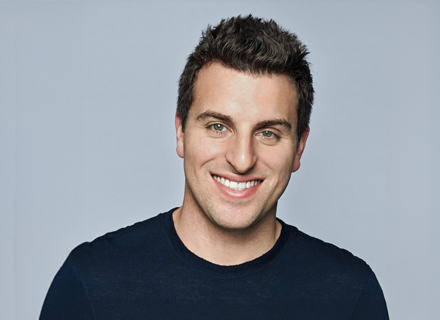

In late 2023, following a dramatic tech-world episode involving OpenAI’s leadership, Airbnb CEO Brian Chesky found himself at a personal and professional crossroads.
The energy he had poured into helping his friend Sam Altman reclaim the CEO seat at OpenAI left him energised but restless. Alone in his San Francisco home over Thanksgiving weekend, he began typing furiously, not about OpenAI but about Airbnb.
For years, Airbnb had been synonymous with short-term vacation rentals. It disrupted hotels, built a global community of hosts and guests, and weathered crises from regulatory hurdles to the COVID-19 pandemic. It was profitable, dominant, and for the first time in Chesky’s entrepreneurial life, dangerously close to stagnation.
Chesky’s breakthrough was a realisation. Airbnb didn’t have to be just a travel company. Its strengths in trust-building between strangers, design thinking, and crisis response were transferable. Why couldn’t it become the infrastructure for booking all real-world services, just as it once did for homes?
In a burst of creative output, Chesky wrote a 10,000-word document reimagining Airbnb as a comprehensive service platform. He envisioned users opening the app not just to book a place to stay, but to hire a dog walker, book a massage, find a personal chef, or connect with a local photographer.
Like Amazon’s evolution from bookstore to everything store, Chesky believed Airbnb could evolve into a life concierge, where anything physical, experiential, or service-based could be booked with trust and ease. This wasn’t a pivot. It was a platform expansion. The goal was to transform Airbnb into the first app people think of, not just for travel, but for everyday services.
From one-off experiences to recurring needs, Chesky wants Airbnb to be the destination where your digital reputation meets your real-world needs. The company would leverage its massive user base and robust vetting infrastructure to match people with not only homes but also hairstylists, personal trainers, tutors, and more.
The 200 million dollar reinvention now underway is Airbnb’s largest strategic bet since its founding. For Chesky, it’s more than just growth. It’s a reclamation of creativity, a doubling down on mission, and a fight against the dreaded word that haunts mature companies: stagnation.
In this reimagining, Airbnb isn’t settling into middle age. It’s breaking out of its pigeonhole and trying to redefine what it means to belong anywhere, not just for a night but in every facet of modern life.
Channelling Apple to build a super-app
Brian Chesky has always believed that great companies are built on great design, not just in aesthetics, but in philosophy as well. Airbnb’s reinvention isn’t simply a business move; it’s a design-led revolution. At the heart of this evolution is Chesky’s lifelong admiration for Apple and its late founder, Steve Jobs.
Design has always been central to Airbnb’s DNA. Chesky and co-founder Joe Gebbia are alumni of the Rhode Island School of Design. But what Airbnb is attempting now is a full-scale transformation into a super-app for services and experiences, which requires a design discipline on par with the world’s most revered product companies. This is where Jony Ive comes in.
The legendary former Apple designer and Chesky have been collaborating closely, bringing Ive’s team at LoveFrom into the fold. While the specifics of their contributions remain mostly under wraps, their fingerprints are everywhere in Airbnb’s new visual language. It is minimalist, emotionally warm, and obsessively refined.
The app’s new interface revolves around three core icons: a house for traditional stays, a bell for services, and a hot-air balloon for experiences. Each icon was crafted with symbolic intent. The hot-air balloon, for example, was chosen after extensive internal debate. It needed to evoke exploration, joy, and a touch of nostalgia. Even the flame size beneath the balloon basket was scrutinised. That level of microdetail isn’t an indulgence; it is the strategy.
Chesky is deeply involved in these choices. In daily product reviews, he doesn’t just give broad direction; he adjusts shadows, rewords labels, and debates icon proportions. He refers to himself not only as a CEO, but also as a product designer who never lets go of the pencil. This hands-on approach mirrors Jobs’ intense focus on the tiniest elements of Apple’s devices and interfaces.
This design-first philosophy extends beyond visuals. Airbnb is rethinking flow, friction, and feel. Services need to be instantly discoverable yet not overwhelming. Profiles must inspire trust without feeling transactional. Experiences should feel curated, not commodified. Every interaction is designed to express care.
For Chesky, this isn’t just about making something functional. It’s about making something memorable, something that stirs emotion. Like Apple, Airbnb is chasing the kind of design that becomes invisible in its elegance and essential in its utility.
The result is a platform that feels less like an app and more like a beautifully organised world, where belonging doesn’t just mean staying the night but navigating life with beauty, ease, and trust. Airbnb isn’t simply copying Apple. It’s aiming to join the same cultural and emotional tier.
Reinventing identity in the digital age
In a world increasingly dominated by anonymous online interactions, trust has become the ultimate currency, and Airbnb knows it. From its earliest days, the platform’s success hinged on strangers trusting strangers. That leap of faith involved sleeping in a stranger’s home, which only worked because of reviews, identity checks, and responsive support. Now that Airbnb aims to become a hub for booking real-world services, trust must be redefined and fortified.
At the centre of this transformation is identity. Brian Chesky doesn’t just want users to create profiles. He wants those profiles to become the gold standard of online authenticity. In his vision, an Airbnb profile could one day function as a digital credential, almost like a passport, that users could carry across platforms, services, and borders.
That may sound like a fantasy in today’s fragmented digital landscape, but Chesky is serious. He’s betting that a meticulously verified Airbnb identity will be more trustworthy than anything online.
This ambition requires going far beyond a photo and a phone number. Airbnb is now vetting service providers with rigorous background checks, license verification, resume screenings, and professional photography. The company is investing in biometric security features, holographic overlays, and reactive inks, similar to those used to prevent counterfeiting on the government-issued IDs. It’s identity proofing on a whole new level, because it’s flashy and necessary.
Why the overkill? Because the stakes are higher. Booking a vacation rental is one thing. Inviting someone into your home for a haircut, massage, or tutoring session requires deeper psychological assurance. Airbnb is building a framework where trust isn’t implied; it is engineered.
There’s a broader ambition at play. If Airbnb succeeds, it could pioneer a new form of decentralised, user-owned identity. In a future where people distrust large tech companies and governments are slow to adapt, a neutral, globally recognised digital credential could transform the landscape. Chesky knows this is a stretch goal and one worth reaching for.
The challenge? Airbnb is not alone. Facebook tried and failed to become a universal identity layer. Apple, Google, and Microsoft all have their own ambitions in this space. But Airbnb has one key advantage. It already has a strong track record of managing high-stakes interactions between strangers. It knows how to handle disputes, mediate claims, and prevent fraud.
Ultimately, trust is not just a feature for Airbnb. It is the product. And as the company expands its scope, this product will need to be rebuilt step by step, brick by digital brick, to meet a new and even more demanding standard. In Chesky’s mind, belonging isn’t possible without trust. And now, trust must be designed as deliberately as any interface or business model Airbnb has ever built.
Lessons from a flop turned flagship
Airbnb’s new wave of ambition includes something old with a fresh coat of strategy, namely, Experiences. Launched in 2016 with high hopes, Airbnb Experiences promised to let travellers do more than just stay in a location because it invited them to live like locals, guided by hosts offering activities ranging from dumpling-making to architectural tours. But the programme flopped. Interest waned, inventory stagnated, and the excitement faded. Fast forward to 2025, Brian Chesky is betting big on the reinvention of that same concept.
Why bring back something that failed? According to Chesky, the original Experiences launch wasn’t flawed in vision but in timing and execution. The infrastructure wasn’t ready. The user base wasn’t large or engaged enough. Airbnb, still focused on scaling its core rental business, didn’t have the bandwidth to support it. The product quietly lingered in the background, underdeveloped and under-promoted.
This time, things are different. Airbnb has matured, and the ecosystem is ready. With a massive, engaged global user base and a richer tech backbone, Experiences is returning not as a side project, but as a core pillar of Airbnb’s identity. The numbers speak volumes, with more than 22,000 Experiences available across 650 cities, and a growing roster of high-end, curated offerings labelled “originals.” These are hosted by top-tier professionals such as star chefs, elite athletes, and even celebrities like Conan O’Brien.
Chesky has learnt from his past mistakes. Rather than a big bang rollout followed by silence, the relaunch features a steady cadence of promotional drops and exclusive events. The goal is to create a rhythm that keeps users curious and engaged, more like a content platform than a travel add-on. Airbnb encourages users to plan their trips and discover memorable activities for the upcoming weekend, all within the app.
Experiences now benefit from deeper integration into the Airbnb app itself. The design team has made them easier to find, more visually compelling to browse, and quicker to book. The hot-air balloon icon representing Experiences on the app’s home screen is not just decorative but serves as a gateway to a new kind of engagement that is spontaneous, local, and personal. Of course, the risks remain. Experiences must scale without losing their artisanal, one-of-a-kind charm.
Airbnb has to ensure safety, quality, and consistency across vastly different geographies and cultures. There is also the issue of regulation, since offering services like culinary classes or wellness treatments can bring local licensing complications.
If Airbnb can overcome those hurdles, Experiences could be more than a profitable side business. They could become the emotional core of the platform, the feature that connects users to real people, real stories, and real memories.
As Chesky put it, the original Experiences was Airbnb’s “Newton,” meaning it was a too-early precursor to something that could eventually be game-changing.
Now, rebooted and reimagined, Experiences has the potential to become Airbnb’s iPhone moment, the product that changes everything.
Chesky’s return to the product trenches
There is a moment in every successful founder’s journey where they must choose between staying involved in the weeds or stepping back to let professional managers take over. For Brian Chesky, that moment came during the COVID-19 pandemic. When Airbnb lost 80% of its business in a matter of weeks, survival required more than delegation. It required leadership grounded in obsession. And Chesky stepped in. That decision marked the beginning of what he now calls “Founder Mode,” a state of hands-on, deeply detailed, and often intense leadership that goes far beyond executive oversight. This is not micromanaging for the sake of control. It is about product-level immersion.
For Chesky, this meant showing up to every design review, obsessing over copywriting, layout, button shadows, iconography, and more. Every corner of the Airbnb experience had to be re-evaluated. If Airbnb was going to reinvent itself, the founder had to be back in the trenches.
Not everyone welcomed the shift at first. Some employees saw the reengagement as overbearing. The culture had drifted toward consensus and process, away from urgency and instinct. As Chesky became unapologetically meticulous, something changed. Clarity returned. Momentum returned. The company stopped trying to please committees and started building again.
Brian Chesky’s approach echoed the founder-driven ethos popularised by Paul Graham of Y Combinator, who later wrote an essay inspired by Airbnb titled “Founder Mode.” Graham argued that only founders truly know what a company should become. Listening too much to external managers, he warned, can dilute the vision. Chesky became the poster child for a new wave of founder-led craftsmanship.
His team now expects and respects the intensity. Product reviews with Chesky can swing from philosophical to painstakingly granular. Chesky might rewrite a headline mid-meeting, question the spacing on a profile card, or pull up screenshots of rival apps on the spot. While that can make team presentations nerve-wracking, the result is cohesion. The app, the brand, the company—it all begins to feel like it came from a single mind.
This kind of leadership is not scalable forever. Eventually, Airbnb will need other leaders who can operate with a similar vision and intensity. But for now, Founder Mode is fuelling a renaissance at the company. Chesky is not just overseeing a transformation. He is architecting it one pixel at a time and one principle at a time.
It is a vivid reminder that great products often come not from efficient processes, but from unrelenting obsession. In Chesky’s case, his return to the product trenches may be the thing that turns Airbnb’s next chapter from just another evolution into something iconic.
Can Airbnb compete on so many fronts?
Brian Chesky’s vision for Airbnb is sweeping. He wants to turn a travel company into a services super-app, a trust platform, a credentialing authority, and a cultural hub. It is a bold move worthy of admiration. But it also raises a difficult question. Can Airbnb compete on all these fronts without losing its focus?
The market Airbnb is entering is not just enormous. It is fragmented, entrenched, and fiercely competitive. For every category Chesky wants to touch, there is already a dominant player. Instacart and DoorDash dominate local services. Yelp handles discovery. OpenTable manages dining. Eventbrite curates experiences. Craigslist covers almost everything else. Then there are the tech giants such as Apple, Google, Meta, and Microsoft, each with greater reach, deeper pockets, and in many cases, a head start.
Airbnb’s traditional moat has been its trust infrastructure in short-term rentals: user reviews, verified identities, and effective dispute resolution. But applying that same model to high-touch services such as massages, personal training, or hairstyling presents new challenges. There is no room for error. One bad experience, such as a bad haircut, a missed chef appointment, or an uncomfortable massage, can damage more than one night. It can erode trust across the entire platform.
Each new vertical brings different regulations, user expectations, and logistical issues. Booking a rental is transactional, while booking a service is relational and full of unpredictable variables.
Is Airbnb prepared to resolve disputes between a nail artist and a dissatisfied customer? What happens if a service provider forgets an appointment or performs poorly? These scenarios are not theoretical. They are inevitable at scale.
Internally, the challenge is equally steep. Expanding across many categories could stretch Airbnb’s culture, product roadmap, and engineering bandwidth too thin. The company is no longer refining one product. It is trying to build a platform that serves hundreds of micro-industries, each with unique behaviours and expectations. Few companies manage such complexity while maintaining a coherent user experience.
Chesky’s bet on identity is similarly bold. The idea of Airbnb becoming a universal digital credential is almost a moonshot. Governments are slow to recognise private-sector IDs. Facebook tried and failed. Apple, Google, and others have more institutional reach. While Airbnb has trust credibility, convincing the world to treat a vacation rental profile as a legitimate form of ID is a steep climb.
There is also the risk of user confusion. Including more features, icons, and flows could bloat the platform. Airbnb’s simplicity has always been its secret weapon. Since it is an app you open a few times a year, it still feels intuitive. Turning it into a daily-use super-app may overwhelm casual users who want to book a place to stay.
Chesky is not naive about these risks. He knows that reinvention is a gamble. But he believes the greater risk is standing still. A profitable yet stagnant product is still vulnerable to disruption. In that sense, expansion is not just ambition but also self-preservation.
Success will hinge on execution. If Airbnb can integrate new services while maintaining its design clarity, scale without losing trust, and build a cohesive experience that feels useful rather than crowded, it could redefine how people interact with the real world through technology. If it cannot, it may become a cautionary tale about a company that tried to do everything and ended up excelling at nothing.
Brian Chesky’s gamble is now in motion. The Airbnb CEO is betting that the future belongs to platforms that do not just fulfil one need but anticipate all of them. In his mind, to truly belong anywhere, you should be able to do anything.