
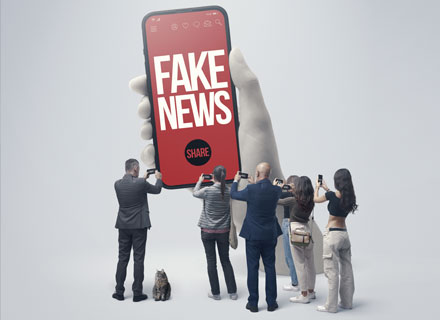

Misinformation is no longer a fringe concern as it has become a fast-moving, reputation-wrecking force. As false narratives go viral, organisations must act swiftly to detect, counter, and contain the damage.
Not long ago, companies barely considered “misinformation campaigns” a serious threat. The odds of a viral falsehood causing lasting damage seemed near zero. That complacency is now gone. Today, a single lie gaining traction online can indeed send a company’s stock plummeting overnight.
All it takes is a critical mass of people believing a false claim. Say that a product is unsafe, made unethically, shoddy in quality, or linked to an extremist cause, and a customer boycott can erupt, wreaking havoc on the brand.
The World Economic Forum’s latest Global Risks Report emphasises the seriousness of this threat. It flags government-led misinformation and disinformation as a top short-term risk that can sow instability and erode trust in authority. Just as worrying, the report warns, is the potential impact on business.
Entire industries could see growth and sales stifled by waves of misleading narratives. This is especially true for sectors like biotechnology, where self-styled “biohackers” and other unqualified influencers tout unproven health remedies while disparaging effective, regulated treatments.
There’s also a geopolitical dimension. Some governments are now aggressively spreading falsehoods about products from rival countries. By poisoning public perception of a competitor’s goods, such state-sponsored lies can spark consumer boycotts. It’s a dangerous escalation amid today’s trade wars. The emergence of artificial intelligence could exacerbate the situation.
Many AI-driven social media algorithms are programmed to maximise engagement by elevating trending posts and unintentionally turbocharging sensational falsehoods over accurate news. In other words, the very platforms companies rely on for marketing can become the channels that amplify lies about them.
Companies also have limited legal recourse when misinformation strikes. There is often no simple way to stop those who sow lies online, and court remedies are notoriously difficult. In the United States, for example, internet platforms enjoy broad immunity from liability for user-posted content under Section 230 of the Communications Decency Act.
That law also shields websites that make good-faith efforts to moderate harmful content. Meanwhile, suing the originator of a damaging falsehood for defamation is usually a long shot and prohibitively expensive. It’s a gamble few organisations can afford.
When falsehoods become weapons
Not all misinformation is accidental or spread by misinformed individuals. In some cases, it’s a deliberate act of sabotage against a company.
During an interaction with World Finance, Ant Moore, a senior managing director in strategic communications at consultancy FTI Consulting, said, “At its worst, deliberate deception has the potential to destabilise or create severe financial and reputational damage.”
Moore explains that while everyday misinformation might start with someone innocently sharing a doctored photo or a counterfeit audio clip, thinking it’s real, true disinformation involves conscious intent.
It’s the difference between a rumour gone wrong and a coordinated lie launched specifically to hurt a target. In all cases, Moore notes, society’s ability to discern fake content hasn’t caught up to the sophistication of today’s forgeries.
There are many ways in which malicious misinformation can threaten a company’s well-being. For example, consumer boycotts and lost sales are extremely detrimental. False claims about a company’s products or practices can spark outrage and mass boycotts, causing an immediate hit to revenue.
There is the erosion of brand trust to worry about. Once a damaging narrative takes hold, public perception can sour quickly. Customers may lose faith in the brand, even if the story is later debunked, leading to long-term reputation harm.
Sometimes investors panic, and shareholders might dump the stock if they believe the negative buzz, driving the share price down and alarming the market. Also, workforce morale issues could disengage employees, and they might even quit if bombarded with false stories painting their employer as unethical. The company’s internal culture and productivity may suffer as a consequence.
Finally, baseless but high-profile allegations can trigger investigations or demands for answers from regulators or politicians, forcing the company to spend time and resources addressing a non-issue.
Real-world incidents illustrate how quickly a lie can erupt into a corporate crisis. In 2016, athletic brand New Balance faced a social media firestorm over false claims that it was aligned with far-right politics. In 2022, pharmaceutical giant Eli Lilly watched its stock price tumble by over 4% in a single day after a fake Twitter account impersonating the company announced that insulin would be given away for free (given insulin’s high cost to patients at the time).
And in 2023, Bud Light, America’s top-selling beer, saw sales plunge roughly 25% after a social media frenzy turned a promotional tie-in with a transgender influencer into a full-blown conservative boycott. The beer’s parent company blamed misinformation online for stoking the backlash. These cases highlight how falsehoods can lead to significant financial harm for businesses, whether spread intentionally or unintentionally.
Exploitable info landscape
According to communications experts, the only surprise is that more companies haven’t been blindsided sooner. Businesses today operate in an information environment that Chris Clarke, co-founder of agency Fire on the Hill, describes as “increasingly complex and globally connected.”
New forms of digital media emerge constantly, and information now moves across the world in an instant. Controlling its flow is next to impossible.
“In the current environment, which is chaotic, fragmented and lacking in trust, the ground is fertile for misinformation to go viral,” Clarke said.
Bad actors are quick to exploit this chaos. Foreign adversaries, ideological agitators, or even unscrupulous competitors or others might weaponise false stories to hurt a business. Companies must assume they will be targeted eventually and plan accordingly, making the fight against misinformation a top corporate priority rather than an afterthought.
Early detection and response
When false stories can be fabricated with a few clicks and broadcast worldwide within minutes, speed is of the essence. Companies must learn to spot and counter malicious narratives in real time before they spiral out of control. The challenge, however, is knowing where to look. Rebecca Jones, associate director at business intelligence firm Sibylline, points out that many communications and PR teams still focus on tracking the major social media platforms like X (formerly Twitter), Instagram, or TikTok for mentions of their brand.
“However, that is not where these disinformation campaigns begin, and arguably, by the time disinformation hits these sites, the issue has already gone viral and you are in crisis,” Jones explains.
In other words, by the time a lie about your company is trending on Twitter or being shared widely on Facebook, it’s probably too late to contain it.
According to Jones, harmful rumours more often germinate in the internet’s shadows on alternative social sites and fringe forums where sensational claims find a receptive audience. A conspiracy theory or fabricated story might simmer in those corners, quietly gathering momentum over time, before jumping to mainstream platforms and exploding into public view. For companies, keeping an eye on these lesser-known channels can be a game-changer.
If you can catch wind of a false narrative early, you might not be able to stop it entirely, but you can at least prepare.
“Even if it can’t be stopped, hopefully, such an early warning mechanism enables teams to have a plan of action in place for when it does hit the mainstream. As your executives are prepped, the press team is ready to respond, and perhaps you have even taken steps to pre-bunk the story,” Jones noted.
In fact, some businesses are now practising “pre-bunking”, which is pre-emptively debunking a looming false claim by releasing correct information or context before the lie goes viral. Another crucial defensive strategy is to proactively control the narrative about your own company.
“Facts are more impressive than fiction,” says Chris Walker, managing director of consultancy “Be The Best Communications.”
He advises organisations to compile clear evidence that disproves the false claim and to showcase the company’s genuine commitment to doing the right thing.
By quickly sharing factual proof, a company can undermine a rumour’s credibility and reassure the public. Walker also suggests directly challenging the source of the fake news and demanding that they show proof for their sensational claim. Often those spreading a lie can’t back it up, and if pressed to “put up,” they’ll likely have to “shut up.” Building trust through direct communication channels is also increasingly important.
Alice Regester, co-founder and CEO at communications agency 33Seconds, emphasises that companies should use their owned media, such as official websites, blogs, and verified social media accounts, to set the record straight quickly.
By consistently putting out accurate information on these channels, a company builds a reputation as a trusted source. Then, when a crisis hits, consumers know they can check the official company outlets for the truth instead of relying on hearsay. In short, the faster and more credibly a company can present its side of the story, the better its chance to blunt the impact of a falsehood.
Collaborate and amplify
Defending against misinformation is not a battle to fight alone. Companies can benefit from cultivating third-party champions, loyal customers, industry experts, and consumer advocates who will publicly counter false claims.
When a false narrative emerges, these outside voices help amplify the truth. Partnering with independent fact-checkers or giving credible media outlets evidence to debunk rumours can further extend the reach of a company’s rebuttal.
Another effective strategy is to build an influencer and fan community that will rally to the company’s defence.
Adam Blacker, PR director at HostingAdvice.com, said, “It is really hard to do everything yourself. You need to build a strong community of fans who love and support your brand. They, in turn, become brand ambassadors.”
These brand advocates can often counteract falsehoods faster and more credibly than any official corporate statement. Their genuine enthusiasm for the brand helps sway public sentiment in the company’s favour.
In tandem with human allies, companies are also turning to technology for an early warning. Social listening software that continuously scans social media and online forums for mentions of a company or relevant keywords is becoming indispensable. By analysing conversations in real time, these tools alert teams to unusual spikes or trending topics, giving them a chance to verify alarming claims before they hit the mainstream.
Catching a lie at the rumour stage (or at least early in its spread) means having a chance to intervene with correct information or prepare a measured response, rather than scrambling after the falsehood has already exploded.
Even with all these measures, experts say organisations should shift from a reactive stance to a proactive defence posture. Andy Grayland, Chief Information Security Officer at threat intelligence firm Silobreaker, argues that cyber threat intelligence (CTI) solutions can serve as a crucial radar system for spotting disinformation campaigns.
These advanced tools monitor a broad range of open sources from news sites and social networks to niche blogs, forums, and even parts of the deep web, looking for early indicators of threats to a company’s brand or interests. The moment something suspicious involving the company starts bubbling up, CTI systems can raise an alert.
Grayland notes that AI-powered intelligence platforms are increasingly essential for cutting through the noise of the internet and pinpointing real risks. They can also highlight patterns that suggest a coordinated effort to spread falsehoods. For instance, if an anti-vaccine group that typically mentions a particular pharmaceutical brand around 50 times a day suddenly ramps up to 500 mentions, a CTI platform would immediately flag the surge as suspicious.
Armed with that knowledge, the company can quickly decide how to respond, whether by engaging with facts, informing authorities, or bracing for impact.
Early detection translates into real business value. Companies that gain real-time visibility into brewing falsehoods have a chance to head off financial losses, prevent full-blown reputational crises, and stay ahead of any regulatory or shareholder fallout. In an age where lies can go viral in an instant, having this kind of rapid radar and response capability safeguards not just a company’s reputation but its bottom line as well.
Misinformation and its more deliberate counterpart, disinformation, are not new. Rumours and hoaxes have troubled businesses for ages. However, in the digital age, social media and AI have accelerated the speed and reach of this threat. A lie that once spread slowly via word of mouth can now hit millions within hours, making viral falsehoods a far more potent danger to companies than ever before.
For companies, it’s no longer a question of if they will face a misinformation attack, but when. In this high-stakes environment, preparation is everything. By investing in early warning systems, building trust with stakeholders, and crafting rapid-response plans, businesses put themselves in a far stronger position to weather a misinformation storm.
When a false narrative hits, a prepared organisation can respond swiftly with facts, rally supportive voices, and contain the damage. Combating viral falsehoods has essentially become part of the cost of doing business, and those that respond decisively are the ones most likely to protect their reputation and bottom line.
Misinformation has evolved from an inconvenient distraction into a systemic corporate threat. Companies that once treated false narratives as isolated crises must now recognise them as recurring hazards that can erode trust, market value, and even long-term viability.
What makes the challenge more dangerous today is speed, as falsehoods can achieve global reach in minutes, amplified by algorithms, bots, and coordinated campaigns. In this environment, silence or delayed responses are no longer neutral options. They are liabilities.
The lesson is clear: proactive defence is the only real safeguard. Monitoring fringe channels, detecting narratives early, and maintaining direct lines of communication with stakeholders are now core business functions, not optional extras.
Pre-emptive storytelling, where companies anticipate disinformation and “inoculate” audiences with facts, has to complement traditional crisis management. Partnerships with fact-checkers, trusted influencers, and even competitors in vulnerable industries can create resilience against viral falsehoods.
Ultimately, misinformation is not just a reputational issue but a strategic one. Companies that integrate misinformation defence into their governance and risk frameworks will be better placed to protect their brands, investors, and customers. Those that do not will continue to underestimate a threat that is already reshaping the business landscape.