

Amid intensifying competition for the thawing Arctic’s resources and strategic dominance, Russia is flexing its technological muscle. It claims an undisputed edge in Arctic capabilities, but how secure is Moscow’s position?
At an international Arctic forum in Murmansk in late March 2025, President Vladimir Putin stepped onto a modest stage, a far cry from the imposing backdrops he often favours. The event’s slogan, “Live in the North!”, emphasised Russia’s focus on its Arctic domain. In a lengthy opening speech, Putin reaffirmed the Arctic’s strategic importance to Russia and stressed its growing global relevance.
“Unfortunately, geopolitical competition and the struggle for influence in this region are also intensifying,” Putin warned the gathering.
He noted that Russia is closely monitoring developments and strengthening military capabilities and infrastructure across the Arctic in rsponse. The Far North has ranked very high on the Kremlin’s agenda for over two decades.
After the Soviet Union collapsed, Moscow’s support for its Arctic regions withered, and through the 1990s the area was seen as an economic burden. Reinvestment resumed in the 2000s as the Kremlin refocused on the north. Now, climate change is rapidly shrinking polar ice, opening new sea routes and resource opportunities.
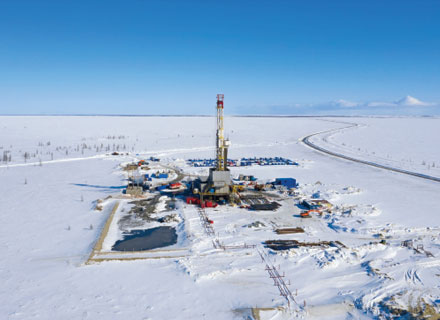
The thaw has enhanced the region’s value, as it holds rich mineral deposits and vast oil and gas reserves, much of it still untapped. In fact, the Arctic is estimated to contain roughly 13% of the world’s undiscovered oil and 30% of its undiscovered natural gas. And with Western sanctions over the Ukraine war, the Arctic’s economic and geopolitical significance has only grown further.
Analysts estimate roughly 10% of Russia’s GDP is generated above the Arctic Circle.
“The Arctic is economically important. A large share of Russia’s oil, gas, and natural resource exports originates from the Arctic. Beyond economics, the region is vital to national security. From a security perspective, the Arctic constitutes Russia’s entire northern border,” explains Pavel Devyatkin of the Arctic Institute.
“Given growing competition with Western Arctic states like the United States, Canada, and Norway, Russia must maintain control over the area and protect those economic projects,” Pavel said.
In short, the High North is both a treasure trove and a strategic shield for Moscow.
Russia proudly presents itself as a leader in Arctic exploration, harking back to tsarist-era pioneers who reached the continent’s farthest edges while others charted new sea routes. Now, with the Arctic emerging as a zone of intense international rivalry, a key question looms: Does Russia truly hold a technological edge in the Arctic, and if so, can it sustain that edge amid mounting pressure?
Icebreakers: Russia’s key assets
In the Arctic, one category of technology stands out as Russia’s ace: icebreakers.
Sergey Sukhankin, a senior fellow at the Jamestown Foundation, said, “Russia’s main strength lies in its superiority across various classes of icebreakers.”
These specialised ships plough through sea ice to clear paths for other vessels, giving Russia a significant advantage. Moscow currently operates 42 icebreakers, including eight nuclear-powered, which is far more than any other country. And the fleet is still growing.
Prime Minister Mikhail Mishustin recently announced plans to add five new nuclear-powered icebreakers. One of these will be the gigantic Rossiya, a next-generation “Leader” class icebreaker displacing over 71,000 tons with reactors generating 163,000 horsepower. It will be capable of crushing through ice up to four metres thick.
At the Murmansk forum, Putin proudly noted that Russia has “the largest icebreaker fleet in the world. No other country has such a fleet,” he declared, urging continued investment in next-generation icebreakers to cement Russia’s lead. The Kremlin often frames its mighty icebreaker flotilla as a geopolitical asset, but experts stress the fleet’s practical role.
“Icebreakers are one of the greatest technological capabilities that Russia has in the Arctic. But they have very limited military applications. Even though sea ice is melting, icebreakers are still important because there is still a lot of ice,” acknowledges Devyatkin.
These ships ensure Russia can navigate and work in Arctic waters year-round, keeping remote northern ports accessible and energy exports flowing even in winter.
Russia has even found ways to monetise its icebreaker fleet beyond freight and supply missions. In recent years, some of its nuclear-powered icebreakers have doubled as adventure cruise liners, ferrying tourists to the North Pole.
Travel companies market these voyages as once-in-a-lifetime expeditions through otherworldly ice floes.
Promotional materials boast, “You will be travelling on one of the most powerful nuclear icebreakers in the world, capable of overcoming centuries-old ice up to three metres thick.”
Ultimately, icebreakers are more than just workhorses or tourist attractions. They are strategic enablers of Moscow’s Arctic ambitions. By keeping the Northern Sea Route (NSR) open for much of the year, the fleet supports Russia’s goal of turning the NSR into a major international trade artery.
If the shipping lane along Siberia’s coast becomes reliably navigable, it could slash travel time between Asia and Europe, providing an alternative to the Suez Canal. This prospect is a major reason the Kremlin pours resources into its icebreaker fleet. It underpins Russia’s vision of the Arctic as both an economic engine and a geopolitical lever.
Military might or symbol?
Russia’s Arctic push is not confined to icebreakers and commerce. The Kremlin also touts military hardware adapted for the Far North, though some wonder if these weapons are more show than substance. In late 2024, Putin oversaw the launch of the Perm, a Yasen-M-class nuclear submarine armed with Zircon hypersonic cruise missiles.
He hailed it as a major advance for the Navy, praising the sub’s modern systems and high-precision weapons. Such capabilities sound formidable, and they could pose a serious threat. However, analysts like Sukhankin question their practical utility in the Arctic context. Using such weapons would likely signal full-scale war.
“In most scenarios, this type of weaponry is more dangerous than useful,” Sukhankin says, suggesting any Arctic clash that escalated to missile strikes would effectively be an all-out conflict between Russia and NATO.
Even Russia’s own strategists seldom anticipate open war in the High North. When they discuss potential Arctic conflicts, they usually envision “hybrid” confrontations – using covert, economic, or cyber means rather than battles under the polar ice.
This implies many of Moscow’s Arctic military projects likely serve a political more than a tactical purpose. The displays of new submarines and weapons project strength and technological prowess to both domestic audiences and rival powers, even if their day-to-day utility on the ice remains limited.
Beyond submarines and missiles, Russia claims other Arctic innovations are underway. Officials speak of drones engineered for extreme cold and robotic systems to mine the seabed. These initiatives underscore Moscow’s desire to conquer the Arctic technologically as well as physically. Still, the ambitious nature of some projects has raised eyebrows and scepticism, leading to questions about how much is genuine progress versus propaganda.
Ambitious plan beneath the ice
The notion of submarine LNG tankers highlights both the boldness and fragility of Russia’s Arctic aspirations. The idea actually dates back to the early 2000s, when some Moscow insiders proposed it to impress Putin. Now it has resurfaced in state media reports, with talk of nuclear-powered submarines carrying liquefied natural gas under the ice to Asian markets.
Yet experts like Sukhankin doubt this concept will ever leave the drawing board. The technical challenges are enormous.
“How can you store the necessary volume of LNG on a submarine in the first place?” he asks, noting that no existing design could accommodate the massive insulated tanks required.
The economics are equally dubious. Building and operating such vessels would be vastly more expensive than conventional tankers.
“If you run the numbers on break-even costs, it simply does not make sense,” Sukhankin said.
Moreover, Russia’s shipyards lack the capacity to construct such advanced submarines, and foreign builders are unlikely to help under the current sanctions. It remains unclear whether the submarine tanker project is a serious endeavour or more of a publicity stunt.
“At this point, it’s difficult to tell whether this is aimed at a domestic audience or designed to impress internationally,” Sukhankin admits.
Either way, merely publicising such an audacious plan serves a purpose: it reinforces the narrative that Russia is willing to pursue outlandish high-tech solutions to secure its Arctic interests.
Cooperation amid rivalry
Despite its military buildup and grand projects, Moscow is also striking a cooperative tone in the Far North, at least rhetorically. In Murmansk, Putin opened his remarks with a rare appeal for partnership.
He stressed that while “Russia is the largest Arctic power,” it “advocates for equal cooperation in the region.” Moscow, he said, is ready to work with any nation that shares responsibility for the planet’s sustainable future. It signalled Moscow’s willingness to involve non-Arctic players.
Russia’s long history in the Arctic gives it valuable know-how. Centuries of exploration and resource extraction in harsh conditions have endowed Russian firms and agencies with deep expertise.
Yet, as Devyatkin notes, collaboration with other countries can bring benefits that Russia cannot easily obtain alone: investment capital, cutting-edge technology, and broader export markets for Arctic resources. In the past, Moscow partnered with Western oil companies and others in Arctic ventures before relations soured. Now the Kremlin may look to non-Western partners to keep its Arctic ambitions on track.
Some analysts suspect practical motives behind Putin’s cooperative rhetoric. For all of Russia’s talk of Arctic dominance, its ability to sustain large-scale Arctic expansion and innovation is in doubt.
“Russia’s own domestic capabilities to modernise are quite questionable,” Sukhankin observes, alluding to economic and sanction-related constraints.
Greater international involvement could help Moscow fill gaps in expertise and funding. At the same time, each high-profile announcement— be it a new drone, icebreaker, or submarine—feeds a narrative that Russia is racing ahead in the Arctic.
Sukhankin suggests this image is deliberately cultivated as a form of information warfare.
“This is exactly what Russians want… exactly what they mean,” he says, referring to the psychological impact of projecting Arctic prowess.
In effect, Russia is trying to have it both ways in the Arctic. They want to project strength and independence while also calling for partners. How much of its Arctic drive is genuine capability and how much is calculated posturing remains debatable. But as the polar ice recedes and competition grows, the world’s eyes are now on Moscow’s next moves in the “High North.”