
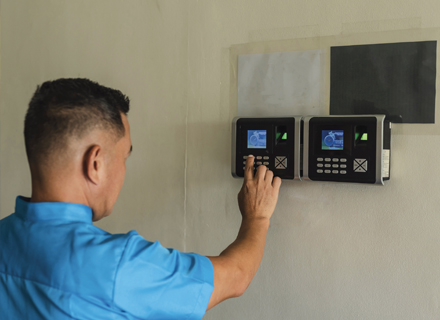

The web brochures of workplace surveillance tech businesses make you think the average American worker is a renegade ready to overthrow their boss.
“Nearly half of US workers steal time! Biometric readers improve accuracy! Give staff-controlled perks with vending machine access!”
Since the New Year, JP Morgan Chase, WPP, and Amazon have implemented return-to-office mandates. President Donald Trump instructed federal agency heads to terminate remote work arrangements and require employees to return to work in person on a full-time basis. This follows five years after the pandemic, when many roles were successfully performed remotely or flexibly.
California-based global industry expert Josh Bersin said, “Two things are happening. The economy is slowing, so companies are hiring less. There is a broad productivity trend, and AI has caused almost every organisation to reallocate resources to AI projects.”
CEOs expect to cut many jobs. Back-to-work mandates are often prompted by irritation that both projects are hard to monitor or implement without knowing what individuals are doing at home. What exactly are we returning to?
RFID badges, GPS time clock apps, NFC apps, QR code clocking-in, Apple Watch badges, and palm, face, eye, voice, and finger scanners are all used across the US to track workers’ time, attendance, and productivity in manufacturing, retail, and fast food chains.
Biometric scanners have long been offered to employers to prevent hourly workers from “buddy punching” each other at the start and end of shifts—so-called “time theft.” A return-to-office mandate and its enforcement might lead to similar situations for salaried staff.
These time and attendance gadgets and apps now end with Austin-based HID’s OmniKey platform. This RFID log-in and security solution for industries, hospitals, universities, and workplaces uses smart cards, smartphone wallets, and wearables. These will monitor turnstile entrances, exits, elevator access, parking, conference rooms, the cafeteria, printers, lockers, and vending machine access.
These technologies and increasingly advanced worker location- and behaviour-tracking systems are spreading from blue-collar to pink-collar and white-collar jobs. According to the poll, 70%–80% of large American firms monitor employees, and PwC has notified staff that supervisors will track their location to enforce a three-day office week.
Cracked Labs’ Vienna-based workplace surveillance researcher Wolfie Christl said, “Several of these earlier technologies, like RFID sensors and low-tech barcode scanners, have been used in manufacturing, in warehouses, or in other settings for some time. All kinds of sensor data are being used, and this technology is entering offices. However, many of these may not make sense there.”
The ability to track workers within office buildings is new to the pandemic age of hybrid work. In November 2024, Cracked Labs published a terrifying 25-page case study showing how wireless networking, motion sensors, and Bluetooth beacons can provide “behavioural monitoring and profiling” in offices.
The project records workstation presence and room occupancy, and it tracks employees’ indoor location, movement, and behaviour. Spacewell uses motion sensors under desks, in ceilings, and at doorways in “office spaces,” along with heat sensors and low-resolution sight sensors to determine workstation and room occupancy. Managers can access real-time and trend data via the “live data floor plan,” and sensors collect temperature, ambient light intensity, and humidity data.
Locatee, based in Switzerland, leverages badge and device data via Wi-Fi and LAN to track clocking in and out, time spent at workstations and on floors, and weekly office hours and days. The software shows executives aggregate staff data, but Cracked Labs notes that Locatee gives a segmented team analytics report that “reveals data on small groups.”
Interest in “optimised” working environments is rising as more organisations return to the office. S&S Insider’s early 2025 forecast estimated the linked office’s value at $43 billion in 2023 and $122.5 billion by 2032. IndustryARC also estimates a $4.5 billion employee-monitoring-technology market, largely in North America, by 2026. However, the overlap is unclear.
Logitech unveiled its millimetre-wave radar Spot sensors at the end of January to help companies track room usage and which rooms are most popular. Logitech told The Verge that the peel-and-stick gadgets, which detect VOCs, temperature, and humidity, might predict meeting room audience placement.
According to Christl, these sensor-based systems’ functionality could lead to a shift from acceptable applications like energy use, worker health and safety, and office resource management to more intrusive ones.
For him, the fundamental concern is that if organisations use highly sensitive data like tracking employees’ gadgets and telephones indoors or using motion detectors indoors, “then there must be totally reliable safeguards that this data is not being used for any other purposes.”
Big brother watches
This alert is especially important for indoor workers’ location, movement, and conduct. Cisco Spaces has digitised 11 billion square feet of enterprise sites, yielding 24.7 trillion location data points. According to Cisco’s website, InterContinental Hotels Group, WeWork, the NHS Foundation, and San Jose State University use Spaces.
Stores, restaurants, hotels, and event venues can utilise it, but offices are the primary use case for meeting room management and occupancy monitoring. These areas provide an all-seeing view of how employees, clients, and visitors, depending on the environment, and their linked gadgets, equipment, or “assets,” move around physical areas.
Cisco used its wireless infrastructure and linked Wi-Fi access points and Bluetooth tracking to do this. Spaces provides employers with real-time and historical data dashboards. Use cases? Everything from meeting-room scheduling and cleaning schedule optimisation to more invasive dashboards on employees’ entry and exit times, staff workdays, floor visit durations, and other “behaviour metrics.” This includes performance metrics, a manufacturing site feature.
Cracked Labs describes how Spaces uses device usernames and identifiers to identify users in its statistics. MAC randomisation can preserve privacy, but Cisco says it renders indoor movement analytics “unreliable” and other uses unfeasible, forcing enterprises to decide.
Management can send staff nudge-style reminders based on building location. An IBM application based on Cisco’s technology can detect occupancy abnormalities and notify workers or management. Cisco Spaces can also use Cisco security cameras and WebEx video conferencing devices to monitor indoor movement, another example of workplace function creep from security to employee tracking.
Cisco said that Spaces “enhances workplace efficiency and employee experience” and was “built and engineered with privacy by design and industry-standard security measures.” The amount of data Spaces gives companies worries Christl.
“Cisco is everywhere,” he said, while adding, “Repurposing networking or IT infrastructure data becomes harmful when employers do so. I think a big manufacturer like Cisco has a responsibility to neither offer nor market irresponsible indoor location monitoring technologies based on its Wi-Fi networks. I would consider productivity and performance tracking quite problematic when based on intrusive behavioural data.”
Not just Cisco is doing this. Juniper’s Mist indoor tracking system, like Spaces, employs Wi-Fi networks and Bluetooth beacons to find people, linked devices, and Bluetooth-tagged badges on a real-time map with up to 13 months of worker activity data.
Juniper’s offering for offices, hospitals, manufacturing sites, and retailers can provide employee device names, enter and exit times, and duration of visits between office “zones”—including a “break area/kitchen” in a demo. Each system has a variety of functional applications, some of which generate labour-law difficulties.
“A worst-case situation would be that management wishes to fire someone and then starts digging into prior records for misconduct,” adds Christl, while mentioning further, “If it’s necessary to investigate employees, a worker representative should work with management to examine fine-grained behavioural data. This would prevent misuse.”
Above and beyond?
American unions want more access to data and quotas used in disciplinary action, as Elizabeth Anderson, professor of public philosophy at the University of Michigan and author of “Private Government: How Employers Rule Our Lives,” explains.
She said, “Surveillance and this idea of time theft—it’s all connected to this idea of wasting time. Essentially, all relational work is considered inefficient. In a memory care unit, the system will say maybe an Alzheimer’s patient is frightened, so a nurse has to calm them down, or perhaps they lost some ability overnight. That’s not one of the discrete physical tasks that can be measured. Most of the work is helping that person cope with declining faculties; it takes time for people to read your emotions and respond appropriately. What you get is massive moral injury with this notion of efficiency.”
According to a 2023 Cracked Labs report on retail and hospitality, Oracle software rates and ranks servers based on speed, sales, timekeeping around breaks, and tips. Oracle software that monitors mobile workers, like hotel housekeepers and cleaners, uses a timer for app-based micromanagement.
Christl said, “People have to struggle to combine what they really do with this kind of rigid, digital system. And it’s not easy to standardise things like talking to patients and other kinds of affective work, like how friendly you are as a waiter. This is a major problem. These systems cannot represent the work that is being done accurately.”
Is it possible to measure and assess knowledge work in offices effectively? In a January episode of his podcast, host Ezra Klein struggled with his own feelings about having many of his best creative ideas at a cafe down the street from where he lives rather than in The New York Times’ Manhattan offices.
Elizabeth agrees that creativity often has to find its own. She said, “We know that daydreaming a little can actually help people come up with creative ideas. Allowing your mind to wander can significantly boost productivity, but it necessitates spending some time gazing around or outside. The software connected to your camera is saying you’re off-duty—that you’re wasting time. Nobody’s mind can keep focused for the whole workday, but…”
Elizabeth cites a scene in Erik Gandini’s 2023 documentary “After Work” that shows an Amazon delivery driver who is camera-monitored for driving, delivery quotas, and even using Spotify in the van.
“It’s very tightly regulated and super, super intrusive, and it’s all based on distrust as the starting point,” she said, while continuing, “What these tech bros don’t understand is that if you install surveillance technology, which is all about distrusting workers, there is a deep feature of human psychology that is reciprocity. If you don’t trust me, I won’t trust you.”
Trust issues
“Our research shows that excessive monitoring in the workplace can damage trust, have a negative impact on morale, and cause stress and anxiety,” said Hayfa Mohdzaini, senior policy and practice adviser for technology at the CIPD, the UK’s professional body for HR, learning, and development. Line manager training and employee engagement may improve productivity.
According to a 2023 Pew Research study, 56% of American workers opposed using AI to detect when employees were at their offices, and 61% opposed tracking their movements.
As Josh Bersin puts it, “Yes, the company can read your emails” with platforms like Teramind, even including “sentiment analysis” of employee messages. Only 51% of workers opposed recording work done on company computers using corporate “spyware,” which was accepted by private sector workers.
The WIRED’s interviews with employees at 13 federal agencies reveal the surveillance of government workers by Elon Musk’s DOGE team. Google’s Gemini AI chatbot, a Dynatrace extension, and Splunk have been added to government computers in recent weeks, and some people feel they can’t speak freely on record.
According to CBS News and NPR, the Department of Government Efficiency (DOGE) implemented full X-ray security screenings in February, replacing entry badges at Washington, DC, headquarters. Additionally, managers informed staff that logging in and out of devices, swiping in and out of workspaces, and all digital work chats would be monitored.
Bersin suggests, “Maybe they’re trying to make a big deal out of it to scare people right now. The federal government is exploiting the back-to-work policy to lay off workers.”
DOGE staff have reportedly added keylogger software to government computers to track everything employees type, worried that anyone using progressive thinking or “disloyalty” to Trump could be targeted, not to mention the security risks for sensitive projects.
One worker told NPR it felt “Soviet-style” and “Orwellian” with “nonstop monitoring.” Elizabeth calls the DOGE playbook “deeply intrusive invasions of privacy.”
Another reality
But what employee protections exist? New York and Illinois give substantial privacy protections against private sector biometric tracking, and California’s “Consumer Privacy Act” includes workers and customers. The lack of federal labour law in this area makes the US a legal anomaly compared to the UK and Europe.
The “Electronic Communications Privacy Act” permits the monitoring of US employees for commercial purposes. EU workplace monitoring assessments by “Algorithm Watch” include the UK, Italy, Sweden, and Poland.
In early 2024, the UK’s Information Commissioner’s Office (ICO) ordered Serco to stop using Shopworks’ face recognition and fingerprint scanning systems to track the time and attendance of 2,000 staff at 38 leisure centres. Virgin Active removed similar biometric staff tracking systems from 30-plus facilities after this new guidance.
Though the United States lacks broad privacy rights, worker opposition, union organising, and media publicity can block some office monitoring methods. The “Service Employees International Union” wants rules to safeguard workers from black-box algorithms that set output speeds.
Boeing terminated a pilot of staff surveillance at Missouri and Washington locations using Ohio-based Avuity infrared motion sensors and VuSensor cameras in ceilings in December. Boeing reversed course when a worker released an occupancy- and headcount-tracking PowerPoint to The Seattle Times. In weeks, Boeing stated that administrators will remove all placed sensors.
Under-desk sensors have garnered significant attention, possibly due to their resemblance to surveillance hardware rather than software designed to record company operations. Northeastern University students hacked and deleted EnOcean under-desk sensors for “presence detection” and “people counting” in the “Interdisciplinary Science & Engineering Complex” in fall 2022. The university provost informed students that the department would maximise desk usage with sensors and Spaceti.
OccupEye (now owned by FM: Systems), another under-desk heat and motion sensor, was protested and physically removed by Barclays Bank and The Telegraph employees in London. After the backlash, the ICO fined Barclays $1.1 billion for using Sapience’s employee monitoring software in its offices to track individual employees. That same software business now offers “lightweight device-level technology” to monitor return-to-office policy compliance, with a dashboard that breaks down employee location by office vs remote for individual departments and teams.
Elizabeth Anderson’s latest book, Hijacked, traces workplace surveillance culture and the fixation with employee productivity to the Puritans’ 16th- and 17th-century “work ethic” conception.
“They thought you should be working super hard; you shouldn’t hang around when you should be working. There are elements that could lead to worker hostility. The Puritans were time-conscious. It was about behaviour confirming salvation. The Industrial Revolution made ‘no wasting time’ a profit-maximising technique. You work 24/7 because they can email you. However, the original work ethic has lost or distorted several fundamental elements. The Puritans also required employers to pay a living wage and provide safe and healthy working conditions. They claimed you couldn’t dominate them tyrannically. Consider them fellow Christians and treat them with respect. In many respects, the original work ethic elevated workers,” she noted.
Cracked Labs’ research highlights how wireless networking, motion sensors, and Bluetooth beacons enable “behavioural monitoring and profiling” in offices. Companies like Spacewell and Locatee offer solutions that track workstation presence, room occupancy, and employee movement, providing employers with real-time and historical data.
The growing interest in “optimised” working environments has fuelled a booming market for employee-monitoring technology. Companies like Logitech offer solutions that track room usage and predict meeting room audience placement, while Cisco Spaces uses wireless infrastructure and linked devices to provide real-time and historical data on employee movement and behaviour.
Concerns about privacy and the potential for misuse of data are rising. While these technologies offer benefits like energy use optimisation and office resource management, they also raise concerns about intrusive monitoring and profiling.
Experts argue that if companies use sensitive data like indoor location tracking, there must be safeguards to prevent its misuse. The lack of federal labour law in this area makes the US a legal anomaly compared to the UK and Europe, where stricter regulations exist.
Employee opposition, union organising, and media publicity have blocked some office monitoring methods. However, the use of surveillance technology in the workplace raises questions about trust, morale, and the balance between productivity and employee privacy.
The debate over workplace surveillance highlights the tension between the desire for efficiency and the need to respect employee privacy and autonomy. As technology continues to advance, it is crucial to find a balance that protects both employer and employee interests.