
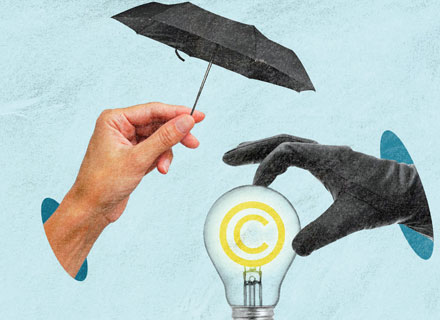

The number is stark, terrifying, and impossible to ignore. Nearly all professional creators now admit they utilise artificial intelligence tools in their daily work, a statistic that, on its surface, might appear to herald a golden age of streamlined efficiency and boundless production.
Approximately 86% of 16,000 professionals worldwide surveyed by Adobe in 2025 reported actively using AI in their creative workflows. It’s no longer futuristic; it is the reality of our times. One would imagine that AI tools would free people from the difficulties of labour and prolonged work hours.
However, the opposite is happening. Instead of leisure, workers around the world are met with demands for unyielding speed and inhuman productivity.
We must decide whether this universal integration signifies genuine technological progress or whether it simply marks the moment human artistic labour becomes economically mandatory to execute at the pace dictated by Silicon Valley’s algorithms.
There is an immense economic pressure forcing creative professionals to comply or face immediate market obsolescence. The data confirms that AI is deeply integrated into creative workflows, yet this utility must not be mistaken for ethical merit or long-term soundness.
Creative professionals do see genuine, tantalising opportunities, with over half reporting that AI helps them explore new mediums and a remarkable 46% believing it helps them create higher-quality work.
This is the lure, the captivating promise of instantaneous enhancement and boundless efficiency, a promise designed to mask the underlying erosion of value and independence. The current analytical view of AI’s labour impact is dangerously complacent, focusing almost exclusively on macro-economic trends while entirely ignoring the microscopic, fundamental erosion occurring at the individual creator level.
Technophiles often point to recent analyses showing that the broader labour market has not experienced a discernible disruption since the public release of major generative AI systems, a finding that allegedly undercuts fears of immediate mass job losses across the entire economy.
This fact is often presented as reassurance, suggesting a measured, benign adoption trajectory, yet it hides a critical, predatory truth, namely that AI first displaces value and incentive long before it ever displaces employment.
Copyright and corporate capture
To understand the core immorality of the generative AI revolution, we must look no further than the fuel source that powers it, which is the massive, unprecedented datasets of human creative expression upon which these models are trained. These datasets, which developers use as a neutral shorthand for copyrighted works, are the products of millions of human lives, careers, and artistic struggles.
The training process, executed often without explicit permission, licensing, or any financial compensation, represents the original, defining sin of this entire industry, effectively turning the intellectual property and life’s work of millions of artists into free, disposable energy for a burgeoning multi-trillion-dollar technological complex.
The fear among creators is profoundly visceral and absolutely justified, because unlicensed training will fatally corrode the creative ecosystem, permitting AI-generated content to directly and unfairly compete in the marketplace with the very artists whose works were ingested and repurposed without consent.
The US legal system is currently caught in the paralysing gridlock of this crisis, embroiled in dozens of high-stakes lawsuits that specifically focus on the strained application of copyright’s fair use doctrine to the mass ingestion required for AI training.
These legal challenges have exposed the staggering scale of the alleged infringement, including claims against powerful entities like Meta for allegedly using its corporate IP addresses to download nearly 2,400 copyrighted adult movies via BitTorrent for the explicit purpose of training its AI systems, a transgression that puts the potential damages well over $350 million.
The stakes in these legal battles are existential, with some developers arguing that requiring formal licensing would irreparably throttle a transformative, world-changing technology, while creators fear, with equal passion, that allowing this unlicensed exploitation will mean the inevitable death of the human creative community. The public interest demands striking an effective balance, one that allows technological innovation to flourish without dismantling the thriving community of creators who feed it.
In terms of intellectual property protection, the American courts have established one clear and critical legal marker, confirming that human authorship is a foundational, bedrock requirement for copyright protection, thereby establishing a critical and necessary distinction between a human using a sophisticated tool and the tool itself attempting to claim the rights to its output.
This decision affirms the principle that intellectual property rights must apply to works generated by humans. The ruling addresses only the resulting output, leaving the foundational injustice of the mass, uncompensated training data capture entirely unresolved, a loophole large enough to drive a generative AI truck through.
Crowding out true innovation
The deployment of generative AI has led to a fundamental economic revaluation of creative labour, posing an existential threat to the long-term health of the artistic community. When AI provides sophisticated tools that enable individuals without traditional, hard-won artistic skills to produce high-quality, technically sound work in fields like illustration, design, or digital music, it fundamentally lowers the barrier to entering the market.
While accessibility sounds like a profound social good, the immediate economic consequence is brutally clear: this widespread capability devalues the artistic skills honed over years of craft, study, and sacrifice, diminishing their perceived market worth and making the professional’s work less appreciated or undervalued.
This devaluation sets the stage for the most dangerous economic outcome, the widely observed “crowding out” effect. Generative AI excels at creating high-volume, low-variance, and highly formulaic work at nearly zero marginal cost, making these formulaic outputs significantly cheaper than traditional human creations.
The lower cost of this technically proficient content then acts as an economic steamroller, systematically forcing out the more costly, experimental, and risky human creations that are essential for driving long-term innovation and stylistic evolution in culture. This phenomenon is not theoretical; the marketplace is already providing clear warning signs, with consumers sometimes showing a direct taste for the influx of AI-generated images, selecting them over human-generated works, confirming that increased competition and variety for buyers come at the devastating cost of financially crippling the creators who fuel the market.
The ultimate psychological and financial violation faced by creators is the commodification of their unique artistic style. Creative professionals are acutely aware of this profound threat, which is why surveys indicate a significant majority express keen interest in being paid specifically to license their unique artistic style (58%) or getting paid for having the models trained on their specific body of work (55%).
Generative AI seeks to distil the most subjective, intangible, and unique element of an artist, his/her individual aesthetic footprint, into a fungible, replicable, and licensable commodity.
If a distinct style can be captured, licensed, and then replicated infinitely by a machine for a small fee, the intrinsic, irreplaceable value of the human hand, the individual struggle, and the unique history behind that style, everything, gets tragically erased.
Yet here lies the supreme, glaring irony, the self-defeating nature of the AI developers’ exploitation. The fundamental truth of machine learning is that the output of these complex models is fundamentally limited by the volume and, more importantly, the quality of the input, the human-generated works they ceaselessly ingest.
Suppose the economic displacement and devaluation of human creators continue unabated, and their financial incentives diminish to the point of collapse. In that case, the flow of new, high-quality, experimental, and challenging human work, the raw fuel of the entire system, will inevitably degrade. Machines are capable of regurgitation. They can modify existing work. But the true fuel of the creative economy is raw, high-quality human work. And this model ensures that there will be recycling and no innovation or radical experimentation in the field of creative arts. It demonstrates that a thriving and compensated creative community is necessary for technological advancement, not merely an optional luxury.
It’s important to recognise that not all creatives oppose technology. They are simply asking to be remunerated for the work they put in. A massive 83% of creative professionals think genuine transparency around whether artwork was created using generative AI is essential, and the same high percentage demands transparency about the specific data used to train the models.
This urgent need for verifiable provenance has spurred important initiatives, such as the Coalition for Content Provenance and Authenticity (C2PA), which now provides open technical standards for publishers, creators, and consumers to establish the origin and edits of digital content, thereby providing verifiable assertions about content origins and, most importantly, ensuring a necessary baseline of trust in this increasingly murky digital marketplace.
The advent of these transparency tools, which allow users to know the source of the information they are receiving, is the only possible path toward stabilising an ethical market where human and machine creations can coexist.
Ghost in the machine
AI can make skills slightly redundant. But true creativity and imagination come from intentionality and lived experiences. Human imperfection mixed with imagination is necessary for art. It can be mimicked, but machines cannot create anything new that is also relatable to the human psyche. We must draw a clear and forceful distinction between sophisticated computation and genuine, conscious creation.
Marvin Minsky, one of the foundational pioneers of AI, famously imagined machines capable of complex human reasoning. Yet the 21st-century generative AI has emerged primarily as the product of immense computational capacity and sophisticated algorithms, fundamentally departing from that initial, perhaps overly optimistic, vision.
The core difference remains immutable. Human creativity is intrinsically rooted in genuine vision derived from living within a specific physical world, from experiencing the emotional complexity of loss, the transformative power of joy, and navigating complex cultural nuances.
AI may function as a superb mimic and an incredibly fast learner, generating complex linguistic experimentation if prompted, but mimicry is not the same as true insight, and the resulting art risks lacking the genuine human depth that separates mere image generation from soulful expression.
Philosophical analysis strongly suggests that mass AI-generated artifacts cannot be legitimately defined as bona fide “art” because they fundamentally lack the sort of intentional control that is plausibly accepted as a necessary precondition for the label of “arthood.”
The aesthetic experiences created by mass-produced AI are often similar to those found in inorganic nature, relying solely on formal properties. Because the work is the result of statistical probability and algorithmic iteration rather than struggle, conscious choice, or personal commitment, it risks meaning nothing to the AI and consequently risks meaning substantially less to us, the audience. This absence of a discernible consciousness or intentional struggle creates an aesthetic void.
Imperative of human accountability
We stand at a profound cultural and economic precipice, facing an existential crisis that must be addressed with clarity and legislative courage. The problem isn’t the technology, which promises genuine improvements to people in all fields of life. As usual, the culprit is corporate greed and unchecked power that boardrooms wield.
These entities have ruthlessly leveraged this transformative capability to systematically dismantle existing legal and economic frameworks for their own profit, establishing an innovation structure that demands the consumption of past creativity while vehemently refusing to compensate the millions of creators whose labour and intellectual property fuel their systems.
The question we face today is fully comparable in its magnitude and complexity to the social shifts that accompanied the advent of the printing press centuries ago, demanding that society urgently debate and establish entirely new, robust frameworks for genuinely rewarding creativity and ensuring that information provenance is transparent and trustworthy.
We cannot possibly maintain a functioning, free creative ecosystem if the people in possession of the truth and the facts, the creators whose work defines our culture, are unable to win the necessary legal and rhetorical argument against powerful, highly capitalised corporate interests.
To effectively preserve the unique and irreplaceable value of human creativity and ensure a stable future for the arts, our political and regulatory response must be swift, comprehensive, and absolute, demanding three non-negotiable elements.
The first essential requirement is transparency and provenance, mandating the full, detailed disclosure of training data used by all generative models. Furthermore, we must implement verifiable authentication systems, such as the standards offered by C2PA, to provide immediate, verifiable confirmation of content origins, allowing both consumers and competitive creators to know exactly when the output is the result of a machine and statistical inference. This clarity is the minimum requirement for a fair market.
The second non-negotiable element is compensation and licensing, requiring an immediate end to the cynical reliance on tenuous fair use arguments for mass, systematic data ingestion. Governments must proactively establish robust collective licensing organisations or statutory compensation mechanisms that ensure genuine financial arrangements for all artists whose work is used to train these models. Creator participation must be predicated on appropriate financial arrangements, recognising that they hold the key intellectual assets that allow the algorithms to function.
The third critical element is the preservation of authorship, legally reinforcing the established principle that copyright ownership must belong only to human beings, recognising the inherent distinction between human creation and machine replication. This ensures that the unique human elements, including personal stories, genuine emotional resonance, and complex cultural nuance, remain the legally protected, recognised, and invaluable core of the creative economy, serving as the ultimate differentiator against the sea of machine-generated competence.
Not too long ago, we envisioned artificial intelligence handling the mundane tasks, like data entry, dishwashing, and manual labour, allowing us to focus on pursuits such as poetry, painting, and philosophy. However, the exact opposite has occurred. We are now automating creative endeavours like poetry and painting for profit, while humans are left to deal with the administrative remnants.
We are at risk of building a culture where the act of creation is viewed as an inefficiency to be solved. We thereby alienate ourselves from the process of creation. It becomes merely a product. A machine can generate a tear-jerking story, but it cannot know what it means to cry.
When we read a book or view a painting, we are unconsciously searching for the hand of the maker, seeking validation that our own joy, suffering, and confusion are shared by another living being. Without that shared resonance, we are simply staring into a mirror of statistical probabilities, profoundly alone. There is a need to fight for these protections to save jobs and to ensure that the future of human culture remains, quite literally, human.