
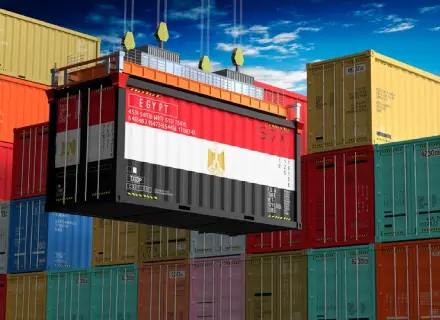

The data presented by the Egyptian Ministry of Investment and Foreign Trade revealed that the country’s non-oil exports increased by over 17% year-on-year in 2025, reaching approximately USD 48.6 billion. The indicators further revealed that the trade deficit narrowed by 9% over the 12 months, reaching USD 34.4 billion. The latest numbers also support Egypt’s ambition to enter the global top 50 in trade performance, boosting exports to USD 145 billion a year.
The development also aligns with the North African country’s efforts to streamline procedures, maximise the benefits of trade agreements, and protect local industry in line with international agreements.
The newly released data said, “Egyptian gold exports also saw a substantial increase, reaching USD 7.6 billion in 2025 compared to USD 3.2 billion in 2024, an increase of USD 4.4 billion,” while indicating that the largest markets for Egyptian non-oil exports in 2025 included the UAE, Turkey, and Saudi Arabia, as well as Italy and the United States.
The most important export sectors included building materials at USD 14.9 billion, followed by chemicals and fertilisers (USD 9.4 billion) and food industries (USD 6.8 billion). In October 2025, Egypt’s credit rating was upgraded by S&P Global to “B” from “B-,” while Fitch reaffirmed its “B” rating, citing progress in reforms and macroeconomic stability.
S&P said at the time that the upgrade reflects reforms implemented over the past period by the country, including the liberalisation of the foreign exchange regime, which boosted competitiveness and fuelled a rebound in growth. The announcement also coincided with Prime Minister Mostafa Madbouly’s observation, as the latter stated that both rating agencies’ decisions signal confidence in his government’s reform agenda and its expected returns.
In September, Egypt’s Ministry of Planning, Economic Development and International Cooperation reported that the North African country’s economy expanded 4.4% in fiscal year 2024/25, driven by a strong fourth quarter when GDP growth hit a three-year high of 5%. This reflects the impact of the more flexible exchange rate regime adopted since March 2024, which has helped stabilise the balance of payments, while also restoring investor confidence.