
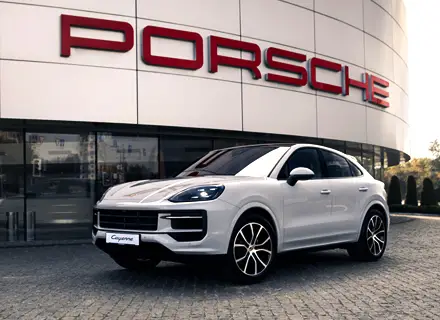

Porsche, the symbol of high-performance German engineering, has just issued a historic surrender to market reality, confirming its roadworthiness crisis is far deeper than a mere speed bump. The deterioration in its financial health has been shocking, forcing the company to issue three profit warnings in 2025, culminating in a devastating third quarter that saw the company slide into a catastrophic operating loss of 966 million euro (approximately USD 1.1 billion), a steep reversal from profit in 2024. This was not merely bad luck or poor execution; it was the crushing financial penalty for decades of strategic inertia.
The crisis has utterly annihilated the company’s famously stellar operating margins, which typically ranged between 15% and 18%, rates that once made it the envy of the global automotive industry. Management has now desperately lowered its forecast, projecting operating margins will clock in between a disastrous 0% and 2% for the year.
This collapse forced the sudden departure of CEO Oliver Blume, who struggled to manage dual roles at Porsche and Volkswagen effectively, and now requires the immediate elimination of 1,900 permanent jobs alongside other restructuring measures.
The company’s market value is now halved since its public listing three years ago, a loss of shareholder confidence that directly reflects the high cost of failing to adapt to a changing industrial landscape. Porsche’s financial health has been utterly exposed, demonstrating definitively that brand legacy is insufficient protection against fundamental structural flaws.
Software Failure And Chinese Humiliation
A core failure of Porsche’s strategy was its disastrous miscalculation of the electric vehicle (EV) revolution, particularly in the most critical growth markets. The company misjudged customer appetite for high-performance battery-powered sports cars, leading to the abandonment of its ambitious goal of 80% of sales from electric vehicles by 2030.
The attempt to reverse this course, steering the firm back toward petrol and hybrid power, is proving excruciatingly expensive and logistically disruptive, requiring billions in restructuring costs, including the decision to scrap plans for in-house battery production.
The Macan, a highly successful small SUV, will be sold only as an electric vehicle starting in 2026, for example, but the petrol replacement has been embarrassingly delayed until 2028, creating a competitive chasm in a crucial segment.
The most profound failure, however, occurred in China, once Porsche’s largest pillar of global growth, where sales volume has plummeted sharply, projected to be only 40,000 vehicles this year, down from 93,000 in 2022.
The contraction is driven by technological displacement from hyper-agile local competition, a true humiliation for the German giant. Local manufacturers like Xiaomi, with its SU7 model, are offering a car that mirrors the performance and braking of the Taycan EV, but for roughly half the price. Worse, Chinese consumers prioritise software and connectivity, integrated artificial intelligence (AI) features that European-developed infotainment systems fail to deliver, falling “well below the expectations of Chinese buyers.”
Porsche suffered a digital collapse, a failure to verticalize the critical software layer, handing tech-native rivals the perfect weapon to seize market share and dictate pricing.
Why German inertia will cost billions
Further compounding Porsche’s troubles is its acute and entirely unnecessary exposure to geopolitical risk, particularly in North America, which has now overtaken China as the company’s single largest market, accounting for a quarter of sales in 2024.
This exposure is a direct result of the company’s structural inertia, its insistence on relying entirely on exports from Germany, unlike competitors such as BMW or Mercedes-Benz, which wisely localised manufacturing in the US.
The fatal lack of a US manufacturing footprint has made Porsche a willing hostage to American trade policy. The projection of President Trump’s potential 15% tariff on cars imported from the European Union (EU) is anticipated to wipe 700 million euro directly from Porsche’s profits this year.
To offset this crippling damage, Porsche is forced to raise vehicle prices in the United States in the coming months, a move that is likely to impact sales volume, undermine growth stability, and threaten the market position the region has provided.
This is the crushing cost of strategic inflexibility, the penalty for prioritising an inherited German export model over adapting to global supply chain and political realities. The incoming CEO, Michael Leiters, faces an unenviable, perhaps impossible, task, trying to put the powerful oomph back into a company that has been brought to its knees by its own self-inflicted wounds.