
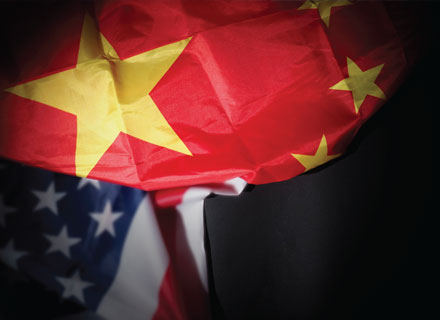

The current situation is a definitive political surrender, a tactical retreat by the world’s self-proclaimed superpower, the United States. After years of aggressive tariff deployment and diplomatic posturing, Washington has formally conceded that its primary objective, forcing Beijing to undertake fundamental structural economic reform, is simply unattainable. The ultimate goal of the trade war, changing the ideological basis of China’s economy, has become a lost cause, a monumental failure.
The recent defeat is reflected in the significant decline of US diplomatic expectations. Wendy Cutler, a former US trade negotiator, confirmed to the Wall Street Journal that current trade negotiations have entirely set aside structural matters.
The objective is no longer advancing the relationship through fundamental change but achieving mere de-escalation and stability. Uncle Sam’s strategy has devolved from demanding systemic change, such as forcing a shift to domestic consumption or ending industrial subsidies, to simply managing crisis stability, confirming that years of tariff warfare yielded nothing but tactical adjustments and an exhausted diplomatic corps.
The US trade war’s unintended primary achievement was proving that China could withstand external economic pressure. By lowering expectations from achieving profound structural reform to settling for simple relationship stabilisation, the United States has signalled to Beijing that its state-led economic model, driven by the Chinese Communist Party, is unassailable.
This undermines the US’ credibility in future negotiations globally, a geopolitical price that far outweighs any temporary trade concessions. The US deployed its greatest economic weapon, access to its immense market, to demand change.
When Beijing retaliated by weaponising its dominance over rare-earth metals and disrupting the US’ agricultural sector, the cost of sustained friction became politically prohibitive for the American system, forcing this abandonment of structural goals. This tactical surrender is a direct, quantifiable measure of the effectiveness of China’s counter-coercion tactics.
The decades-long faith in engagement, pursued through successive US administrations, was a profound political delusion, an act of intellectual self-comforting that ignored the clear warning signs.
The historical premise of this policy rested on the belief that drawing China into the global trading system, notably through its accession to the World Trade Organisation in 2001, would inevitably lead to political liberalisation.
That hope has been comprehensively dashed. The ensuing decades saw not political openness, but the reverse. Chinese leader Xi Jinping, who consolidated power in 2012, has systematically tightened his control over the domestic political system and civil society more broadly.
This failure was inherently ensured by Beijing’s rigid political identity. Evidence suggests that the Chinese Communist Party fundamentally rejects the idea that the rule of law should take precedence over the Party’s leadership role in governing the state. This stance creates significant obstacles to any transition toward a true, open market economy.
Furthermore, the failure of engagement was significantly exacerbated by the failure of global enforcement. The US and the international community failed to utilise the tools available under the WTO to hold China rigorously accountable for its commitments, providing Beijing the space to pivot sharply toward a state-centric, CCP-run economy.
This political tragedy confirms that the US supported China’s entry on terms that proved wholly ineffective in securing Beijing’s embrace of an open, market-oriented trade regime. China weaponised the benefits of global integration to strengthen its state apparatus and industrial planning. The policy of engagement was a Trojan horse that ceded geopolitical advantage and accelerated CCP power.
Predictable collapse of tariff warfare
The Donald Trump administration, armed with tariffs and rhetorical fury, thought its economic might could intimidate history and force a fundamental shift in Beijing’s economic DNA. They were tragically, predictably wrong. The flawed strategy sought to move China away from what was correctly identified as a mercantilist policy of subsidised manufacturing and export focus.
The mechanism was based purely on market mechanics, imagining that tariffs would squeeze exports and compel Beijing to initiate painful social reforms, specifically overhauling health and social welfare systems, which would allow China’s 1.4 billion consumers to spend more and save less. The idea was that by pressuring exports, China would be forced to find new sources of growth at home, boosting global consumption and shrinking its massive trade surplus.
This strategy failed catastrophically because it entirely ignored China’s ideological commitment to its state model. Oliver Melton, a director at Rhodium Group, states plainly that Washington has very little ability to influence China’s macroeconomic strategy because the two nations hold fundamentally different ideological understandings of what drives economic growth and development.
China’s commitment to manufacturing and industrial production as the wellspring of national prosperity is absolute. Beijing viewed the trade war not as a simple economic negotiation over market access, but as a severe test of national will and security.
The failure of tariffs to achieve structural change confirms that Beijing is willing to absorb immense short-term economic pain and dislocation to defend its foundational industrial state model, a resolve the US completely underestimated.
Why Beijing refuses to spend
The weak level of household consumption in China is a deliberate political choice essential for funding the industrial state apparatus. Analysis confirms that China’s long-term economic stability absolutely requires a transition to household consumption as its investment-led model yields diminishing returns. Even some Chinese officials grudgingly acknowledge that the country’s consumption is far too weak and express a desire for some rebalancing.
However, the necessary structural reforms are gargantuan, requiring a fiscal overhaul that Beijing views as politically unacceptable. Meaningfully boosting consumption requires structural reforms to address issues like the rural-urban divide, the precarious position of migrant workers, and the deep misallocation of capital currently controlled by state-owned enterprises and banks.
The total fiscal resources required to fund social infrastructure, public services, and ongoing social transfers needed for a durable shift would amount to tens of trillions of RMB, approximately 30% of China’s GDP.
Such a massive fiscal commitment is an existential threat to the powerful nexus of state-owned enterprises, local governments, and central planners that currently control the flow of capital. The efforts seen so far have been piecemeal, stymied by ideological attachment to industrial production and wariness of politically painful reforms in taxation, healthcare, and social welfare.
For Xi Jinping and the Chinese Communist Party, redistributing 30% of the nation’s capital to the populace to boost consumption is perceived as an act of weakness that would destabilise the existing political system and threaten the Party’s command over the economy, hence the resolute refusal to change the growth model.
Beijing’s response to the American tariff assault was immediate, disciplined, and ruthlessly strategic, a calibrated move that forced the United States onto the defensive and rapidly exposed the limitations of American economic coercion.
Rather than capitulating, Beijing retaliated with stiff countermeasures, using its leverage over critical supply chains and strategically targeting politically sensitive US sectors, such as halting purchases of soybeans to punish America’s agricultural ecosystem.
This counter-coercion was built upon decades of deliberate industrial policy aimed at securing dominance in strategic materials. China weaponised its near-monopoly position on rare-earth elements, critical minerals essential for defence, electric vehicles, advanced semiconductors, and green energy technology.
China established its leverage through decades of concerted industrial policy and now accounts for approximately 91% of global rare-earth refining. When the trade war heated up, Beijing imposed stringent export controls on these critical materials, establishing an economic weapon that allows it to inflict targeted pain directly on American companies reliant on these inputs.
The American assumption that high tariffs alone would secure surrender proved far less damaging than China’s targeted, chokepoint-based retaliation, cementing China as an economic peer rival capable of defying the world’s longstanding superpower.
The systematic failure of the United States to achieve its stated goals is laid bare by key economic metrics, which confirm the persistence of China’s export-driven imbalance and the scale of the necessary, yet politically impossible, consumption reforms.
Xi’s chokepoint strategy
Henry Farrell, a professor of international affairs, argues that the trade war taught Xi Jinping the necessity of reducing reliance on the United States in critical areas such as semiconductors, confirming that Washington’s pressure was entirely counterproductive.
In response, Beijing strategically hardened its system. China systematically identified perceived “chokepoints,” sectors where it was reliant on foreign inputs, and launched a determined, whole-of-nation strategy to achieve self-sufficiency, rapidly building up domestic industries, developing alternative sources for inputs, and carefully husbanding its strengths.
The ultimate geopolitical goal articulated by this strategy is not improved trade balance, but political autonomy. Beijing seeks to maximise its freedom to pursue its own national interests without the United States being capable of determining its destiny through technological or economic coercion. This shift elevates industrial policy from a matter of economic efficiency to a core mandate of national security and geopolitical warfare.
Beijing’s official policy response to American pressure, the “Dual Circulation Strategy,” is a fortress doctrine designed for resilience and siege, not for peace or global integration. The blueprint for China’s future was made clear in its latest five-year plan, which confirmed Beijing’s absolute intention to double down on this path. The plan reemphasised its commitment to technological self-sufficiency, pledging to pour more investment into advanced manufacturing and boosting exports.
The “Dual Circulation Strategy” aims to insulate the domestic market from external shocks by vertically integrating production and eliminating bottlenecks in technology and natural resources. This involves focusing heavily on the internal market while leveraging the Belt and Road Initiative to secure reliable external demand and open markets in the emerging world.
This inward pivot, born from the pressures of the trade war, is a powerful dual threat to the global economy. By aggressively seeking self-sufficiency in high-end inputs, China deliberately cuts off major high-tech exporters like the United States, Japan, and Germany.
Simultaneously, the external circulation component ensures China will use its growing geopolitical reach to export its industrial overcapacity and deflationary pressures globally, creating new and pervasive structural trade friction worldwide.
Controlling the global component chain
While Washington obsessed over tariffs and finished goods, Beijing executed a strategic masterstroke by weaving itself so deeply into the core machinery of global production that true decoupling became an impossibility. China has strategically shifted its focus from being merely the final assembler of finished products to dominating intermediate goods and core components.
Dinny McMahon, head of markets research at Trivium China, told the Wall Street Journal that the consequence is pervasive; virtually any manufactured goods purchased globally, no matter origin, now carries some exposure to Chinese supply chains.
This dominance is structural and non-replicable in the short term. China holds dominant positions in multiple critical electronic products and raw materials. Mainland China hosts over 50% of global manufacturing for Printed Circuit Boards (PCBs), the fundamental backbone of all electronics.
Furthermore, China’s chemical industry alone contributes over 40% of global chemical production, a critical input for countless industrial processes.
Experts confirm that relocating final assembly processes is relatively straightforward, but the real obstacle, the “difficult middle stages,” lies in replicating China’s established infrastructure and expertise in complex component production, such as metal moulding and speciality chemicals.
The US strategy fundamentally failed to comprehend that the centre of global manufacturing gravity had moved. China has successfully forced the world into a state of strategic interdependence where Beijing holds the most essential chokepoints, allowing it to overcome decoupling efforts and export restrictions by leveraging its deep local supply chains.
China is suffering from domestic economic malaise and is actively weaponising its internal crisis, exporting deflation and systemic instability to the world. The rampant, state-subsidised production in China continues to far outstrip weak domestic consumption, leading to menacing domestic deflationary pressures. China is an exceptional case, the first G20 economy to report a year-on-year decline in consumer prices since August 2021.
This crisis is now a global problem. China’s export prices are collapsing, pushing inflation rates down globally. Between April and December 2023, Chinese export prices fell by 6%. Crucially, prices for machinery and electrical equipment, inputs essential for Western industry and technology, dropped 8.4%.
This overproduction, particularly in sectors like steel, aluminium, and advanced clean energy technology, is now flooding global markets and aggressively suppressing prices. The systematic undercutting of global prices in key strategic future industries, such as electric vehicles and solar panels, is an effective extension of China’s mercantilist industrial policy.
This forces foreign firms into unhealthy, unsustainable competition, capturing global market share by systematically destroying the profitability of rival industries in advanced economies. This is economic warfare waged with weaponised low prices, supported by state funding, subsidies, and cheap financing.
Perhaps the most profound moral indictment of China’s rigid, export-focused system is its detrimental effect on the development pathways of poorer nations.
Eswar Prasad, a professor of trade policy, notes that China’s ballooning goods surplus and resolute refusal to rebalance its model actively stifles manufacturing in other countries.
This specifically targets poorer economies trying to nurture a domestic factory sector, as China refuses to cede significant ground in lower-value manufacturing, even as it achieves dominance in high-value goods like aircraft and chips.
The historical promise that China’s rise up the value chain would create growing markets for labour-intensive manufactured goods from other emerging markets has been systematically dashed. Developing economies are being crowded out of manufacturing by Chinese overcapacity, blocking their essential path up the value chain.
China increasingly competes head-on with these nations in the low-tech and mid-tech space. The consequence is a global South dilemma, where China remains primarily a source of supply, not a reliable source of demand, creating profound structural imbalances and mounting trade friction even with its supposed developing partners. Beijing must undertake aggressive reforms, including allowing the renminbi to strengthen and boosting imports, to ease the intense pressures these trade flows are creating.
The trade war was doomed before the first tariff was levied because Washington and Beijing are locked in a conflict between two mutually exclusive economic ideologies. The US insists on painful reforms toward consumption-led growth, but Beijing’s leadership reemphasises its absolute commitment to industry-led technological self-sufficiency and boosting exports. This is the unmovable object meeting the unstoppable force.
The structural reality is clear: without aggressive, politically traumatic reforms to restructure the economy, China’s growth trajectory will inevitably slow while trade friction with every trade partner, both in the North and the South, will increase dramatically.
The world must now prepare for a future defined by China’s chronic structural imbalances, a reality created by the failure of the United States to understand the ideological foundations of its rival. The quantitative evidence for China’s systematic export of its industrial surplus and deflationary pressure is overwhelming.
Necessity of a new strategy
The US trade war achieved nothing of its stated goals, confirming only the profound political and ideological resilience of China. The American effort resulted in the confirmation of China’s resolve, cementing its status as an unyielding peer rival fully capable of determining its own destiny.
Uncle Sam’s objective was inverted. Washington now accepts tactical de-escalation, having squandered years on a flawed, unilateral campaign that only taught Beijing how to harden its system and solidified its commitment to industry-led growth.
The comprehensive failure of unilateral American tariffs against a centrally controlled, cohesive state apparatus demands a multilateral reckoning. The only viable path forward in response to China’s entrenched industrial model and its resulting weaponised deflation requires coordinated, unified action. This unified front must encompass Europe, Japan, and other critical partners globally.
The strategy should go beyond simply applying tariffs. It must focus on systematically neutralising China’s leverage at critical points, countering the systemic instability caused by its enforced overcapacity, and offering alternative development paths for emerging economies that are currently being overwhelmed by Chinese overproduction.
This is the final verdict on the grand delusion, the profound political naïveté that defined decades of US-China engagement. The geopolitical tragedy is that China leveraged that era of hope to construct a state fully immune to American economic coercion. The trade war showed Xi Jinping how essential it is for China to reduce reliance on the US and develop economic weapons to strike back.
China, having successfully defied the world’s superpower on the matter of structural reform, now moves forward along an unchangeable path of technological autonomy and industrial dominance. The world must now adapt to China’s reality, a geopolitical shift that ensures escalating global friction and will redefine the structure of the 21st-century economy.