

Six years after its launch, the African Continental Free Trade Area (AfCFTA) remains more promise than progress, as it has been hampered by weak implementation, structural barriers, and entrenched political and economic challenges.
Touted as a “holy grail” for boosting intra-African trade, spurring industrialisation, and accelerating economic development, the AfCFTA agreement carried immense hopes when it was signed in 2018. Yet six years on, analysts warn that AfCFTA is at risk of joining the list of Africa’s missed opportunities.
A few months back, in May, the continent quietly marked the sixth anniversary of AfCFTA’s signing, a milestone that arrived with more frustration than fanfare. In principle, nearly the entire African Union (AU) supports AfCFTA’s ideals. Almost 54 out of 55 African countries have signed on, with only Eritrea holding out after openly questioning the deal’s value. Of those signatories, 48 have officially ratified the agreement.
In practice, however, even countries that ratified appear stuck at the level of rhetoric. In fact, three ratifying states—Burkina Faso, Mali, and Niger—are currently suspended from AU activities after military coups, slowing their participation.
This gap between vision and action is becoming increasingly glaring. Africa Kiiza, a researcher and PhD fellow at Germany’s Universität Hamburg, describes the situation bluntly: “The aspirations and ambitions of AfCFTA are brilliant. The problem was in putting the cart before the horse.”
In Kiiza’s view, African leaders were so eager for a continent-wide trade pact that they rushed to sign a “shell” agreement long before resolving the many practical obstacles that stand in the way. Now, as political and economic landscapes shift both within Africa and globally, tackling those unresolved hurdles is proving to be a Herculean task.
Lofty goals vs languid reality
From the outset, AfCFTA was imbued with sky-high expectations. It was enshrined as a flagship project of the AU’s Agenda 2063, elevating it as a linchpin for Africa’s future development. On paper, the agreement’s goals paint a rosy picture of transformation.
By creating a single continental market for goods and services, a market of 1.3 billion people with a combined GDP of roughly $3.4 trillion, AfCFTA aims to fundamentally reshape African economies. The ultimate vision is to pave the way for a continental customs union and eventually an African Common Market, echoing the progression of the European Union.
More immediately, AfCFTA proponents tout a laundry list of concrete benefits anticipated from freer trade within Africa. These include boosting intra-African trade by 53%, addressing the historically low trade integration on the continent (where, before AfCFTA, African countries traded only 12–18% of their goods among each other). They also include expanding the manufacturing sector by $1 trillion, as reduced barriers encourage industrial growth and diversification beyond raw commodity exports. And generating $450–$470 billion in income gains, as businesses access new markets and more efficient value chains take shape.
The union also hopes to create 14 million jobs, from farms and factories to logistics and services, helping absorb Africa’s growing labour force and lift 50 million people out of poverty, roughly 1.5% of the continent’s population, by opening opportunities and reducing consumer prices through competition.
Such outcomes would be revolutionary. Achieving them, however, depends on translating the agreement’s text into real changes on the ground—and that is where progress has been painfully slow. Now, six years down the line, the cart-before-horse nature of AfCFTA’s launch has become starkly evident.
Consider the basics: AfCFTA’s administrative backbone, the AfCFTA Secretariat, was only established in 2020 and remains surprisingly reliant on external support. In fact, the German development agency GIZ has been footing much of the bill, including financing the Secretariat’s operations, supporting technical negotiations, and helping draft legal frameworks.
To be sure, GIZ’s assistance has been invaluable in moving the agreement forward on paper, for instance by helping finalise rules of origin in many sectors, setting up a dispute settlement mechanism, and developing protocols for digital trade. Yet this dependence exposes an uncomfortable truth about African integration efforts.
Slow start to a long journey
After years of preparation and delays, trading under the AfCFTA officially commenced on January 1, 2021. However, the volume of commerce happening under AfCFTA preferences remains well below initial expectations. Before the agreement, formal trade within Africa was only about 15% of the continent’s total trade, lagging far behind regions like Europe or Asia.
Today, that figure is still stuck below 20%. In 2022, the AfCFTA Secretariat launched a “Guided Trade Initiative” to jump-start commerce under the new rules. This pilot programme selected eight countries to begin exchanging specific goods under AfCFTA conditions, testing customs procedures, documentation, and tariff reductions in practice.
The good news is that intra-African trade is showing slight growth. In 2023, trade between African countries rose about 7.7%, reaching $208 billion, according to the African Export-Import Bank. There are also signs of gathering momentum, and by the end of 2024, 31 of the 45 AfCFTA-ratifying states had initiated at least some form of trade under the AfCFTA framework, a big jump from only seven countries trading under AfCFTA in early 2023.
Moreover, African negotiators have continued ironing out the deal’s details by adopting new protocols on investment, intellectual property, and competition policy to complement the core trade agreement. These developments signal that African governments are, on paper, committed to building out the AfCFTA architecture and gradually bringing more countries and products on board.
Despite these positive steps, the scale of trade happening under AfCFTA rules remains a drop in the ocean relative to Africa’s ambitions. The agreement’s target to boost intra-African trade to 53% of total trade by 2030 or shortly thereafter would put Africa on par with other continents where regional trade is dominant. By comparison, about 68% of Europe’s trade is within Europe, 59% of Asia’s trade is within Asia, and North America stands at 51% internal trade. AfCFTA’s current performance is still far from these levels.
The road to progress
Why has AfCFTA’s promise been so difficult to realise? The truth is that the agreement faces a tangled web of structural, logistical, political, and economic obstacles. Overcoming these will require sustained effort and political will, both of which have been in short supply.
One fundamental challenge is resistance born of economic disparity and fear of unequal gains. Not all African countries are convinced they will benefit equally under AfCFTA, and some of the smallest and poorest states worry they could lose out. Many least-developed countries have historically pursued inward- focused development strategies.
For them, opening up borders feels risky, as it could mean being flooded by imports from larger African economies like South Africa, Nigeria, or Egypt. There is a perception, fair or not, that AfCFTA might primarily serve the interests of Africa’s biggest economies, those most eager to find new markets for their industrial and consumer goods, at the expense of smaller nations that have fewer competitive industries. In other words, critics fear the agreement could turn into a pursuit of profit for Africa’s giants rather than a project in pan-African equity.
Kiiza provides a striking example of the uneven playing field within Africa.
“A US citizen has the luxury of travelling to 24 African countries without a visa. For a Ugandan national, visa-free access applies to only nine countries,” he points out.
This highlights how even basic facilitators of integration, such as free movement of people, are far from reality.
African governments have been hesitant to implement the AU’s Protocol on Free Movement of Persons, fearing migration or security issues. To date, only four countries have ratified that protocol, leaving Africa one of the most visa-restricted regions for its own citizens.
Such reluctance directly undermines the spirit of a continent-wide free trade area, since trade isn’t just about goods and capital—it’s also about the ability of people (business travellers, workers, service providers) to move freely.
Trade itself is beset by examples of counterproductive barriers. Take Ghana and South Africa: Ghana is the world’s second-largest cocoa producer and has a nascent chocolate-making industry. Yet if Ghana wants to export chocolates to South Africa, those products face a hefty 30% tariff upon entry.
Contrast that with chocolates from Switzerland (a non-African country), which enter South Africa tariff-free, thanks to pre-existing trade arrangements. An African product is penalised by African tariffs, while a European product enjoys preferential access. Af- CFTA is supposed to eliminate such inconsistencies, but until its tariff reductions are fully in force, these old rules remain a hindrance.
Then there’s the disparity in economic scale. Burundi’s entire economy is worth only about $3 billion, while Nigeria’s is around $487 billion (the largest in Africa). Yet under AfCFTA’s framework, both countries are theoretically expected to open 97% of their markets to duty-free trade over time. Many economists argue that asking a tiny, fragile economy to liberalise at nearly the same pace and extent as a regional heavyweight is a recipe for trouble.
“The idea that liberalisation and tariff removal before building the capacity of small nations will automatically increase trade is flawed,” Kiiza notes.
He suggests that African leaders need to ‘apply the brakes on political expediency’— in other words, not just rush for feel-good announcements of unity but instead focus on building the fundamental blocks that would allow weaker economies to compete. That includes developing industrial capacity, improving productivity, and strengthening local businesses so they can actually take advantage of a larger market.
Beyond politics and policy, practical obstacles significantly raise the cost of doing business across African borders. Chief among these is the infrastructure conundrum, the simple fact that it is often prohibitively expensive and cumbersome for African companies to move goods to a neighbouring country. Transport networks are underdeveloped and often oriented toward overseas trade rather than intra-African commerce.
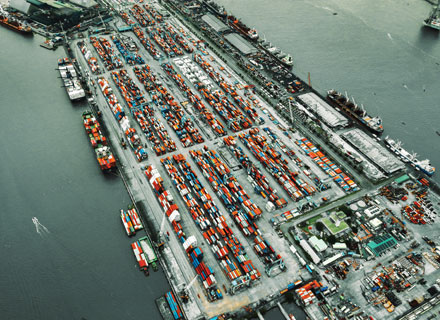
For instance, African ports, railways, and roads were historically designed to extract commodities out of Africa to global markets, not to facilitate continental trade. As a result, it can be cheaper to ship goods from Africa to Europe or Asia than to send them overland to the next African country. Maritime transport starkly illustrates this, as an estimated 98% of Africa’s shipping traffic is handled by foreign-owned shipping lines.
These global carriers optimise routes for profit, and it is often more lucrative for them to bring in finished goods from abroad and carry out raw materials rather than facilitate inter-African trade routes.
The imbalance is evident when containers that arrive full of imported products often leave African ports either empty or filled with unprocessed commodities, highlighting how African producers struggle to utilise those same vessels to export within the continent.
On land, rail connectivity between countries is minimal and accounts for as little as 0.1% of freight movement in some estimates, due to underinvestment and incompatible rail systems inherited from colonial times.
Then there are non-tariff barriers (NTBs), a broad category of bureaucratic, regulatory, or informal restrictions that hinder trade just as surely as tariffs do. NTBs have become a favoured tool for governments looking to protect domestic industries or pursue political ends without overtly violating trade agreements.
These include things like import quotas or bans, onerous customs procedures, arbitrary product standards, corruption at checkpoints, and subsidies that give local businesses an edge over imports. Within the East African Community, for example, NTBs cost businesses an estimated $17 million in direct losses in 2023 alone, through goods delayed or turned back at borders. And the problem could be pervasive under AfCFTA if not checked.
Tariff reduction is itself moving more slowly than planned. African negotiators agreed to gradually eliminate tariffs on 97% of tariff lines over 15 years (with a bit more leeway for least-developed countries). The clock is ticking, and the deadline to achieve near-full liberalisation is 2034—less than a decade away. Yet many countries have yet to implement even the initial cuts they signed up for. Some nations find tariffs a vital source of government revenue, and slashing them means losing funds that pay for public services.
Others are genuinely afraid that local firms, often less efficient or more expensive than competitors in neighbouring states, will be forced out of business if markets open too quickly. Many African economies export a narrow range of similar commodities and import manufactured goods. With countries not yet specialising in complementary industries, they worry that free trade would simply pit them against each other in a race to the bottom rather than fostering synergies.
Can AfCFTA succeed?
The coming years will be decisive for AfCFTA. The agreement is not an instant fix but rather a framework that requires continuous negotiation, adjustment, and, above all, implementation. To avoid AfCFTA becoming another well-intentioned plan that fails to deliver, African leaders and institutions will have to confront head-on the challenges that have surfaced.
Firstly, infrastructure and connectivity must be improved. It is often said that “you cannot trade where you cannot travel.” Investing in trans-African highways, modern rail links connecting key trade hubs, improved port facilities, and digitised border systems would dramatically lower the cost and increase the speed of cross-border trade.
Secondly, Africa needs to address the “software” of trade, not just the hardware. This means harmonising regulations, simplifying and unifying customs procedures, fighting corruption at border points, and actively identifying and eliminating non-tariff barriers.
Thirdly, support for smaller economies and vulnerable sectors is crucial to get all countries on board. Recognising that liberalisation has winners and losers, the AfCFTA includes a $10 billion Trade Adjustment Fund intended to help governments offset revenue losses from tariffs and assist industries that might be disrupted.
Perhaps most importantly, Africa must break the colonial economic pattern that still defines its trade. AfCFTA’s promise will ring hollow if countries simply continue to export unprocessed minerals and agricultural goods to each other and import finished products.
True success lies in value addition, like processing cocoa into chocolate, cotton into textiles, or cobalt into batteries. This requires investments in manufacturing, skills, and innovation, and creating a business environment where private-sector players feel confident to build factories and supply chains spanning multiple African countries.