
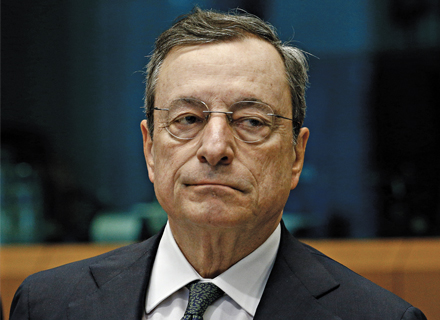

A leading European economist has warned that without substantial investment and change, the European Union (EU) will suffer a “slow agony.” The continent will need to undergo drastic adjustments to adapt to a world that’s becoming more competitive and unpredictable if it wants to catch up to the United States and China. Europe’s economy is reaching a turning point. Former European Central Bank chief Mario Draghi has cautioned that unless the EU can end decades of economic stagnation and flatlining productivity, it risks an “existential challenge.”
The former Italian premier offered a sobering message in a 400-page study written for the European Commission: the EU runs the risk of losing its core purpose if substantial investment and coordinated cooperation are not made.
The EU has faced difficulties for a long time. Since the turn of the century, the continent has struggled with slow growth, and since the global financial crisis, it has struggled with poor productivity and slow wages. Up until now, “slowing growth has been seen as an inconvenience but not a calamity,” according to Draghi’s assessment. However, the environment in which the EU functions is drastically shifting.
The EU’s share in global commerce is decreasing as trade slows down. With the Russia-Ukraine war revealing the EU’s dependence on imported gas, geopolitical tensions are high in both Europe and the Middle East. Meanwhile, the continent of Europe is becoming more and more fragmented due to the development of right-wing populist groups and ongoing cost-of-living difficulties. In light of this, sluggish growth can no longer be written off as a minor annoyance.
Europe’s lack of development has turned into a threat to its future in this new world. Furthermore, Europe runs the risk of falling behind as China and the US make investments in cutting-edge technologies and the green economy.
However, it’s not all bad news. A bold plan for turning around the EU’s failing fortunes is also laid out in Draghi’s report, which calls for increased cooperation and significant investment in common European goals. Draghi’s strategy for reviving the European economy includes reducing regulations, encouraging innovation, and releasing the advantages of decarbonisation.
The brave new world
Following the horrors of two world wars, the idea of a more united, cooperative Europe started to gain traction, and the first tentative steps towards a European Union were taken in 1946 when Winston Churchill delivered a historic speech at the University of Zurich, advocating for a “United States of Europe.”
The “Original Six” countries—Belgium, France, Germany, Italy, Luxembourg, and the Netherlands—began pursuing economic integration after experiencing a post-war growth miracle. In 1957, they signed the “Treaty of Rome,” creating the “European Economic Community.”
Over the ensuing decades, cooperation increased, and in 1993, the “Maastricht Treaty” went into effect, thereby establishing the “European Union.” The EU became the world’s largest and most economically integrated trading union with the creation of the single market.
Businesses of all sizes in Europe benefited greatly from the promise of free movement of capital, people, commodities, and services. Originally envisioned as a means of removing trade restrictions, promoting competition, and fortifying European integration, the single market initially benefited the EU economy.
As a result, trade with Europe increased, job possibilities expanded, and member nations’ GDPs increased slightly. To put it briefly, the single market serves the current globe. After around 30 years, that world has essentially vanished.
Europe was the centre of the world economy in the late 1980s, when the single market was beginning to take shape. Communist governments were falling in central and eastern Europe, and the post-war baby boom had produced a youthful and expanding labour force.
In terms of innovation, research, and development, Europe was keeping up with the United States, while China and India combined accounted for less than 5% of the global economy. However, the world currently appears to be totally different.
The EU’s economic share of the world economy has decreased over the past 30 years. The US is advancing rapidly as the world’s economic superpower, while China, India, and other developing Asian economies are now prominent on the international scene.
The EU economy was still just slightly bigger than the US economy in 2008. However, by 2023, the American economy was over 50% bigger than the EU’s, demonstrating the stark differences in economic fortunes on both sides of the Atlantic. To the amazement of economists and forecasters, growth in the US is booming while it is faltering in the EU.
The EU was on the verge of a recession in 2024 due to the long-lasting effects of the COVID-19 outbreak, excessive inflation, and a broad energy crisis, and its present economic prognosis is still muted. The United States, on the other hand, has surprised everyone by coming out of the pandemic stronger than before.
The development of new businesses is at an all-time high, wages are rising, and unemployment is declining. Meanwhile, even though China’s economy is weakening, it is still growing faster than Europe. The continent is just having a hard time keeping up in this brave new world with new economic titans.
Examining oneself
Europe’s economic fortunes have undoubtedly suffered as a result of the changing geopolitical environment. However, the continent must take responsibility for its own problems if it is to genuinely confront its difficulties.
The continent has been heavily reliant on imports for many years, especially in the areas of raw materials and fossil fuels. Draghi has stated that “we rely on a handful of suppliers for critical raw materials, and import over 80% of our digital technology,” making Europe the most dependent major economy.
Such agreements might not always be a reason for concern during a period of peace and prosperity. But the Russia-Ukraine conflict has shown how susceptible Europe is to geopolitical upheavals. Russia was by far the biggest supplier of natural gas to Europe before it invaded Ukraine.
In 2021, Russia supplied the EU with more than 50 million tonnes of coal and more than 100 million tonnes of crude oil annually, accounting for over 45% of Europe’s gas imports. All of that changed when the Russian taps began to shut off in May 2022. Europe was compelled to consider other, more expensive options as it could no longer afford Russian energy.
In this period of increased geopolitical danger, Europe needs to reevaluate its import dependency. The EU can no longer rely on its suppliers to consistently deliver the products it so desperately needs because once-reliable dependencies have turned into weaknesses.
Furthermore, when it comes to imports, Europe has other weaknesses besides Russian gas. Europe has become more and more dependent on the Asian giant for vital resources, especially those rare earth commodities that are essential to facilitating the renewable energy transition, even if the US has been trying to lessen its reliance on Chinese imports since 2018.
In a 2024 speech in Brussels, European Commission President Ursula von der Leyen said, “This is an area where we rely on one single supplier, China, for 98% of our rare earth supply, for 93% of our magnesium, and for 97% of our lithium, just to name a few. As the digital and green transitions accelerate, our demand for these materials will soar.”
By 2050, the demand for lithium is expected to increase 17 times due to the batteries that power our electric cars. Without access to these vital raw materials, Europe will undoubtedly be unable to achieve its clean energy goals; yet, the Russia-Ukraine war has given the continent a painful but timely lesson in over-dependencies.
The European Commission has responded to this difficulty by introducing the “Critical Raw Materials Act,” which establishes standards that domestically obtained, processed, and recycled raw materials must meet. Europe appears to be learning from its recent setbacks, but if it wants to build a safe future in a world that is becoming more uncertain, it will need to step up its diversification efforts.
Can unity save Europe?
The idea that the European nations are stronger as a group than as individuals is one of the tenets of the “European project.” This idea served as the foundation for the single market, which aimed to promote cooperation and dismantle obstacles throughout the continent. Certainly a commendable goal. However, the single market’s reality has been rather different.
In reality, the single market is not really “single,” as many detractors have pointed out. True cross-border trade is hampered by several factors, such as disparities in national taxation and contradictory e-commerce regulations.
The fact that financial services, energy, and transportation all have their own national markets further complicates issues, leading to differences in laws and policies across national boundaries. Foreign businesses that may normally wish to invest and expand in the EU may be put off by this complicated environment.
“Our competitiveness is negatively impacted by the decades-long fragmentation of our single market,” Draghi claims. It pushes high-growth businesses abroad, which limits the number of projects that can be funded and impedes the growth of the capital markets in Europe.
Draghi asserts that additional market consolidation is necessary for more than just the single market. He contends that for the EU to realise its full potential, it must come together around a common goal and vision. He laments that Europe is failing to realise its potential because it does not act as a true community.
He contends that although the EU has enormous collective spending capacity, it does not sufficiently combine its resources to accomplish common goals. Instead of cohesive strategic thinking, we observe fragmentation and divergence throughout Europe in terms of policy.
With so many national interests at stake, uniting EU member states behind shared objectives may prove challenging, but large-scale cooperation could be the only way the EU can keep up with the US and China’s massive economies.
The issue of productivity
While experts have been worried about Europe’s slow growth for years, the region’s falling GDP has mostly gone unnoticed by EU citizens, until now. After the COVID-19 pandemic began, inflation started rising. Then, when Russia invaded Ukraine in 2022, it climbed even faster, creating cost-of-living problems across several European countries.
A drop in real wages made it harder for families to make ends meet, and households started to feel the pinch of rising food and transportation costs. It is a very different story on the other side of the pond.
Americans pay three to four times less for their energy use than their European counterparts, thanks to the US’s abundant oil and gas resources, which have kept energy prices comparatively steady. Americans are benefiting from a thriving economy as earnings are increasing and unemployment is low.
In contrast, 93% of Europeans ranked the rising cost of living as their top concern, surpassing public health, climate change, and even the spread of conflict in Europe, according to a 2023 study conducted by the European Parliament.
According to the survey, nearly half of EU people said their standard of living has decreased since the start of the COVID-19 outbreak, suggesting that families and individual citizens are starting to feel the effects of Europe’s weak economic performance.
Concerns about their financial future are legitimate for Europeans. Real disposable income in the US has doubled since 2000, indicating a rising disparity in living standards between the US and the EU. Since the COVID-19 outbreak, this economic disparity has become more noticeable, and economists have been trying to figure out why.
Draghi asserts that Europe’s consistently low productivity is the primary cause of its subpar performance. By now, the productivity issue in Europe is widely recognised.
Since the 1970s, productivity has been declining throughout the continent, and this decline cannot be attributed to afternoon siestas and leisurely lunches. And from the 1990s, the EU’s prospects for expansion have been consistently impeded by a refusal to invest in developing industries.
According to Draghi’s study, “Europe largely missed out on the digital revolution led by the internet, and the productivity gains it brought: in fact, the tech sector is largely explained by the productivity gap between the EU and the US. The EU is lacking in the cutting-edge technologies that will propel future expansion.”
The upcoming artificial intelligence revolution poses a challenge to the EU, which has already lost out on the substantial productivity benefits that the digital revolution could have delivered. With their expenditures in AI and other cutting-edge technologies, the US and China are already outpacing the EU in this new race.
Similarly, Europe is well-placed to lead the global green energy shift, but unless it boosts its spending on R&D and worker training, it risks falling behind China. The productivity gains promised by these new industries are something Europe can’t afford to miss out on.
Given the demographic shift the continent is going through, this is an especially urgent issue. The population of Europe is ageing quickly, and future generations cannot sustain growth on their own due to a decline in birth rates.
The EU-27’s over-85 population is predicted to more than quadruple by 2050, and the European workforce may lose up to two million workers annually starting in 2040. Achieving productivity growth will be even more crucial in light of these impending difficulties.
An expensive remedy
Draghi does not sugarcoat the challenging economic situation facing Europe in his report. He admits that things are grim, but they are not hopeless. The former head of the Central Bank lays out a bold strategy to revive the European economy in addition to his appraisal of the current problems.
His radical and far-reaching recommendations mostly focus on three areas of action: maximising the advantages of decarbonisation, enhancing security while lowering dependency, and bridging the innovation gap with China and the US.
Draghi further cautions that without substantial investment, these suggestions cannot be realised. According to him, the EU needs to boost expenditure by €800 billion annually if it hopes to improve its economic situation in the long run. This illustrates the magnitude of the difficulties that lie ahead and amounts to about 5% of the bloc’s total GDP.
In contrast, the “Marshall Plan” recovery programme helped much of Europe develop beyond pre-war levels while spending 1%-2% of GDP to rebuild a devastated Europe. But unlike 1948, there is no outside support for Europe today. It will have to figure out how to pay for its own recovery this time.
The cost issue is the exact point at which Draghi’s proposal fails. His suggestions are contemporary, practical, and potentially revolutionary in theory. However, the cost of putting them into practice might just be too great, especially for the more cautious and risk-averse EU member states.
Draghi admits that without assistance from the public sector, the private sector is unlikely to be able to finance the majority of this investment.
Investing in important European public goods, like ground-breaking innovation, will require some joint funding.
However, given the glaringly empty EU coffers, joint debt might be the only means of achieving the kind of investment Draghi is calling for. In more conservative countries like Germany and the Netherlands, where there is little appetite for more joint spending and much less for joint borrowing, this will be difficult to sell.
In fact, German Finance Minister Christian Lindner confirmed that “Germany will not agree to this” in response to these proposals for greater common debt, just three hours after Draghi’s report was made public.
The alarm
A lot of Draghi’s proposals centre on stronger cooperation and deeper integration in key areas like the digital economy, decarbonisation, and defence. In order to achieve common goals, member states may need to cede some of their authority, even while greater coordinated action in some areas would enable Europe to take advantage of its size and combined strengths.
Many EU nations have been extremely hesitant to give up any form of authority up to this point, and they have even been slow to coordinate their policies. However, this has led to the fragmented EU that exists today, which is impeded by needless duplication and excessive regulation.
Draghi’s report might serve as the impetus for the EU to finally address its present fragmented methods of operation. The EU is in a state of near-crisis both geopolitically and economically, and it may never have felt more split on the most important issues pertaining to its future.
However, if leaders can grab the initiative and take a chance on significant reforms, a crisis can also catalyse progress. The cost of fixing Europe’s problems might be high, but the penalty of doing nothing could be much higher.