
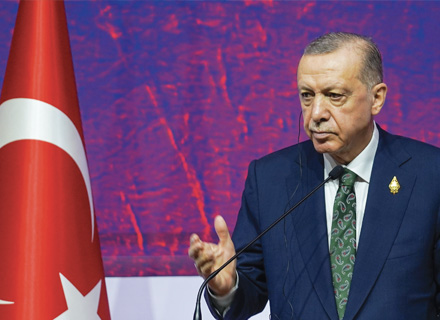

Turkey, which was in the news a year ago due to its sky-high inflation, is now seeking to become a major economic player in the Asia-Pacific region. Under President Recep Tayyip Erdogan’s leadership, the country is strengthening its diplomatic and trade ties with key partners, including Malaysia, Indonesia, and Pakistan.
Turkey has set its sights on regional trade blocs like the Association of Southeast Asian Nations (ASEAN) and the Asia Cooperation Dialogue (ACD), aiming to expand trade agreements backed by stronger diplomatic alliances. In 2015, it signed a free trade pact with Malaysia and hopes to achieve a similar deal with Indonesia in the coming days. President Edogan’s ambitious goals include transforming Turkey from a “regional economic centre into a global economic powerhouse” and elevating it from the world’s 16th largest economy into the top ten.
Turkey expands Asian footprint
Beyond Southeast Asia, Turkey wants to attract investment from Asia-Pacific businesses seeking a foothold in Europe and the Middle East. With its strategic location, strong manufacturing sector, and skilled workforce, the country offers a compelling destination for investors.
At the same time, Turkish companies are expanding their presence in Asia. Defence, aviation, and technology firms are forming partnerships in Malaysia and Indonesia, while the textile and construction industries see growing opportunities across the region.
However, challenges remain. Logistical bottlenecks, geopolitical uncertainties, and stiff competition from India and Gulf nations mean Turkey must carve out a distinct advantage in Asia-Pacific trade.
Senior journalist Tulay Kalyon Haznedaroglu said, “To stay ahead, it must enhance its infrastructure, refine trade diplomacy, and tap into emerging sectors like technology and green energy. Expanding shipping routes, increasing air travel agreements, and strengthening digital trade platforms will be key to accelerating its trade ambitions. With new free trade agreements on the horizon and strategic partnerships taking shape, Turkey is positioning itself as a vital bridge between Asia and Europe. Erdogan’s proactive diplomacy lays the groundwork for long-term economic growth, reinforcing Turkey’s status as a rising global trade powerhouse.”
“In the short term, the bi-continental country’s much-vaunted Twelfth Development Plan (2024-2028) aims to improve its international stature, promote prosperity, and combat inflation while maintaining strong and sustainable public finances. That goal will depend partly on the success of an associated Foreign Direct Investment Strategy aimed at significantly boosting FDI. The target is for Turkey to account for 1.5% of global FDI and 12% of regional FDI by 2028,” Haznedaroglu added.
On the domestic front, Turkey’s central bank has cut its policy rate by 250 basis points to 42.5%, marking the third monetary easing in a row after months of holding rates steady, as inflation continues to fall.
Experts now predict that inflation will continue to decrease throughout 2025, although it will still exceed year-end targets. In January, the central bank raised its year-end inflation forecast for 2025 to 24%, up 3 percentage points from the previous projection.
According to the latest official data, Turkey’s annual inflation fell to 39.05% in February, down from 42.1% in January, reaching its lowest level in almost two years and raising expectations for further rate cuts.
However, prices in essential sectors such as food, housing, and transportation have continued to rise. A recent poll by Ankara-based Asal Research revealed that 61.2% of respondents cited the “Economy/High Cost of Living” as their primary concern. Istanbul-based economist Atilla Yesilada also suggested that one more rate cut is likely in April 2025 before policymakers pause to assess the situation.
Growth prospects remain mixed
Not particularly, at least when considering FDI as a key measure. While full-year figures for 2024 have yet to be released, they will likely come close to the previous year’s $10.6 billion—down from $13.7 billion in 2022, far below the 2007 peak of $22 billion and short of the $14 billion hoped for earlier. That amounts to less than 1% of GDP, compared with 3% in 2007 and well under both potential and policymakers’ ambitions.
“In the months since June 2023, when a new policy team led by Finance Minister Mehmet Simsek, Vice President Cevdet Yilmaz, and the Central Bank of Turkey (CBT) reversed unorthodox policies, there have been many positive steps toward rational policymaking. However, challenges have emerged along the way,” said Rafik Selim, lead economist for Turkey at the European Bank for Reconstruction and Development (EBRD).
The EBRD now expects Turkey to post GDP growth of 2.7% in 2024, rising to 3% in 2025. Private consumption will likely be the biggest casualty as policymakers try to lift export-led growth above the current low share of 20% of GDP.
“Reducing spending remains difficult. The 2023 fiscal deficit was 5.2%, and the 2024 level is expected to be similar despite service cuts and tax increases. The main driver is earthquake spending. Ankara committed about $30 billion a year to help communities recover from the February 2023 quake that left several million people homeless in southern and central Turkey. Nevertheless, the unprecedented rebuilding of homes and infrastructure should support growth,” Haznedaroglu noted.
“Without the quake, the deficit would be 1.1%, which is quite reasonable,” Selim noted, adding that the estimated 2024 deficit of 5% will likely fall to 3.1% this year.
“Disinflation will likely continue this year, given the CBT’s signal that it will maintain its tight stance despite the start of rate cuts, the ongoing real appreciation of the Turkish lira, and an improvement in services inflation. We expect inflation to fall below 30% by the end of 2025,” said ING Bank analyst Muhammet Mercan.
The current account deficit has narrowed to around $10 billion from 2023’s high of $60 billion, helping rebuild foreign exchange reserves and reducing Turkey’s dependence on external financing.
“Capital flows have been strong; every recent bond and sukuk issue has been three or four times oversubscribed while yields have declined, indicating falling risk perceptions,” Selim observed.
In 2024, Fitch Ratings upgraded Turkey’s sovereign debt and several Turkish banks twice, from B- to B+ in March, then to BB- in September, making Turkey the only country in 2024 to receive upgrades from all three major ratings agencies up to that point.
“In a sense, we’ve returned to where we were in 2021, before the unconventional policy experiments that caused a dramatic deterioration in the country’s macroeconomic and financial stability outlook,” said Erich Arispe, senior director and head of Emerging Europe Sovereigns at Fitch Ratings.
“Turkey’s slower short-term growth outlook reflects ongoing economic rebalancing, which will take time given stubborn inflation,” Arispe argued. With no elections this year, falling dollarisation, rising foreign exchange reserves, and an expected drop in the fiscal deficit as earthquake spending recedes are all encouraging signs.
“Turkey has the capacity to grow. We expect 2.6% growth in 2025 and 3.5% in 2026, without creating further economic distortions. But this is a multi-year story, with the economy being recalibrated to support sustainable higher growth and realise its export and FDI potential,” Arispe said.
Another bright spot is Turkey’s exports to Europe, which rose 7.1% in January 2025 compared with a year earlier, despite economic challenges in its biggest trade market.
According to the Turkish Exporters Assembly (TIM), outbound shipments reached $10.32 billion, up from $9.63 billion a year ago.
However, growth in exports to the Eurozone has been weak over the past two years, as the continent battles high energy costs, tight government budgets, and cautious households who are choosing to save more, hurting overall consumption.
Turkey’s EV market surges
More than 105,000 electric vehicles (EVs) were sold in Turkey in 2024, marking a 45.9% increase from the previous year in a market where total vehicle sales rose only 0.5%. The share of EVs in total sales increased from 7.5% in 2023 to 10.7% in 2024.
Of the 105,315 EVs sold in 2024, 99,489 were pure electric, and 4,826 were extended-range vehicles.
The country’s first indigenous EV brand, Togg, delivered 30,093 cars last year—far surpassing the 11,534 units sold by US giant Tesla. In December 2024 alone, Togg and Tesla delivered 5,732 and 2,307 vehicles, respectively.
Togg, a joint venture of five Turkish holding companies and a business union, began deliveries only in 2023. In December 2024, Turkey’s EV market grew 82.3% to 22,017 units, capturing a 16.3% share of total vehicle sales.
EVs will make up 30% of the country’s auto market in 2025, predicted Ali Bilaloglu, CEO of Turkish auto exporter and distributor Dogus Otomotiv.
The Energy Market Regulatory Authority’s (EPDK) high-case scenario estimates that the number of EVs in Turkey will exceed 361,000 in 2025 and climb to 1.7 million in 2030 and 4.2 million in 2035.
Turkey’s charging network has expanded rapidly, and the country now ranks first in Europe in socket power and in the number of fast (DC) sockets per electric vehicle. Over the past two years, the number of charging sockets has grown from about 3,000 to 26,000.
Chinese EV manufacturer BYD’s plan to build a $1 billion plant in Turkey is seen as the sort of encouraging development the government hopes for, given the sector’s rapid growth.
Growth outlook remains wary
According to a United Nations report, the Turkish economy is expected to grow by 3% in 2024 and 3.1% in 2025, surpassing the global average of 2.8% for both years, with a moderately easing monetary policy aligned with declining inflation.
While conditions seem favourable for Ankara, a further upgrade to investment-grade status by ratings agencies would be a major step toward realising Erdogan’s broader 2028 ambitions.
According to Fitch, Turkey’s private sector has a remarkable ability to adapt.
“However, it takes time to reestablish macroeconomic credibility and for this to resonate with investors,” the agency warned.
“Many of the factors underlying Turkey’s potential also pose risks, including its geographic location, the possibility of indirect impacts from higher US tariffs, and exposure to shifts in investor sentiment. Many factors are beyond Turkey’s control, not least the current, highly fluid international environment,” Fitch said.
Turkey is working to strengthen its place in the global economy by building new ties in Asia while pushing reforms at home. Falling inflation, better credit ratings, and stronger exports give the country some momentum, even as challenges remain. Its growing EV market and rising investment interest show clear progress. Still, long-term success will depend on steady policies and stronger investor trust. If Turkey stays on this path, it could secure a stable future ahead.