
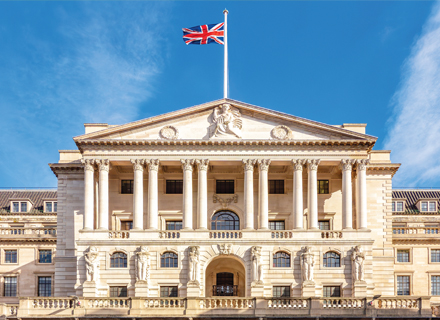

The Bank of England (BoE) faces a challenge: managing inflation and guiding the economy, particularly after recent data indicated that starting salaries in the UK have increased at their fastest rate in nearly three years.
According to the latest figures from job search platform Adzuna, the average advertised salary hit £42,278 in April 2025, a rise of 8.9% year-on-year, marking the steepest annual increase since June 2022. Every month, salaries rose by 0.75%, further complicating the central bank’s efforts to justify additional interest rate cuts.
The Monetary Policy Committee (MPC) of the Bank of England is now witnessing its key members, including the Bank’s chief economist Huw Pill, expressing concern about elevated wage growth, warning that loosening monetary policy too quickly could reignite inflationary pressures.
According to Adzuna, vacancies rose slightly by 1% year-on-year to 862,876, but were down 0.95% compared to March, suggesting a mixed picture for hiring momentum.
What’s going on?
Sectors seeing the strongest demand for workers included healthcare, which hit its highest vacancy level since January 2023, as well as hospitality, logistics, teaching, and retail. The construction and trade sectors recorded a sharp 15.2% decline in vacancies, reflecting cooling activity in those industries.
The BoE had been hoping for a clearer signal that inflationary pressures were easing before committing to a series of rate cuts in the second half of 2025. However, April’s inflation surprise, which saw the consumer price index jump to 3.5%, up from 2.6% in March, has prompted fresh caution.
Although the ONS reported a slight slowdown in overall wage growth, down to 5.6% in Q1 from 5.9% in Q4, starting salary trends suggest that employer competition for skilled staff remains high, particularly in regions with labour shortages. The MPC has a dilemma: to stay with rate reductions to stimulate growth, or pause to prevent an inflationary rebound.
A Chartered Institute of Personnel and Development (CIPD) study paints a different yet painful picture.
The report, titled “Labour Market Outlook – Spring 2025,” found employer confidence declining again this quarter, with the net employment balance falling to +8 — the lowest level recorded outside of the pandemic. Hiring intentions have softened, and one in four employers now plan redundancies, rising to 27% in the private sector.
Rising employment costs, including increases in National Insurance and the National Living Wage, are forcing many organisations to scale back recruitment, limit training investment, and consider price increases. Uncertainty around the Employment Rights Bill and global events adds to employers’ caution.
“The further softening in employment in April suggests businesses continued to respond to the rise in business taxes and the minimum wage by reducing headcount,” said Ruth Gregory, deputy chief UK economist at Capital Economics.
She also stated that despite a deceleration in wage growth, it remained relatively strong, meaning the Bank of England will remain cautious over future interest rate cuts.
For BoE, the key concern is that if earnings grow quickly, firms will seek to push up prices, thereby putting up the inflation rate.
As per Gregory, sticky wage growth (a situation where wages do not immediately adjust up or down in response to changes in labour market conditions) may mean the bank remains uneasy about inflationary pressures in the near term.
Wage hike: A new battlefield?
The Bank of England has noted that wages have quietly continued to rise, raising concerns that this could indicate a seismic and more long-lasting shift in the relationship between workers and employers. In May, the European country announced its public sector pay awards, which were higher than ministers had previously said they could afford and outstripped higher-than-expected inflation.
Still, it failed to please the disgruntled doctors. In fact, the latter threatened to protest against the new pay structure. After teachers were awarded a 4% increase, teaching unions also responded angrily to the Keir Starmer government’s refusal to fully fund the deal and warned that it would damage the quality of education that pupils received. The largest union plans to take the first step towards possible industrial action.
The decision to award 1.4 million NHS staff, including nurses, midwives and ambulance workers, a smaller rise (3.6%) also met with anger. The Royal College of Nursing (RCN) said it was “grotesque” to hand doctors a bigger increase than nurses who earned less than them.
Wes Streeting, the health secretary, and Bridget Phillipson, the education secretary, sought to defend the rises by highlighting that they represented the second time public sector personnel had received above inflation pay rises since Labour took power in 2024.
Are we seeing a 2022 scenario being played out all over again? Back then, inflation not only rocketed, it led to a situation where, in a desperate scramble to keep pace with rising prices to protect their incomes, British private and public sector workers took widescale industrial action in a way that brought back memories of the 1970s. What followed was a series of pay deals thrashed out between bosses and employees, with unions often arguing they had been due pay increases for years.
When considering the British private sector, relations between bosses and the rank and file have already been redefined by a shift towards remote working caused by the COVID-19 pandemic, and then companies’ increasing insistence on more regular attendance at work. Despite the volatile background, Threadneedle Street policymakers now ask whether the wage increases indicate that the power balance has moved back in the direction of workers, allowing them to protect their finances. Data from the Office for National Statistics (ONS) has gone some way to justifying the BoE view.
According to payroll data from the ONS, wages in the hospitality sector rose sharply, with hotels and restaurants increasing staff pay by 8.5% in the year to April, well above the 3.5% inflation rate. Retail workers also saw gains, with median pay rising by 6.9% over the same period. Across the economy, average wage growth reached 6.4%.
Recently, BoE chief economist Huw Pill said the UK’s labour market was becoming less flexible, suggesting employers were no longer able to freely hire and fire as they once could. Businesses, charities and public sector organisations have been laying off staff and freezing job adverts, but those staff who stay behind are well rewarded.
Ben Caswell, an economist at the National Institute of Economic and Social Research (NIESR), said, “Wages adjusted for inflation have returned to where they were before the cost of living crisis began in 2021. And the share of overall national income that is secured by workers rather than firms has also recovered to 2021 levels. While the average pay figures disguise many winners and losers, the aggregate figure showed most workers had benefited from inflation-busting pay rises to recover lost ground.”
He also focused on a slightly less up-to-date measure of pay based on employees’ average regular earnings over a rolling three-month period. This showed a rise in Great Britain that was still well above inflation at 5.6% in January to March 2025, though not as much as the PAYE data shows.
Caswell sees a series of minimum wage increases, closing the gap with the average wage, which is likely to fuel further pay rises as companies attempt to maintain a significant difference between the salaries of those on the bottom rung and the semi-skilled workers and middle managers above them.
What to expect next?
James Smith, research director at the Resolution Foundation, said that the weakening economic outlook worked against a prolonged recovery in pay.
He noted, “If we believe that wages consistent with the Bank of England’s 2% target would be about 3.5%, then we are well above that level at the moment. And that would give the Bank good reason to be cautious about cutting interest rates. However, other pay surveys are showing earnings rising at a much slower rate, so the official figures might be a bit like Wile E Coyote and about to be brought down to earth.”
Emphasising the likely short-term nature of the current bumper pay rises, the bank’s regional agents say employers are limiting pay rises to between 3% and 4% by the end of 2025. The Starmer government is not planning to pay more than 4% to public sector workers on average, and more departmental budget squeezes may be coming up.
Talking about other industries, take the hospitality sector, for example, which is known to employ a high proportion of minimum wage workers, and the same applies to the retail industry, boosting pay in 2025.
Senior journalist Phillip Inman claimed that most likely not next year or the year after, the legal minimum salaries will start rising more slowly.
Seemanti Ghosh, principal economist at the Institute for Employment Studies, sees the significant return to office-related demands from the companies as direct evidence of worker power reaching its limits. There has also been a gold rush for digital skills, which will result in another paradigm shift in the labour market.
Employers had to pay higher wages this time around, as they needed to retain skilled staff and pay them more while they embarked on a search for workers who were more adaptable in an ever-changing work environment.
“If wage increases are not driven by negotiations with unions, then they are due to employers wanting to hang on to skilled staff. This matters for all companies that increasingly rely on soft skills for things like project management and tech skills in other areas. We also see it in the green sector, where there is a shortage of people with the skills the industry needs,” Seemanti remarked.
How much of this dislocation is systemic and will keep wages higher for longer will be a subject of debate for the rest of the year. Pill advocated for keeping interest rates elevated while the trends become clearer, believing there is less damage from higher rates than letting inflation run away again.
Other MPC members disagree, arguing that businesses cannot invest in skills training while borrowing costs are prohibitively high.
It reflects a starkly different view of the labour market, one that emphasises the lasting damage caused by rising job losses and prolonged economic stagnation.
Swati Dhingra and Alan Taylor want rates to come down quickly. Who wins the argument inside the central bank could dictate whether workers or bosses have the whip hand in the great tussle over pay.