
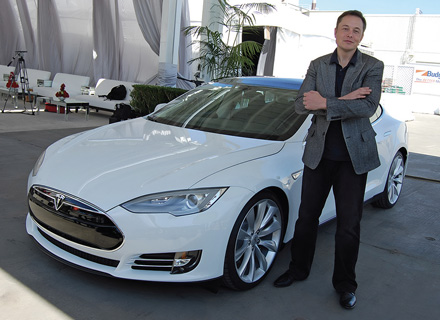

Elon Musk’s persona and public perception have metamorphosed significantly in the past decade. Remember when he first exploded onto the scene in YouTube videos and talk show interviews? He was seen as a visionary who was going to save the world from climate change through radical new technology that would electrify automobiles and steer them away from carbon-heavy fossil fuels.
He was a little quirky, but America was used to eccentric, ingenious inventor-CEOs like Steve Jobs. Musk was seen as a hero of capitalism, welcomed with applause and given a prominent seat at the table of public discourse. Perhaps his charged opinions, fantastical futurism, and idiosyncrasies won the hearts of millions initially. But those same polarising opinions, unfulfilled promises, and outlandish behaviours are getting him (or more accurately, the company he built) into terrible trouble.
Without Elon Musk, there would be no Tesla. He poured his PayPal fortune into the struggling startup, a gamble that paid off splendidly. For the longest time, his cars were symbols of environmentalism, prestige, and tech-savviness. If he had just remained the focused CEO of Tesla, it could have been one of the greatest companies of all time.
However, Musk is no longer the man sleeping on the factory floor of his high-tech automobile corporation. He is distracted by politics, petty feuds, and a dozen other ventures like Neuralink, Starlink, SpaceX, and The Boring Company.
He became deeply embroiled in politics through his purchase of the micro-blogging platform Twitter (now X) and his platforming of Donald Trump. As time went by, Musk shifted from a liberal to a libertarian, eventually patronising right-wing hardliners, including those who deny the very climate change Tesla claims to solve. There are even accusations that he did a Nazi salute.
International Finance will examine how Elon Musk’s behaviour is quantifying into a “Musk Discount,” eroding brand trust, accelerating the partisan divide in sales, and leaving the company vulnerable to stagnation while its CEO fights political battles elsewhere.
The rise of a visionary
To understand the sheer magnitude of the reputational collapse and the financial “discount” currently weighing on Tesla’s valuation, one must first painstakingly reconstruct the extraordinary “Musk Premium” that characterised the company’s ascent.
For nearly fifteen years, Elon Musk was more than a CEO; he was the singular asset upon which the entire valuation of the enterprise rested. In the early 2010s, the automotive industry was defined by insurmountable barriers to entry. It was a graveyard of failed startups, a capital-intensive sector where margins were razor-thin, and brand loyalty was entrenched over decades. Into this rigid ecosystem stepped Musk, fresh from his PayPal exit, with a proposition that seemed economically suicidal. He suggested developing a luxury electric sports car to finance the production of a mass-market sedan.
The early narrative was one of existential heroism. Musk’s willingness to pour his personal fortune into Tesla (and SpaceX) when both teetered on the brink of bankruptcy in 2008 forged the initial layer of the “Iron Man” mythos. This was a technocratic saviour utilising capitalism to solve the climate crisis. By positioning himself as the protagonist in a battle for the planet’s future, Musk imbued Tesla products with a profound moral imperative. You did not merely purchase a Model S in 2013; it was also a symbolic vote for a sustainable future and a rejection of the “big oil” status quo.
This narrative construction created a formidable, intangible economic moat. While traditional automakers like General Motors and Toyota spent billions annually on advertising to maintain market share, Tesla spent absolute zero.
The CEO’s X account served as a global broadcasting tower, where updates on software, manufacturing targets, and rocket launches captivated an audience that far transcended the typical car-buying demographic. This “halo effect” allowed Tesla to command premium pricing and maintain high stock valuations despite fundamentally weaker financials than its legacy competitors.
The strength of this bond is visible in historical consumer data. For a sustained period between 2013 and 2020, Tesla topped Consumer Reports owner satisfaction surveys with consistency that defied statistical norms. In 2020, even as the company struggled with initial quality control issues on the Model Y, it secured the top spot for the fourth consecutive year. The satisfaction scores frequently hit 99%, a figure that indicated owners were judging the vehicle not by the panel gaps or paint quality, but by the ideological affinity they felt for the mission and the man leading it.
The financial apotheosis of this visionary status was reached during the bull run of 2020–2021. As Tesla finally conquered the “production hell” of the Model 3 ramp-up (a period where Musk famously slept on the factory floor at Giga Nevada), the market stopped pricing Tesla as a car company and began pricing it as a high-growth technology platform, akin to a software monopoly.
The inclusion of Tesla in the S&P 500 in December 2020 served as the ultimate institutional validation. It was the largest company ever added to the index by market capitalisation, entering with a weight that forced index funds to buy billions of dollars’ worth of shares, driving the price even higher. At the time of this inclusion, Tesla was trading at over 120 times earnings.
By comparison, traditional automakers like Ford or Volkswagen traded at single-digit price-to-earnings ratios. This delta, the difference between 8x earnings and 120x earnings, was the “Musk Premium.” It was the price investors were willing to pay for the optionality of Musk’s brain and the belief that he would solve full autonomy, robotics, and energy storage, creating trillions in value where others saw only steel and rubber.
Between 2010 and 2021, Tesla’s stock performance generated generational wealth for retail investors. The company’s market capitalisation eventually surpassed the combined value of the next nine largest automakers. This phenomenon cemented a base of retail shareholders (often referred to as “Tesla Stans”), who viewed Musk not just as a competent manager but as an infallible oracle.
However, the foundation of this valuation was implicitly and explicitly tied to the CEO’s singular focus. Tesla’s own 10-K filings contained “Key Man” risk disclosures that were far from boilerplate. They were a literal admission of corporate fragility with statements like “We are highly dependent on the services of Elon Musk, Techno King of Tesla and our Chief Executive Officer… Without his relentless drive and uncompromising standards, there would be no Tesla.”
As long as that “relentless drive” was directed at expanding the Supercharger network, improving battery energy density, and refining manufacturing processes, the market was willing to overlook missed deadlines, aggressive tweets, and eccentric behaviour. The eccentricities were seen as features of his genius, not bugs in his leadership.
The cost of madness
The transition from “visionary” to “liability” was not a singular event but a cascading series of reputational fractures that accelerated dramatically between late 2022 and early 2025. The purchase of Twitter (rebranded as X) marked a distinct inflexion point.
It was the moment Musk’s public output shifted from engineering optimism, the vision of sending rockets to Mars and creating electric tunnels and neural interfaces, to a relentless stream of partisan combat, cultural grievances, and conspiracy theories.
The most critical strategic error in Musk’s recent pivot has been the systematic alienation of Tesla’s primary demographic. Historically, the early adopters of electric vehicles (EVs) have skewed heavily Democratic, liberal, and environmentally conscious. These were the consumers willing to pay a premium for a “green” product.
By aligning himself with right-wing hardliners, amplifying climate change sceptics, and engaging in “anti-woke” crusades, Musk placed Tesla in an untenable commercial position. It is now a company selling a solution to climate change run by a man actively supporting politicians who mock its existence.
A landmark study by economists from Yale University and the National Bureau of Economic Research (NBER), released in early 2025, provided devastating empirical evidence of this phenomenon. Analysing vehicle registration data matched with voter registration records across the United States from October 2022 through early 2025, the researchers identified a massive, statistically significant “Musk Partisan Effect.”
The study found an estimated 1.0 to 1.26 million lost vehicle sales (tens of billions of dollars in lost revenue) between October 2022 and early 2025. This decline was most severe in strongly Democratic counties, where sales plummeted by an astonishing 67% to 83% compared to expected trends, simultaneously providing a 17% to 22% sales increase to competitors like Rivian, Ford, and Hyundai. The study posits that without this alienation of his core customer base, Tesla’s sales in the first quarter of 2025 could have been approximately 125% higher than actual figures.
Republican interest in EVs remains structurally low due to ideological opposition to the technology itself, while Democratic interest in Tesla specifically has collapsed. The buyers haven’t stopped wanting electric cars; instead, they have stopped wanting Musk’s electric cars. They are migrating to “anti-Musk” alternatives. The study notes that this effect “showed no indication of slowing down” and had actually increased in intensity by the first quarter of 2025.
The damage to the brand’s intangible value mirrors the devastating sales data. In the early 2020s, Tesla enjoyed a reputation as the gold standard in corporate innovation, akin to the iPhone in 2010. By 2024 and early 2025, brand sentiment trackers painted a bleak picture of a brand in freefall.
Data from YouGov and other reputation indices highlight this precipitous drop. Tesla’s “Buzz score” (a metric that tracks whether consumers are hearing positive or negative news about a brand) remained consistently negative throughout 2023 and 2024, averaging -7.1. This indicates that the dominant conversation around the brand was negative for two straight years.
More alarmingly, in broader reputation polls, Tesla’s ranking plummeted from a top-tier status (sixth) to near the bottom of the list (95th). This erosion is inextricably linked to the CEO’s personal approval ratings. Pew Research Centre data from early 2025 indicates that 54% of American adults now hold an unfavourable view of Musk.
If the partisan alienation was a slow bleed, the events of January 20, 2025, served as a traumatic arterial wound for the brand. Following the inauguration of Donald Trump, Musk, who had been tapped to lead a new “Department of Government Efficiency,” addressed a crowd of supporters at the Capital One Arena in Washington, DC.
During this speech, celebrating what he called “no ordinary victory,” Musk performed a gesture that was widely interpreted as a Nazi salute. The reaction was immediate, visceral, and global.
The optical damage to Tesla was catastrophic. For a brand that relies on coastal urban professionals, a demographic sensitive to social justice and historical sensitivity, the image of their CEO performing a gesture associated with the Third Reich was a breaking point. It cemented the “Musk Discount” as a moral penalty. Driving a Tesla was becoming a social stigma.
The “Musk Discount” is visible in the sharp divergence between Tesla’s stock performance and the broader market. While the S&P 500 and other tech giants surged on the back of the AI boom in 2024, Tesla’s stock languished, decoupling from the “Magnificent Seven” tech cohort.
Over the 12 months leading into early 2025, Tesla significantly underperformed the S&P 500. While the index grew by approximately 12%, Tesla delivered negative returns, dropping 1% over the same period and down nearly 40% from its late 2024 peak by March 2025.
By January 2025, the “political noise” was no longer treated as a sideshow by Wall Street but as a fundamental risk factor. Morgan Stanley, historically one of the most bullish firms on Tesla, downgraded the stock to “equal-weight” and cut price targets, explicitly citing “volatile behaviour” and the distraction of the CEO as primary risks to earnings. Analysts noted that the “political noise” had begun to overshadow the fundamentals.
In 2024, for the first time in its history as a mass-market manufacturer, Tesla saw a decline in annual sales in the United States and failed to meet its global growth targets. The company sold approximately 1.79 million vehicles, while the broader electric vehicle market continued to grow.
The contingency
As the liability of Musk’s leadership grows, the question of corporate governance and succession has moved to the forefront of institutional investor concerns. The lack of a clear contingency plan represents a critical failure of the board of directors, which has been accused of being “captive” to the CEO and derelict in its duty to protect shareholder value from his personal whims.
The extent of the board’s subservience to Musk was laid bare in a landmark legal ruling that reverberated through 2024 and early 2025. In the case of Tornetta vs Musk, Delaware Chancery Court Chancellor Kathaleen McCormick struck down Musk’s massive 2018 compensation package (valued at over $55 billion), ruling that the process to approve it was deeply flawed and legally invalid.
Tesla functions as a monarchy. The board’s subsequent attempts to reinstate the pay package through new shareholder votes in 2024 and 2025, rather than negotiating a new, reasonable deal, only deepened the conflict between institutional investors concerned with governance and retail investors loyal to Musk.
Despite “Key Man” risk being the most significant threat to Tesla’s valuation, the company has stubbornly refused to publish a formal succession plan.
Shareholder proposals demanding a “Key Person Risk” report have been repeatedly voted down by the board, which argues that such disclosures would put the company at a competitive disadvantage. However, the urgency of this issue, amplified by Musk’s distraction with X, SpaceX, xAI, and politics, has forced internal movements that hint at a shadow succession strategy.
The most prominent figure to emerge as a potential stabilising force is Tom Zhu (Zhu Xiaotong). Zhu gained fame within the company for orchestrating the “production miracle” at Giga Shanghai, where he implemented the “China Speed” ethos, characterised by extremely efficient, 24/7 operational intensity.
Under his leadership, Giga Shanghai became Tesla’s most efficient export hub, accounting for half of global deliveries in 2022. Another key player is Omead Afshar, a long-time Musk confidant often referred to as the “fixer” in the office of the CEO. Reports in late 2024 and early 2025 placed him in critical roles overseeing operations in North America and Europe, stepping in to manage sales as inventory piled up. Afshar is viewed as an executor of Musk’s will, a bridge between the chaotic vision of the CEO and the operational reality of the company.
Elon the indispensable
While the “liability” argument is supported by robust sales and brand data, any honest analysis must contend with the formidable counter-argument, i.e. Elon Musk is not merely a manager. To fire him, or to marginalise him, risks turning Tesla into “just another car company,” stripping it of the innovation premium that justifies its stock price. His “madness” is inextricably linked to the method that produced the company’s greatest breakthroughs.
Musk’s value to Tesla is most tangible in the engineering trenches. His management style, characterised by “first principles” thinking (boiling things down to the fundamental truths of physics and economics), has led to breakthroughs that traditional OEMs deemed impossible or unwise. He refuses to accept “reasoning by analogy,” instead demanding to know the atomic cost of materials and the theoretical limits of physics.
The development of the Cybertruck provides a case study in both the madness and the genius of Musk’s method. In the design phase, Musk rejected traditional aluminium body-on-frame designs, which have been the standard for pickup trucks for nearly a century. Instead, he insisted on using an ultra-hard 30X cold-rolled stainless-steel exoskeleton.
At the same time, Musk had decided to pivot the Starship rocket design from carbon fibre to stainless steel to reduce costs and improve thermal durability. He forced this same material science onto the Cybertruck team, demanding they use an alloy so hard it would break traditional stamping presses. This decision caused immense manufacturing headaches, requiring the invention of entirely new manufacturing techniques and contributing to years of delays.
The steel was so hard it could not be painted or stamped into curves, dictating the truck’s polarising “origami” aesthetic. While some might say the design is ugly, the result is a vehicle that is bullet-resistant and dent-proof. The mobile fortress is the safest thing on the road and stands as a physical totem of his refusal to compromise vision for convenience.
The dilemma for investors is that the same psychological traits that led to the “Nazi salute” controversy (impulsiveness, lack of filter, extreme risk tolerance) are the same traits that led to the reusable rocket and the electric car revolution. You cannot have the stainless-steel truck without the chaotic personality that drives it.
Furthermore, Tesla’s recruitment strategy relies heavily on the allure of working for Musk. Top engineers in AI and robotics join Tesla not just for the stock options, but to work with the man who is trying to colonise Mars. The 10-K disclosure admits that the company competes for talent based on this “visionary” allure. Removing him could trigger a brain drain of the most critical technical talent, leaving the company as a hollow shell of its former innovative self.
The future of Tesla
The automaker is no longer a pioneer and has been sidelined by BYD in sales and technology. With Musk’s public relationship with climate change deniers, even the liberals are distancing themselves from him and his products.
The board needs to act fast and figure out if they should wait for an implosion or professionalise Tesla into a mature corporation with clear succession plans, potentially elevating leaders like Tom Zhu.
While Musk’s “first principles” thinking remains essential for breakthroughs in AI and robotics (Optimus, FSD), investors must weigh whether this engineering value still outweighs the “Musk Discount.” The company’s valuation depends on whether Wall Street continues to treat it as a tech monopoly or re-rates it as a distressed auto manufacturer.
Tesla’s future is no longer guaranteed. If the “political noise” continues to drown out product fundamentals, the company risks stagnation, surviving as a niche, volatile tech holding rather than becoming the mass-market, global titan it was promised to be.