
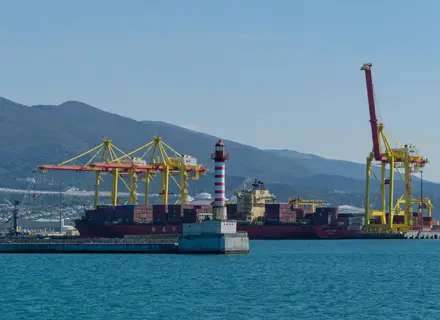

Oil prices fell in early Asian trade on November 17, erasing the previous week’s gains, as loadings resumed at the key Russian export hub of Novorossiysk after a two-day suspension at the Black Sea port that had been hit by a Ukrainian missile and drone attack.
Brent crude futures dropped 58 cents, or 0.9%, to USD 63.81 a barrel, while US West Texas Intermediate (WTI) crude futures were trading at USD 59.50 a barrel, down 59 cents, or 1.0% from 14th November’s close. Both benchmarks rose more than 2% to end the November mid-week with a modest gain, after exports were suspended at Novorossiysk and a neighbouring Caspian Pipeline Consortium terminal, affecting the equivalent of 2% of global supply.
Novorossiysk port resumed oil loadings on November 16, stated media reports and LSEG (London Stock Exchange Group) data. However, Ukraine’s stepped-up attacks on Russia’s oil infrastructure remain in focus for further possible disruptions. While a Reuters report claims that the incident crippled two oil berths at Novorossiysk, two tankers — the Suezmax class Arlan and Aframax class Rodos — are now doing the loading duty.
“Investors are trying to gauge how Ukraine’s attacks will affect Russia’s crude exports in the long term, while also locking in profits after last Friday’s rally. Overall, the perception of oversupply from OPEC+ production increases remains,” said Toshitaka Tazawa, an analyst at Fujitomi Securities, while adding that WTI is likely to stay near USD 60, fluctuating within a USD 5 range.
Investors are also monitoring the impact of Western sanctions on Russian supply and trade flows. The United States imposed sanctions banning deals with Russian oil companies Lukoil and Rosneft after November 21 to push Moscow toward peace talks and stop the Ukraine campaign, which started in 2022.
The attack on Novorossiysk, Russia’s largest Black Sea export hub, was the most damaging Ukrainian attack to date on Russia’s main Black Sea crude export infrastructure. The facility accounts for about a fifth of Moscow’s crude exports, and a long shutdown would have forced costly shuttering of oil wells in West Siberia, a step that would have significantly reduced the amount of oil sent to international markets by the world’s second-largest exporter.
Ukraine has been conducting frequent drone and missile attacks on Russian refineries, oil depots and pipelines. Despite that, as per Reuters, Russia’s oil processing has fallen just 3% in 2025. Russian crude oil shipments via Novorossiysk’s Sheskharis terminal totalled 3.22 million tonnes, or 761,000 barrels a day, in October, according to industry sources. A total of 1.794 million tonnes of oil products were reportedly exported through Novorossiysk in October.
In the United States, the ruling Republicans are working on legislation that will impose sanctions on any country doing business with Russia, with President Donald Trump even indicating that Iran may get added to that list. In early November, OPEC+ agreed to increase December output targets by 137,000 barrels per day, the same as for October and November. The energy exporters cartel also agreed to a pause in increases in the first quarter of 2026.