
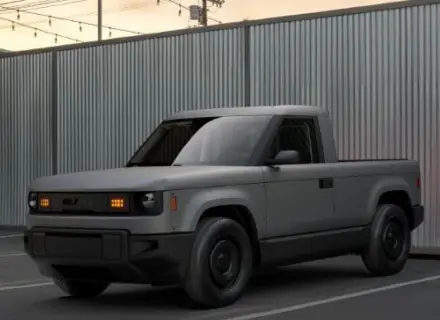

A bold new player is revving into the electric vehicle race in the United States. Michigan-based Slate, which recently raised USD 700 million from investors, including Amazon founder Jeff Bezos, has been racking up more than 100,000 reservations for its cars. However, the company is entering a tough American market, which, until a couple of years ago, was brimming with high promises but is now witnessing fading consumer interest. While global EV sales are up 27% over 2024, in the United States, growth has been muted so far in 2025, while uncertainty hangs over the future of the USD 7,500 federal tax break.
Against this background, Slate likely faces a long road to profitability. While the EV business has proven to be a money loser for most industry players, partly because of “expensive batteries,” the start-up’s founders believe the company can overcome those obstacles by offering something that is in short supply in the current American car market: affordability. While the average new-vehicle selling price is above USD 45,000, Elon Musk’s Tesla has recently backtracked on plans to introduce an electric vehicle in the mid-USD 20,000s. Slate hopes to fill the shoes here by taking a bare-bones approach to its two-seat pickup, which is slightly smaller than a Honda Civic hatchback.
Going For Radical Simplicity
The start-up states, “When the auto industry keeps jacking up their prices, we’re keeping the price of the blank Slate low. Where they make you pay for trim packages and features you’ll never use, we let you hand-pick the ones you want. And unlike every other vehicle, a Slate is never finished. You can add new accessories, swap colours, reconfigure body types, and more whenever you want. As many times as you want.”
With the vision of “making the most affordable new vehicle possible” and the mission of bringing manufacturing jobs back to the Midwest region of the United States, Slate’s creation started with an idea from Miles Arnone, the CEO of “Re:Build Manufacturing,” a Massachusetts-based start-up that includes several former Amazon employees. Arnone believed workers needed better access to affordable vehicles.
Arnone shared his idea with Jeff Wilke, the company’s chairman and a former Amazon executive, and eventually, a small team was formed. The group hired Christine Barman, who spent most of her career as an engineering executive at Fiat Chrysler, now part of Stellantis. Barman, while interacting with Reuters, said that her venture will be able to absorb the loss of the USD 7,500 tax credit because the truck’s price still will undercut competitors.
With a plan to build the flagship pickup vehicle at an old catalogue factory in Warsaw, Indiana, Slate’s “radical simplicity” approach will see costs held down by starting with a simplified design that uses about 500 parts in the truck’s assembly, compared with a few thousand for a traditional truck. The plan to build all of its trucks in a basic package – what the company calls a “SKU of one” – will allow customers to choose to add a stereo, centre console, special lighting, and other features later.
Bring Your Own Tech
The pickup will be built with composite body panels in gray, with an option for a vinyl wrap, thereby sidestepping the need for a paint shop, which is one of the most expensive investments in a typical car factory.
“We think everyone should be able to personalise their car. But vehicles aren’t built to be customised by non-gearheads (we love you, gearheads). So, we changed that. A Slate is designed for easy DIY (yes, even you). It’s built with over 100 Slate Attach Points that fit our ever-expanding range of accessories. So, you can make it whatever you want, whenever you want,” the start-up stated.
While traditional vehicles aren’t built to be easily customised, Slate will challenge the idea by designing its pickup for easy DIY (Do It Yourself). It will be built with over 100 “Slate Attach Points” that fit the user’s ever-expanding range of accessories and features. The start-up will also enable its pickup buyers to select their preferred colour, with the vehicle being designed to be easily wrapped. The wrap kits will start around USD 500.
The customer can also bring the apps they know and love to create the preferred experience. Instead of a bulky, distracting, and quickly outdated infotainment system, the Slate pickup will come with something simpler: a smartly designed mount that fits a phone or tablet, and a holder for a portable Bluetooth speaker. Heating and air conditioning will be included.
While most cars are built based on their user’s present needs, the Slate pickup has been made keeping the future in mind. The vehicle’s design will allow it to easily transform from a two-seat truck to a five-seat SUV, along with the addition of the start-up’s “SUV Kit.”
While average American vehicle owners drive around 37 miles a day, Slate claims that their customers can perform the same act on a single charge of the start-up’s standard battery. And if they need to grab a charge while on the road, the Slate App will let them know when and where to plug in. For long road trips, the Slate pickup’s extended range battery will increase the range to a projected 240 miles from a projected 150 miles.
“A Slate comes with everything you need to charge at home, no need to buy anything extra. With the included charging cable, you can charge using a regular household outlet. If you have access to a 240-volt outlet (the outlet used for dryers, stoves, and other appliances), you can charge faster with Level 2 charging. Many EV owners choose to purchase an optional wall-mounted charging station, which can add convenient features like cable storage and Wi-Fi connectivity, but you don’t necessarily need one to charge at home,” the start-up commented.