
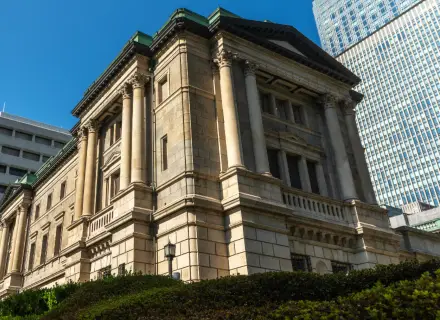

Amid the yen’s ongoing slide, former Bank of Japan (BOJ) board member Makoto Sakurai told the media agency Reuters that the East Asian country’s central bank may have to raise interest rates as soon as March 2026 if the currency continues its downward spiral. The news also comes amid the build-up to the upcoming US-Japan summit, as Prime Minister Sanae Takaichi is expected to visit Washington for a meeting with her American counterpart, President Donald Trump.
“Takaichi may seek the BOJ’s help in keeping yen from falling in check, as the fact that Washington conducted rate checks to prop up the yen last month signals its preference for the currency to strengthen against the dollar,” Makoto Sakurai remarked.
“Currency intervention has only a temporary effect in combating yen-selling pressure. The best way to counter a weak yen is for the BOJ to raise interest rates. A renewed yen slide would push up inflation through higher import costs and offset some of the downward pressure from government fuel subsidies,” said Makoto Sakurai, who reportedly retains close contact with the central bank’s incumbent policymakers.
“If the need to combat sharp yen falls emerges, the BOJ can justify raising rates as soon as March by pointing to prospects of strong wage growth in annual spring wage talks between companies and unions. It would make better sense to wait until April, but depending on yen moves, there’s a chance the BOJ could raise rates in March,” the former board member added.
Sakurai served as a BOJ board member from 2016 to 2021, the timeframe that saw the central bank shift its policy focus away from huge asset purchases toward controlling long-term interest rates through the introduction of bond yield control.
He stated that the BOJ may need to raise its policy rate twice in both 2026 and 2027, increasing it from the current 0.75% to 1.75%. This rate will neither cool nor overheat the Japanese economy.
“Hiking rates at a faster pace could hurt Japan’s banking system by increasing bankruptcies among small firms and hurting the balance sheets of regional lenders,” Makoto Sakurai added.
The year 2024 saw a massive change in the BOJ’s policy approach, with the central bank ending a decade-long massive stimulus programme, apart from raising rates several times, including in December, when it took its short-term policy rate to a 30-year high of 0.75%.
With inflation exceeding the BOJ’s 2% target for nearly four years, Governor Kazuo Ueda has signalled the apex institution’s readiness to keep raising rates if its economic projections materialise. The BOJ’s next policy meeting will be held on March 18-19, followed by the board meeting on April 27-28, during which it will also make fresh quarterly growth and inflation forecasts.
A weak yen has become both an economic and political headache for Japanese policymakers, with the phenomenon hurting households and retailers by pushing up imported fuel and food costs. Since Takaichi’s ascendancy as the country’s Prime Minister in October 2025, the currency has fallen about 8% against the dollar to an 18-month low of 159.45 in January. In fact, according to reports published in The Mainichi daily, one of Japan’s major newspapers, Takaichi, during her meeting with BOJ Governor Ueda in February, expressed “reservations” about additional interest rate hikes.
While there hasn’t been any proper clarification from either of the two personalities, the report signals potential friction over monetary policy that could complicate the BOJ’s coordination efforts with the newly strengthened administration. While Ueda described the meeting as a “general exchange of views on economic and financial developments,” apart from refuting rumours of the PM making specific monetary policy requests, Takaichi said that she hoped the central bank would work closely with the government to durably achieve its 2% inflation target, accompanied by wage gains.
According to the BOJ governor, when he met Takaichi in November 2025, she was told that the central bank was gradually raising interest rates to guide inflation smoothly toward its 2% target and ensure the economy achieves sustainable growth.