
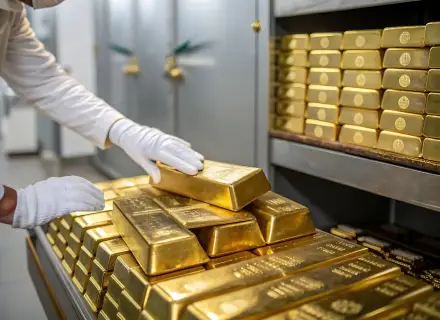

Uganda’s central bank will start its domestic gold purchasing programme in March 2026, joining the bandwagon of policymakers around the world building up their gold holdings after a surge in the yellow metal’s price in the past few months.
The plan, announced two years ago, will see the African country’s top financial body boosting its reserves, apart from cushioning the domestic economy from risks in international financial markets.
“If all goes as planned, we should be able to purchase at least 100 kg of gold between March and June 2026. We are finalising with gold refineries that have been contracted to carry out fire assaying and refining of gold to required purity levels,” Adam Mugume, executive director for research and economic analysis at the bank, told Reuters.
Spot gold jumped more than 2% on March 2 to USD 5,395.99 an ounce, amid concerns about the impact of US-Israel strikes on Iran, and most importantly, its fallout on the Middle East region, driving an investor rush into safer assets. Adam Mugume did not say whether or how the price move would impact the plan.
On the other hand, on 3rd March, the US dollar rose to a more than one-month high, which will likely make dollar-denominated commodities such as gold more expensive for buyers with other currencies.
Bullion has hit record highs in 2026 amid heightened geopolitical and economic uncertainties. Against this backdrop, central bankers in Kenya and the Democratic Republic of Congo have also announced moves to diversify their reserves by buying gold.
Uganda exported USD 5.8 billion worth of gold in 2025, a 76% increase from 2024. The African country has already commissioned its first large-scale gold mine. The Chinese-owned facility is projected to process 5,000 metric tons of gold ore per day and produce about 1.2 tons of refined gold a year.
“The central bank will purchase from artisanal miners as well as medium-scale and large-scale producers,” Mugume said.
Uganda set up its first bullion processor, “Africa Gold Refinery,” in 2017, and several others have since been established, processing both locally produced gold and shipments from neighbouring Democratic Republic of Congo.