
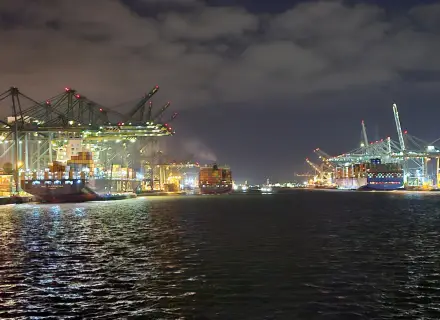

A sustained pilot strike and national labour action disrupted major European gateways (Antwerp, Bruges, and Zeebrugge) in March 2026. Dozens of vessels have been waiting in queues, delaying thousands of containers.
The Port of Antwerp-Bruges had up to 27 inbound ships waiting offshore with no possibility of entry, while Zeebrugge saw around 10 vessels held up during peak interruptions of March 19–22, according to port authorities and industry advisories.
Antwerp-Bruges handles about 290 million tons of cargo annually, and the strike has forced ship owners to omit certain port calls on Asia-Europe loops.
Most cargo types that come in through the port are perishables, such as fruits and vegetables, and automotive parts. These cargo types were especially vulnerable, with some shippers warning of production stoppages at Flemish assembly plants if just-in-time parts failed to arrive.
The strike was organised by Belgian pilots and staff at the Zeebrugge traffic centre, which effectively suspended vessel movements in and out of Zeebrugge for several days and forced Antwerp to proceed with seagoing traffic via the North pilot station using only Dutch pilots.
The Belgian National Strike is due to a pension reform proposal and budget cuts. Pilots and maritime controllers argue that reforms will significantly reduce retirement benefits, while the Federal Government frames the measures as fiscally necessary.
The bottleneck, compounded by a national strike in Belgium on 12 March, created a cascading delay across the Scheldt River system and tightened capacity for exporters and importers on the corridor.
Several major lines, like Maersk and MSC, redirected Asia-Europe loops to Rotterdam and Le Havre. The rerouting compressed capacity at those ports and pushed demurrage and storage costs higher across North European gateways.
Bremen and Bremerhaven, further north, have also grappled with congestion pressures, notably in vehicle logistics, where storage at Bremerhaven reportedly neared its maximum capacity amid extended dwell times for road or cargo. With these logistics, the main terminal operator moved vehicles off-site and adjusted rail and interland waterway flows to ease the backlog, but freight forwarders say scheduling remains volatile.
Freight‑data and advisory platforms describe the Antwerp-Zeebrugge strike as one of the most disruptive industrial actions in the region this year, with planners in Europe and Asia now building in extra buffer days for cargo routed via Belgium. The episode highlights how tightly packed Europe’s northern gateways have become, and how quickly local labour disputes can ripple into global supply‑chain lead times.