
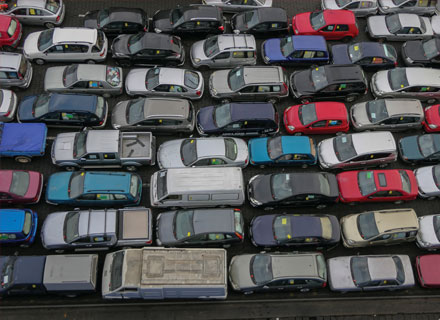

AutoTrader’s data on the health of South Africa’s automobile sector revealed that the country was witnessing a double-digit boom in its used car market in January 2026, with 34,452 vehicles being sold. Not only were sales up (12.07% month-on-month from December’s 30,742 units, and 11.28% higher than the 30,961 vehicles sold in January 2025), but there were indications of a sustained demand for second-hand cars in the country.
The cumulative value of used vehicles sold reached R14.32 billion in January, up from R12.89 billion in December, and R12.59 billion a year earlier. The average transaction price moderated slightly to R416,082 from R419,537 in December 2025, while average mileage declined to 70,938 km, continuing a gradual downward trend.
Toyota continued to capture the majority share in the used vehicle market, with 5,876 units sold in January, ahead of Volkswagen (4,733) and Ford (3,577).
Decoding Ford’s figures, more than half of the total came from Ranger sales, underscoring the continued strength in the bakkie segment. This highly competitive, core automotive market focuses on utility, durability, and lifestyle.
The best-selling used vehicles
According to AutoTrader data, at the model level, the Ford Ranger retained its position as South Africa’s best-selling used vehicle, with 2,069 units sold, up 6.3% year-on-year, followed by the Toyota Hilux (1,604 units), and Volkswagen’s Polo Vivo and Polo. Together, these four maintained their positions among the top four best-selling models.
Compact and value-driven models showed some of the strongest gains. The Suzuki Swift moved ahead of the Toyota Fortuner in overall rankings, with 794 units sold and year-on-year growth of nearly 25%. The Toyota Corolla Cross and Hyundai Grand i10 also recorded notable annual increases, reflecting a continued shift towards smaller, more affordable vehicles.
None of the top 10 models posted a year-on-year decline, although performance varied across brands. Suzuki recorded the greatest month-on-month improvement, while Hyundai achieved the highest annual growth rate. BMW was the only major brand to register a monthly decline, although it remained up year-on-year.
AutoTrader’s “2025 Annual Car Industry Report” reveals the emergence of quite a few trends. One among them is established industry players maintaining strong sales figures. Among the vehicle categories, while compact hatchbacks gained a significant market space, SUVs further consolidated their dominance. If Chinese brands gaining measurable ground was the surprise factor, new energy vehicles (especially hybrid ones) gaining prominence gave a sneak peek at the African country’s direction towards a clean transport sector.
AutoTrader CEO George Mienie stated, “The used car market delivered solid growth. A total of 383,410 used vehicles were sold in 2025, generating R160.1 billion in sales value, representing a 7% increase over 2024. Four interest rate cuts in January, May, July, and November 2025, reduced borrowing costs and provided meaningful relief to consumers. However, while economic conditions improved, buyer behaviour remained disciplined. If anything, 2025 reinforced how firmly affordability and practicality now anchor local purchasing decisions.”
Which models were in demand
Among second-hand cars, search behaviour shifted at the brand and model level. BMW was the most-searched brand on AutoTrader, with 76 million searches. On a model level, the Volkswagen Polo was the most-searched, displacing the Toyota Hilux from its long-standing leadership position. On the search interest front, Ford Ranger, Volkswagen Polo Vivo, and Toyota Hilux continue to dominate overall sales volumes, indicating the strength of established names in the used market.
While the Ford Ranger maintained its position as the most-enquired bakkie vehicle, its demand remained in the higher territory, despite growing cost pressures. Compact hatchbacks have earned significant momentum in the used car market, with models such as the Suzuki Swift and Toyota Starlet capturing a larger share of the market.
“The Swift stood out as the fastest-selling used vehicle in South Africa, averaging just 26 days before sale. That turnaround time reflects strong underlying demand for vehicles that are affordable to finance, efficient to run, and practical for everyday use,” Mienie stated.
While the average used car price grew 3% year-on-year to R417,584 in 2025, the average vehicle age remains five years. The average mileage was 73,646 km.
Pragmatic approach to electric vehicles
The new energy segment (electric vehicles) grew by a strong 73% in 2025, powered by hybrid cars. Hybrids ended up accounting for nearly 85% of all new-energy vehicles sold. This growth also gave an insight into South Africans’ EV adoption strategy: choosing practical, money-saving options instead of waiting for full electric cars that need better charging networks and lower prices.
Hybrids (known for combining a petrol engine with an electric motor) saw sales jumping 76% compared with 2024, with 4,888 units changing hands. In total, 5,727 used hybrids and battery electric vehicles were sold by the end of December 2025, showing steady interest in greener driving options. This segment was dominated by locally built Toyota Corolla Cross Hybrid, with many buyers opting for the model’s reliability, affordability in the used market, and, most importantly, the absence of range anxiety of pure electric cars.
Other popular models included the Volvo EX30, and various Toyota and Lexus hybrids, vehicles that offer good fuel savings.
Battery electric vehicles, despite showing a 55% year-on-year increase, remained a distant second in the new-energy car market.
Used hybrids have proven to be game-changers for South African families and first-time car buyers, as these vehicles use less fuel than ordinary petrol cars, produce fewer emissions, and often come with lower running costs, during an age of high petrol prices, and living expenses. Because hybrids do not rely completely on charging infrastructure, they suit South African roads and lifestyles better than full electric cars for now.
China: New player in the sector
While European, American, Japanese, and Korean vehicle brands have been dominating both the new and used vehicle markets, 2025 witnessed the emergence of Chinese brands in the sector.
Chery Tiggo 4 Pro was the best-selling used Chinese car. The crossover, since 2025, has remained one of South Africa’s best-selling new passenger cars, with more than 1,000 units sold each month. Last year, 3,144 units were sold, underscoring the popularity of Chery’s smallest offering. With an average price of R284,779, it is one of the cheapest cars on the list, both on the new and used-car segments, despite its low average mileage of 21,970 km, and a registration age of just two years.
Next is the Haval Jolion, which competes in the same crossover class. However, with fewer models, particularly more budget-focused derivatives (the cheapest new version is R348,950), sales are slightly lower at 2,736 units.
The oldest entry on the list was the Great Wall Motor’s discontinued six-year-old Haval H2, which landed at the sixth spot with 1,063 units, while the much newer Omoda C5 came seventh with 806 purchases.
While vehicles like Chery Tiggo 4 Pro and Haval Jolion are mostly ICE (Internal Combustion Engine) vehicles with some plugless hybrid variants, Chinese automobile players have reportedly started offering more plugin options. These players, already known for their rapid global expansion (using affordability as a weapon), are now sweetening things further for their South African customers by adding more PHEVs (Plug-In Hybrid Electric Vehicles) and BEVs (Battery Electric Vehicles) to both the new and second-hand segments.
Sales of plugin hybrids (PHEVs) were up 280% in 2025 compared with 2024, with brands like Haval, Chery, Omoda, Geely and BYD leading the charge.
“Chinese vehicle manufacturers have learnt how to narrow the gap between cost and perceived value, delivering around 80% of the consumer experience at roughly 60% of the price of traditional players. By focusing on tangible performance and visible benefits rather than legacy branding, they have capitalised on a shift in consumer behaviour. As buyers become more informed and discerning, brand loyalty is weakening, replaced by an expectation for high-quality products that justify every rand spent,” Mienie told Creamer Media’s Engineering News.
Bakkies rule the roost
Bakkies, the Ford Ranger in particular, had a massive share in the used car segment. These are basically pickup trucks with open cargo beds. Renowned as ‘workhorses’ for cargo, bakkies have evolved into popular lifestyle vehicles in the African nation.
According to the AutoTrader data, the used car market shipped 30,742 vehicles in December 2025, with 1,744 being Ford Rangers. Buyers reportedly opted for four-year-old Rangers with an average mileage of 83,958km.
The average used Ranger sold last year fetched a price of R497,960, which represents a saving of nearly R80,000 compared to buying the cheapest variant of the popular bakkie brand new.
In contrast, the most expensive version of the Ranger is the 3.0T V6 Raptor double-cab, which fetches a handsome price of R1,271,000.
A used Ranger comes in many forms: single-cab workhorses, which are found on construction sites and farms, while double-cab variants are often used by families to haul children to and from school. Add the affordable price factor, and buying the vehicle becomes a win-win deal for average South Africans.
For businesses, Ranger, in its current-generation form, offers a reliable fleet option. Be it the powerful Raptor, or versions like XL single-cab and XLT double-cab, they offer varieties like the cheapest, mid-range, and most expensive models, both on the new and used markets.
With regard to Bakkie’s popularity in South Africa, Nissan sold a grand total of 434 units of NP200 in March 2025, despite the fact that the vehicle is no longer officially on sale. It was supposed to be the Japanese company’s last compact bakkie in the South African market, before its discontinuation in April 2024.
Despite Nissan pulling the plug on its NP200, citing ageing design as the primary factor, the model continues to be the workhorse for small businesses and will remain one of the dominating names in the second-hand car market.
Decoding the customer mindset
The year 2025 was the one when South Africa faced an acute cost-of-living crisis. The nation’s Competition Commission’s inaugural ’Cost of Living Report’, which came out in September, presented the harsh reality: prices for electricity, water, education, and food outpacing overall inflation.
Electricity prices saw a 68% increase, followed by water with 50%, exceeding the general inflation rate, which itself stood at 28%. Food staples, such as brown bread, maize meal, and eggs, were witnessing widening margins, or sticky prices in some cases, despite falling producer costs.
With this background, four interest rate cuts were implemented in the year, totalling 100 basis points. Customers bought cars, but with a lot of financial discipline and self-restraint, and that’s what ended up helping the second-hand car industry.
During an interaction with Dealerfloor, Mienie stated, “Buyers are still active, but they are more deliberate and value-driven than ever before. The brands gaining traction are those aligning product offering, pricing and perceived quality with real-world affordability constraints.”
While Ford Ranger, Volkswagen Polo Vivo and Toyota Hilux dominated overall transactions and bakkies topped the chart, reduced financing costs led to accelerated demand for smaller, more economical vehicles. What the recent cost-of-living crisis has told the South Africans is that financing costs for new vehicles go up with every cycle of interest rate climb. Add monthly repayments and insurance premiums, and the situation leads to cash bleeding. A second-hand car, by contrast, often delivers the same utility at a far gentler price point.
According to reports, buyers are also reducing long-term financing exposure by taking smaller loans while also lowering costs on insurance, licence and registration fronts.
The availability of vehicle history reports and online valuation tools allows consumers to assess pricing, mileage and ownership records with ease. If you factor in the dealers’ game of elevating their used-car offerings, providing certified pre-owned vehicles, service plans and warranties, customers are getting an experience similar to buying a new car.
Car ownership is increasingly becoming a practical tool rather than a status symbol. In a climate where every rand counts, buyers are bound to think whether they should complicate their financial health further by buying a brand-new car, with higher financing costs. Thus, the so-called second-hand, but tried-and-tested models, with widespread service support, are capturing the buyers’ minds.
More than swanky features, brands and models known for longevity are in high demand, particularly those with solid fuel economy and manageable maintenance costs. Priority is to choose cars that fit South Africans’ lifestyles, not just their aspirations.