

Kenyan avocados are one of the best in the world. They are often dubbed ’green gold’ and are critical to the East African economy. Kenya ranks among the world’s top five avocado exporters, generating over $150 million in annual revenue. Europe imports most of Africa’s avocados, with 60-70% coming from Kenya.
Though Kenyan avocados are delicious, Europeans are not just content with flavour. They have deeper concerns about the environmental cost of production and logistics.
The EU’s Farm to Fork Strategy and the Corporate Sustainability Due Diligence Directive (CS3D) have been introduced to ensure that food production and logistics are ethical and cause minimal harm to the planet.
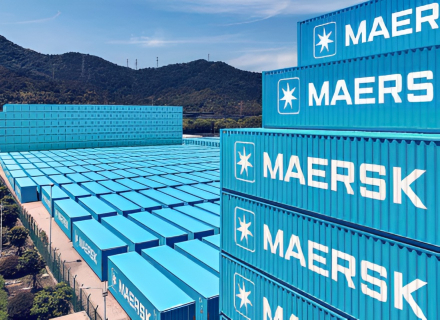
Kenyan exporters are well aware that sustainability is no longer optional and is a prerequisite for market access to one of the wealthiest markets in the world. Maersk has recognised this demand and is rebranding its logistical network as ‘Blue Shipping’, an end-to-end framework for decarbonising cargo movement from inland farms to ocean freight, to meet the sustainable demands of Kenyan premium produce.
The Carbon Footprint Problem With Perishable Goods
Perishable logistics is a race against time. It requires precise temperature control, and the journey is often complex. Traditionally, people used the cold chain model, which is just uninterrupted refrigeration.
However, that is very energy-intensive and does not comply with EU demands. It is also definitely bad for the planet. Refrigerated transport alone accounts for roughly 2.5%-3% of global logistics carbon dioxide emissions.
Not just that, if there are inefficiencies, delay of any kind, or equipment failure, the food is spoiled. Spoiled food emits methane, which is around 80 times more harmful to the planet than carbon dioxide over 20 years.
Kenyan exporters face two challenges simultaneously. One is the distance (journey from Mombasa to Rotterdam takes 20-25 days), and the other is the climate impact. If they optimise for speed, they create a lot of emissions and waste. However, if they optimise for environmental sensitivities, the cost surges.
This is where Maersk comes in. According to Tito Okuku, Managing Director of Maersk East Africa: “The avocado season is a critical time for Kenyan exporters, and we are committed to providing not just transportation services, but comprehensive support that empowers our customers to meet the world’s growing demand for premium Kenyan avocados.”
Decarbonisation And Waste Reduction Through ‘Blue Shipping’
Maersk has been committed to decarbonising logistics and reaching net zero emissions by 2040 through ‘Blue Shipping’. The company hopes to achieve this through different methods, including strategic resource positioning and inland optimisation.
In the world of logistics, strategic resource positioning and in-line optimisation are the two gears that make a global supply chain more efficient.
Strategic resource positioning is the art of placing physical assets such as shipping containers, trucks, or specialised equipment, in the exact locations where they need to be before demand spikes.
In agriculture, harvest seasons are sudden and massive. If empty refrigerated containers (reefers) are sitting in Mombasa and the avocados are harvested 500 kilometres away in central Kenya, a lot of time is wasted just moving these reefers next to the farm.
To address this, a strategic move involves analysing historical data to figure out when the peak harvest will be, and moving the empty resources to the staging areas a few weeks in advance. This ensures that produce is picked, packed, and boarded onto container ships quickly, thus improving shelf life.
Inland optimisation is about how things move between the farm and the ship. Maersk focuses on the first and middle mile, which involves transporting goods from the farm to the warehouse, and then from the warehouse to the port.
Another point of focus is the ’empty mile’, which is also called ’deadheading’. This refers to when a truck drives empty to pick up a load.
Optimisation software ensures that the truck is already delivering something to rural areas, only picking up avocados after unloading whatever goods (such as fertilisers) it has brought. This software might suggest that utilising a train for the long-haul journey from the dry port to the coast is a more cost-effective option than using a fleet of trucks.
Furthermore, inland optimisation involves streamlining various processes, such as handling customs and pre-clearance, documentation, and inspections. All of these critical steps must occur without disruption.
Reefer Technology And Training
The second part of ‘Blue Shipping’ involves state-of-the-art reefer technology and training. Maersk has developed and deployed advanced refrigerated shipping technology with atmospheric controls, while also providing specialised technical training to exporters regarding proper reefer handling and cold chain management.
The third method is efficient ocean routing and freight decarbonisation.
Maersk prioritises vessel capacity on the Kenyan-European trade route and focuses on high schedule reliability. Reliable, efficient routing minimises the time produce spends at sea, preserving shelf life and reducing the total energy required for refrigeration during transit.
Capitalising On Appetite For Avocados
European per capita avocado consumption has grown dramatically, and so has its compliance bar. According to a 2013-2024 analysis of the European Union by Indexbox, Italy recorded the fastest compound annual growth rate in avocado consumption at about +20.9% in that period. In 2024, Europe consumed around 1.1 million tonnes of avocados, marking a 8.1% increase since 2023.
The World Avocado Organisation (WAO) found that Spain leads European per capita consumption at 4.6 kg per person per year, followed by the Netherlands at 3.3 kg and Portugal at 3.1 kg. Data from 2020-2024 revealed other consumption levels across the continent, with France at 2.31 kg, the UK at 1.7 kg, Germany at 1.48 kg, and Italy at 0.81 kg.
The growing appetite for avocado is creating opportunities for exporters in Kenya. But, they would not be able to access European markets without a sustainability tag.
Maersk helps small African producers gain access and compete in the European markets through sustainable logistics. Whether that access holds and expands will depend less on the quality of the fruit and more on the reliability of the supply chain delivering it to the market.