
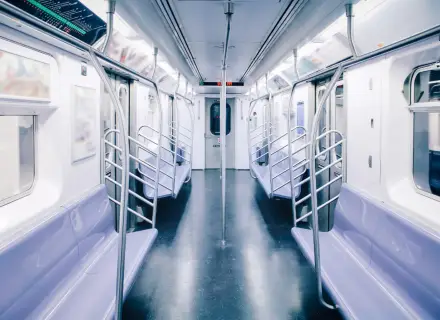

Iraq is moving to fundamentally redesign the long-delayed Baghdad Metro project, shifting to an integrated public transport network that combines ground-level, elevated and underground routes, said a senior government official.
“Under the new design, metro routes will be tailored to the Iraqi capital’s geography and congestion levels,” Prime Minister’s Adviser for Investment Affairs Mohammed Al-Najjar told the media outlet.
“Ground-level tracks are estimated to cost USD 20–USD 30 million per kilometre, elevated lines USD 50–USD 70 million per kilometre, while underground tunnels – an option retained for densely congested centres—would cost around USD 200 million per kilometre,” Al-Najjar said.
“Earlier proposals relied heavily on underground construction, making them economically unviable,” he added.
In July 2025, Zawya Projects reported that the Mohammed Shia’ al-Sudani government was reassessing the financial framework for the project after previous proposals had been rejected.
Al-Najjar said Baghdad’s population growth—from around 3 million to nearly 10 million residents—and its expansion toward areas such as Al-Mahmoudiya required a complete reassessment of metro routes and designs. The updated plan now positions Baghdad Metro as the core of a wider transport network, linked with bus and tram systems to enable smooth passenger movement from stations to final destinations without worsening surface congestion.
The metro will be a fully automated and driverless system. While this raises upfront procurement costs, Al-Najjar said the move, in the long run, would lower long-term operating and maintenance expenses by removing the need for human train operators.
“The Al-Sudani government also plans to procure the project under a public–private partnership (PPP) framework, supported by a 30-year concession agreement to ease pressure on public finances,” Al-Najjar said, adding that the World Bank and the European Bank for Reconstruction and Development (EBRD) have expressed serious interest in participating as project partners.