
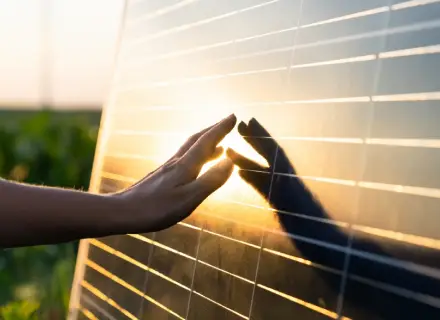

The Abu Dhabi Department of Energy (DoE) has launched the second phase of its “Solar Energy Self-Supply Policy,” expanding its scope to include the residential sector for the first time in the UAE capital.
According to the department, the policy will now cover villa owners and residential buildings, enabling the latter to generate and store electricity from rooftop solar systems and efficiently integrate their usage with the grid.
The latest initiative is part of DoE’s mandate to develop policies and regulatory frameworks that advance the Emirati city’s transition towards a more efficient and sustainable energy system, while promoting the adoption of smart and flexible solutions for energy production and consumption.
“This builds on the success of the policy’s first phase, launched during the World Government Summit in February, which enabled owners of farms, rest houses, and ranches to benefit from solar energy solutions for self-generation and storage of electricity, improving consumption efficiency. The expansion reflects the growing uptake of renewable energy solutions among customers and aligns with national objectives to meet the increasing demand for energy through advanced solutions serving all sectors,” reported Emirates News Agency.
“The new phase focuses on facilitating adoption through a simplified regulatory framework that streamlines installation and grid connection procedures, alongside the standardisation of technical requirements to ensure high levels of safety and operational efficiency. In line with the first phase of the policy, DoE issued a policy on the procurement of efficient consumption appliances, providing a practical framework to support individuals and entities in purchasing and operating the most efficient solutions based on actual performance data and total lifecycle cost, enabling more efficient and sustainable long-term decision-making,” it stated.
“The policy covers key systems that will impact consumption efficiency, including air conditioning and cooling, water heating, lighting, and electrical appliances, as well as pumps, motors, and irrigation systems. It also highlights best operational practices, smart control solutions, and regular maintenance, contributing to reduced energy and water consumption, lower peak loads, and enhanced economic and environmental efficiency,” DoE remarked.
Under the second phase, customers will be enabled to meet a significant share of their daily energy consumption during daytime, allowing them to store electricity through battery storage systems, substantially reducing pressure on the grid and improving electricity load management across Abu Dhabi and the UAE.
“The second phase of the Solar Energy Self-Supply Policy represents a significant step in advancing the policy’s implementation, integrating the residential sector to enhance energy consumption efficiency and support the integration of the power system,” said Abdulaziz Mohammed Al Obaidli, Director-General of Regulatory Affairs at the DoE.
“We are strengthening partnerships in the transition towards clean energy, contributing to a more balanced and sustainable energy mix by empowering a broader segment of society,” he concluded.