

The United Kingdom, in order to achieve its goal of becoming a ‘Net Zero Economy’ by 2050, is shaping its industrial set-ups. While a robust compliance structure, including the UK Emissions Trading Scheme (UK ETS), regulates a significant proportion of emissions from the European country’s industrial and power sectors, a thriving and increasingly sophisticated Voluntary Carbon Market (VCM) is emerging as a crucial weapon to help the country meet its climate goals.
United Kingdom has also taken up the co-chair’s role in the ‘Coalition to Grow Carbon Markets’, an 11-nation-backed initiative to boost corporate demand for high-integrity carbon credits, reduce policy fragmentation, and unlock billions in private climate finance for developing economies.
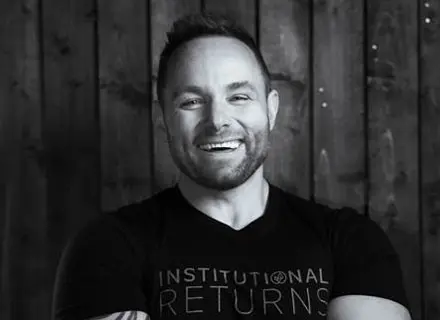
International Finance discussed with Dr Rich Stockdale, author of Rewilding Wealth (Rethink Press), the United Kingdom’s policy actions in accelerating the global decarbonisation efforts, by bringing carbon markets into play.
Armed with a PhD in data science, Dr. Stockdale combines a relentless commitment with visionary thinking to redefine humankind’s relationship with the natural world. He co-founded Oxygen Conservation with Oxygen House Group in 2021, and has rapidly built it into one of the world’s most impactful natural capital portfolios, valued at hundreds of millions of pounds, and actively transforming over 50,000 acres into thriving ecosystems for people and wildlife.
In this exclusive interview with the International Finance, Dr. Stockdale, a transformative leader and pioneering environmentalist on a mission to scale conservation, explains the workings of the UK’s VCM, its salient features, and how it will help the businesses transition as per the ‘Net Zero 2050’ goals.
Here are excerpts from the interview.
How does the UK’s Voluntary Carbon Market (VCM) work, especially the buying and retiring of carbon credits to offset emissions?
At its simplest, the voluntary carbon market allows organisations that restore or protect nature to generate independently verified carbon credits, which businesses can buy to compensate for their residual emissions as part of a credible net-zero strategy.
A carbon credit represents one tonne of carbon dioxide (or its equivalent) that has either been removed from the atmosphere, or prevented from being emitted. In the UK, credits are created through activities such as planting new native woodland or restoring degraded peatlands, both of which capture and store carbon over many decades.
Before any credits can be sold, the projects must be independently validated against the UK government-endorsed Woodland Carbon Code or Peatland Code by accredited bodies, such as Soil Association Certification. Once verified, the credits are issued and recorded on the UK Land Carbon Registry, a publicly accessible registry that provides transparency over ownership, transactions, and retirement, ensuring every credit can only ever be claimed once.
Businesses can then purchase these verified credits directly from project developers or through intermediaries. When a company wishes to use the climate benefit towards its own reporting or voluntary climate commitments, the credit is permanently retired from the registry. Retirement removes the credit from circulation, so it cannot be resold or double counted.
Unlike many voluntary carbon markets globally, UK woodland and peatland credits are backed by government-endorsed standards, independent verification, and a transparent public registry, giving buyers a high degree of confidence in the environmental integrity of the credits.
Our own first carbon sale illustrates how this works in practice. In 2025, we entered a partnership worth up to £1 million with Burges Salmon, which became the exclusive buyer of up to 8,000 premium UK carbon credits at £125 per tonne. Those credits are generated through native woodland creation and the restoration of ancient Atlantic rainforest at our Leighon Estate in Dartmoor, providing long-term finance for landscape-scale nature recovery.
How will the UK government’s six principles for voluntary carbon and nature markets make it easier and more credible for businesses to operate in the UK?
The six principles provide greater clarity about how voluntary carbon and nature markets should operate, giving both buyers and project developers greater confidence. Markets function best when expectations are clear, and these principles help establish a common framework for what constitutes high-integrity participation.
More broadly, the UK is positioning itself as the global market for high-integrity nature credits. While parts of the global voluntary carbon market have been characterised by inconsistent standards and declining trust, the UK is building its market around government-endorsed standards, transparent registries, and independent verification. That gives businesses greater confidence in the environmental integrity of the credits they purchase, and strengthens the UK’s position as a global leader in high-integrity nature markets.
What were the key industry suggestions made during the UK’s 2025 consultation on implementing these six principles?
Our response was submitted as part of a coalition of leading organisations from across the UK’s carbon and nature market ecosystem, representing project developers, investors, environmental finance specialists, technology providers, and land managers. Together, we focused on how the UK can build the world’s leading market for high-integrity carbon and nature credits.
We argued that government should move beyond setting principles, and create the policy foundations needed to attract long-term private investment into nature. That included enshrining the polluter-pays principle in law by requiring companies to develop science-based transition plans, and compensate for their residual emissions using high-integrity UK carbon credits, positioning the UK as a global leader in climate finance, and continuing to strengthen and promote domestic standards, such as the Woodland Carbon Code and Peatland Code. We also called for formal recognition of the Peatland Code alongside other carbon standards, and for high-integrity woodland and peatland credits to be integrated into the UK Emissions Trading Scheme.
Taken together, these measures would strengthen demand for UK credits, unlock private investment into large-scale nature restoration, and reinforce the UK’s position as the global leader in high-integrity environmental markets.
What is the role of the British Standards Institution in developing standards for engineered carbon removal and nature-based investments?
Standards bodies such as the British Standards Institution have an important role in establishing the rules and minimum standards that give markets confidence. As the market matures, however, we think the emphasis should shift from creating ever more layers of approval towards providing buyers with better information to assess risk.
Ultimately, that’s how the most successful financial markets operate. Investors don’t expect every asset to be certified as good or bad— they rely on transparent disclosure and independent risk assessments to make informed decisions. We believe carbon markets should evolve in the same direction.
Independent ratings providers, such as BeZero Carbon, are an important step in that evolution. Our Invergeldie woodland project, for example, received the UK’s first AA rating from BeZero Carbon, placing it amongst the highest-rated nature-based carbon projects globally. Combined with robust standards such as the Woodland Carbon Code and Peatland Code, that kind of transparent risk assessment gives buyers greater confidence and helps capital flow towards the highest-quality projects.
Could other countries adopt a similar Voluntary Carbon Market designation model to the London Stock Exchange?
Yes. We hope other countries will adopt similar models, but we also believe the UK has an opportunity to establish itself as the global centre for climate and nature finance.
What makes the UK distinctive isn’t any single initiative such as the London Stock Exchange’s Voluntary Carbon Market designation. It’s the ecosystem that is emerging around it: government-backed standards, transparent registries, independent verification and ratings, innovative financial products, and one of the world’s leading financial centres. Together, these create the foundations of a high-integrity market capable of attracting long-term institutional capital.
If the UK continues to innovate, the real export opportunity won’t simply be carbon credits. It will be the market architecture itself — the standards, financial products, regulatory frameworks, and intellectual property that enable private capital to flow into nature restoration around the world.
What makes the LSEG’s Voluntary Carbon Market designation unique for companies and investors?
The London Stock Exchange’s Voluntary Carbon Market designation is an important example of the market architecture the UK is building to attract private investment into nature. Its distinctive feature is that it allows companies to raise capital through public markets to finance the creation of future carbon credits, helping bridge the gap between the significant upfront cost of restoring nature, and the long-term revenues those projects generate.
More broadly, one of the biggest barriers to scaling nature restoration isn’t a shortage of projects — it’s a shortage of patient, long-term capital. That’s why innovations like the LSEG designation matter. They demonstrate how London’s financial ecosystem can develop new investment structures that connect institutional capital with high-integrity natural capital assets.
Ultimately, that’s the UK’s real opportunity. Success won’t be measured simply by the number of carbon credits traded, but by whether London becomes the world’s leading financial centre for financing climate and nature recovery.
How significant is Amazon’s expansion of its carbon credit services into the UK market for corporate decarbonisation?
It’s a significant signal that demand for high-integrity carbon credits is continuing to mature. Businesses increasingly want access to credible, independently verified carbon credits as part of their climate strategies, and platforms such as Amazon are making those markets more accessible by connecting buyers with trusted supply.
What’s particularly encouraging is that Amazon appears to be focusing on credit quality rather than simply favouring one type of carbon removal over another. The market is increasingly recognising that high-integrity nature-based removals, underpinned by robust standards, independent verification, and transparent monitoring, can play an important role alongside engineered removals. The debate is becoming less about technology and more about quality.
Ultimately, thriving markets need both supply and demand. Project developers create the high-quality environmental assets, while platforms and marketplaces help connect those assets with corporate buyers. The growth of that market infrastructure is another sign that voluntary carbon markets are becoming a more mature and investable asset class.
What role can the UK play through the ‘Coalition to Grow Carbon Markets’ in scaling high-integrity carbon markets globally?
Carbon markets are not the destination—they’re the financing mechanism. Their purpose is to mobilise private capital into restoring nature at a scale that governments and philanthropy cannot achieve alone.
The Coalition reflects an important recognition that high-integrity carbon markets will only scale if we create strong and sustained demand for high-quality credits. Project developers need confidence that there will be long-term buyers before they can invest in restoring landscapes at scale.
The UK is well placed to lead that effort. By combining robust standards, transparent market infrastructure, and clear policy signals, it can demonstrate how voluntary carbon markets can attract private investment while maintaining high environmental integrity. If successful, that model can be replicated internationally.
Our role is to help build the supply side of that market. Across our 50,000-acre portfolio, we’re restoring woodlands, peatlands, rivers, and other habitats to create high-quality carbon and biodiversity assets. Ultimately, success won’t be measured by the volume of credits traded, but by the amount of private capital mobilised into restoring nature.
How can governments and industry, through the ‘Coalition to Grow Carbon Markets’, address concerns around greenwashing and build trust in voluntary carbon markets?
Trust isn’t created through marketing — it’s created through transparency. The best way to address concerns about greenwashing is to build markets that deserve trust in the first place.
That means combining robust standards, independent verification, transparent registries, and increasingly, independent risk ratings that allow buyers to make informed decisions. Just as in financial markets, confidence comes from giving investors access to reliable information, not from asking them to accept broad claims at face value.
It’s also important that we communicate honestly about what carbon credits achieve. They are not a substitute for reducing emissions — they are a financing mechanism that enables private investment in restoring woodlands, peatlands, rivers, and other ecosystems while companies decarbonise. High-integrity nature-based projects deliver far more than carbon alone, generating benefits for biodiversity, water quality, flood resilience, and rural communities.
Ultimately, low-quality projects will continue to lose market share because buyers increasingly have the tools to distinguish quality from poor practice. That’s exactly how well-functioning markets should work.