
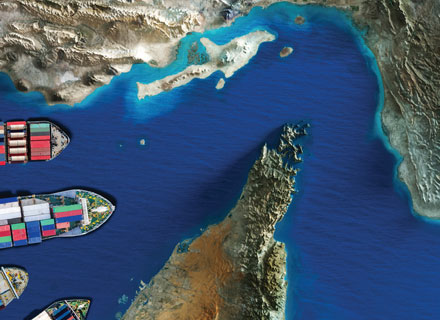

The Strait of Hormuz is a narrow strip of water between Iran and the Arabian Peninsula, roughly 33 kilometres wide. People everywhere are talking about how closing the Strait of Hormuz has created an oil shortage. But what most people overlook is that until the spring of 2026, it was the world’s most important fertiliser highway.
When the United States and Iran effectively shut down the waterway in late February, global energy markets responded loudly. However, the consequences for the global food supply represent a slower, quieter, and more dangerous impact that many people have not noticed.
The Silence in the Strait
Before the conflict, around 130 ships passed through the Strait of Hormuz every day, but by March 16, that number collapsed to single digits, representing a reduction of 95%. This left more than 750 commercial vessels either stranded in the Persian Gulf or circling in holding patterns outside the conflict zone, waiting for a signal that never came. These ships weren’t just deterred by the physical danger of being caught in a war zone. The most decisive factor in their decision was the prohibitive cost of insuring a ship through the strait, which spiked overnight.
Marine war insurance is a specialised financial contract that has existed for centuries to protect ship owners if a vessel is damaged or destroyed in a conflict zone. In normal times, coverage costs between 0.125% and 0.25% of the ship’s value for a single voyage. For a typical large cargo vessel valued at around $120 million, this translates to roughly $48,000 per transit.
However, the financial landscape changed dramatically during the conflict. Following attacks on vessels in the Gulf, and reports of mines in shipping lanes, insurers repriced premiums to between 1% and 10% of the hull value. This dramatic shift pushed the cost of a single transit for the same vessel to $1.2 million.
At these rates, most shipping companies turned around and called it quits. Now, navigating across the strait for ordinary commercial trade was near impossible, regardless of military risk.
Ships that really needed to reach the Gulf started taking detours around the southern tip of Africa, adding weeks of transit time and burning significantly more fuel in the process. The world’s most efficient trade artery had been blocked, and global supply chains were about to discover how dependent they had become on it.
Never Just About The Oil
When the strait closed, the world’s focus was primarily on oil. The Persian Gulf supplied approximately 20% of the world’s daily petroleum consumption, causing energy markets to react with extreme alarm. However, this fixation on oil obscured a more significant vulnerability. The region also produces a substantial portion of the world’s industrial and agricultural raw materials.
One of the most critical materials is helium, with Qatar alone supplying nearly one-third of the global total. Far from being used only for party balloons, helium is essential for cooling the superconducting magnets inside MRI scanners. Without a reliable supply, hospitals globally risk losing their diagnostic imaging capabilities.
Additionally, the Gulf region is a major hub for chemical feedstock and agricultural components. It ships roughly a third of the world’s methanol, which is a foundational ingredient for manufacturing plastics, resins, paints, and synthetic fibres. Furthermore, the region supplies about half of the world’s seaborne sulphur, a critical resource required for producing phosphate fertilisers and refining battery metals such as nickel and cobalt.
But among all the commodities that pass through the Hormuz corridor, nitrogen fertiliser is perhaps the most important.
Approximately 33% of all globally traded fertilisers passes through the Hormuz corridor. For urea, the world’s most widely used nitrogen fertiliser, that figure rises to 46%. Nearly half the world’s supply of the single most important agricultural input on the planet was suddenly unable to reach the farmers who needed it.
The Invisible Line Between Gas Wells and Grain Fields
To understand this, it’s important to familiarise ourselves with the chemistry. In the 19th century, there was an influential English economist and demographer known as Thomas Robert Malthus who believed that the population growth of the world would outpace the food supply, leading to an inevitable social crisis.
In his ’Essay on the Principle of Population’, he noted that the human population was doubling (geometrically) every 25 years back then, while food production increased arithmetically (linearly). He envisioned that there would be a point of crisis which would lead to wars, famine and extreme poverty.
However, in the 20th century, German scientist Fritz Haber successfully synthesised ammonia from nitrogen gas (from the air), and hydrogen gas under high pressure and temperature using an osmium catalyst.
With this information, Carl Bosch transformed Haber’s laboratory into a massive industrial-scale process for the company BASF by 1913. This created industrial fertilisers that would lead to green revolutions across the globe, feeding billions of people effortlessly. Malthus’s apocalyptic predictions did not come true because of scientific advancements, which led to the creation of the mass production of nitrogen fertilisers.
However, the blockade on the Strait of Hormuz has cut off the supply of natural gas, which is both a raw material and a source of energy in fertiliser production. This development inadvertently might cause the fulfilment of the Malthusian prophecy.
The numbers bear this out starkly. “We have 30-35% of crude oil, which is not moving, 20% of natural gas…and between 20 to 30% of other fertilisers that are not moving out,” said Maximo Torero, Chief Economist of the Food and Agriculture Organization.
Countries like Qatar, Saudi Arabia, and the UAE have built massive industrial complexes converting cheap domestic gas into exportable fertiliser.
Qatar State Fertiliser Company (QAFCO) operates the single largest urea production facility on earth, and supplies 14% of the global urea on its own. When the conflict disrupted regional gas infrastructure and made maritime export impossible, QAFCO went offline.
Saudi Arabia’s SABIC petrochemical complexes declared force majeure (a legal term meaning circumstances beyond their control prevented them from fulfilling their contracts). Storage silos filled to capacity with nowhere to send their product, and production halted. In one stroke, 14% of the world’s urea supply vanished from the market.
This isn’t just a Gulf issue. Natural gas prices spiked globally as buyers scrambled for alternative supplies, and this crushed fertiliser production in Europe too.
In Europe, natural gas accounts for up to 80% of the variable cost of making fertiliser. When gas prices spiked by 60% following escalation of the conflict, major producers found themselves making fertiliser at a loss.
Yara International (one of the world’s largest fertiliser companies) cut production at its European plants to 35% of capacity. This removed the equivalent of millions of tonnes of finished products from an already devastated market.
Prices, Panic and the Planting Window
Fertiliser prices are spiking at an alarming rate. Urea was traded around $450-$490 per tonne in early February, but it is now being sold at over $700 per tonne by late April. That is roughly a 50% increase in mere weeks.
Other fertiliser products are also seeing a surge, with liquid nitrogen variants jumping 22% month-over-month. Consequently, distributors are now rationing retail sales, and dealers have stopped quoting future prices because there is arguably no reliable way to predict what replacement inventory would cost.
The most dire consequence of all is the catastrophic timing, as the Northern Hemisphere’s spring planting season is just beginning. This matters because farming, unlike most other industries, cannot pause and resume. Crops have biological windows in which fertilisers must be in the ground, or else you face a permanent yield loss. There isn’t a way to catch up next year.
In an April survey of over 5,700 farmers across all 50 states, the American Farm Bureau Federation found that 70% of respondents could not afford necessary fertiliser, with regional impacts varying significantly. In the South, nearly 80% of farmers were priced out because crops such as cotton, rice, and peanuts require fertiliser close to planting time, preventing them from pre-purchasing stock. Conversely, the Midwest saw some protection through advance purchasing as 67% of farmers locked in their supplies early, though one-third of the region’s farmers remained entirely exposed to volatile spot prices.
The small farmers were hit the hardest. Large-scale commercial operations were better positioned to pre-book supplies months in advance and had the financial depth to absorb price shocks. However, smallholders and family farms operating on thin margins, purchasing inputs closer to planting time, did not have the time to adjust or cope with the doubled prices.
“The skyrocketing cost of fuel and fertiliser is creating more economic hardship for farmers who have already endured years of losses,” said Zippy Duvall, President of the American Farm Bureau Federation. “Without the necessary fertilisers, we’ll face lower yields, and some farmers will reduce acres altogether.”
University specialists and soil scientists, who calculate the economic efficiency of fertilisers, revised their guidance as urea prices rose. The optimal application rate for corn in Illinois dropped by 6 pounds per acre.
It might sound like a modest change, but the relationship between fertiliser and yield is not linear. Research from precision agriculture companies reveals that cutting application rates significantly below the optimal level creates disproportionate yield losses.
For example, a farmer who uses half the recommended nitrogen does not get half the yield reduction. It can be considerably worse. This means farmers who ration inputs very aggressively in response to price shocks end up losing a lot more in crop revenue for what little they can save on fertiliser.
This effect will alter planting decisions going forward. Corn, a very nitrogen-hungry crop, might be abandoned in favour of soybeans, which can absorb some of the nitrogen they need from the atmosphere. This is going to reduce the total caloric output, and markets are going to adjust well beyond the 2026 harvest.
Torero has warned that policy coordination is now essential to prevent the crisis from deepening. “We need to avoid export restrictions…especially now for fertilisers and energy,” he said, cautioning that without coordination, vulnerable countries could be priced out of essential supplies.
David Laborde, Director of Agrifood Economics at the FAO, echoed this concern from the demand side. “If we have rising demand because biofuels start to consume more…and lower supply because we have less input…food prices will go up,” he warned.
Ill-Prepared for The Indian Monsoon
India has structural vulnerabilities which the fertiliser shock makes worse. It imports 90% of its fertiliser raw materials. The kharif season (the monsoon planting cycle sown in June and July) produces almost 100 million tonnes of rice, which is the cornerstone of food security for more than a billion people.
The Indian government has moved quickly to protect its domestic fertiliser production, declaring an emergency guarantee of gas supply to fertiliser sectors at 70% of historical consumption. The FACT plant in Ambalamedu, Kerala, which produces NPK and DAP fertilisers, was flagged as a critical operation requiring protection.
Indian diplomats secured alternative fertiliser imports, arranging 2.5 million tonnes from Morocco, and 3 million tonnes from Russia via the much longer Cape route. Both these deals cost significantly more than what Gulf supplies usually cost.
Farmers in Punjab are anxious. India’s most productive agricultural state saw widespread panic buying and hoarding. Retailers report distributors bundling unwanted products with essential ones, forcing farmers to buy expensive supplementary inputs they do not need in order to access granular urea.
Harjinder Singh of Saidwan village in Kapurthala is one of thousands facing the consequences of this shortage firsthand. “I had never realised that getting a bag of urea would be such an ordeal, when paddy cultivation is still over a month away. Generally, the time after wheat harvesting is for celebrations. This year, the days preceding the harvest were filled with anguish because of the quality of grains. Post-harvest, we are grappling with urea shortage,” he said.
The situation could be further complicated by the weather. The Indian Meteorological Department forecasts the 2026 southwest monsoon projected rainfall at 92% of the long-period average, the lowest first forecast in at least 25 years. Global agencies simultaneously indicated that there is a 62% probability of El Niño conditions developing in the summer months, which is associated with weaker monsoons. The convergence of potential drought, depleted reservoirs, and fertiliser shortages creates a genuinely alarming picture for the next kharif harvest.
The urgency was captured sharply by the head of the UN Task Force on April 21. “With hunger looming, life-saving fertiliser shipments cannot wait,” the official said. “If we don’t get some solution immediately, the crisis will be very significant and severe, particularly for the poorest countries.”
Russia’s Quiet Leverage
Russia found itself in a powerful position as the Persian Gulf fertiliser infrastructure went down. Russia exports 23% of the world’s ammonia and 14% of its urea via the Black Sea and Baltic ports, which are unaffected by the Hormuz closure.
In what analysts are calling ’fertiliser diplomacy’, Russia leverages exports to cultivate political relationships across the Global South. Countries in Africa, like Nigeria, Ghana, and Ethiopia, are pre-purchasing Russian fertilisers for the third quarter of 2026 on terms that go beyond commercial transactions.
Senior Russian officials have been explicit about their strategy. “The escalation of hostilities in the Persian Gulf region has led to the closure of the Strait of Hormuz. The logistics and trade-economic architecture, as well as global energy and food security, are on the brink of collapse,” said Russian diplomat Alexander Venediktov. He described the situation as fraught with ’very serious consequences’ for countries dependent on imported hydrocarbons, fertilisers, and food, and was candid about Moscow’s positioning. “Nitrogen additive prices have risen by 30%. In the current extremely challenging situation, Russia is ready to act in coordination with its friends, countries of the Global South and East.”
It is not the first time Russia has done this. They used a similar approach during the Black Sea Grain Initiative in 2023, when grain export negotiations became a lever for extracting broader diplomatic concessions.
China has pursued a parallel strategy from the supply side by implementing strict export controls on phosphate fertilisers and urea to prioritise domestic agricultural security, which has subsequently cut off critical volumes to Southeast Asia and other import-dependent regions. This has further tightened a global market that was already in crisis.
The End of Just-in-time
Unlike oil price spikes, fertiliser or agricultural shocks don’t announce themselves immediately. Oil prices go up at the petrol pump within days, but fertiliser shortages take months to reveal the economic damage. The crisis has a built-in delay mechanism. We will see the consequences of what is happening now in the third and fourth quarters of this year.
The World Bank has observed that markets are already pricing in expectations for a smaller harvest, as evidenced by a 13% increase in wheat prices and a 7% rise in cereal indices.
The actual supply reduction has not yet materialised, but when it does, food price inflation will skyrocket.
For wealthy countries, this means higher grocery bills and compressed farm margins. However, for lower-income nations, it can be devastating.
Nations across Sub-Saharan Africa and South Asia will suffer significantly because they rely heavily on imports, and lack the capacity to subsidise fertilisers. In tropical and sub-tropical regions, the relationship between fertiliser application and crop yield is stark due to nutrient depletion in the soil. If things remain unchanged, we can expect a 40-50% reduction in maize yield across African countries.
The UN World Food Programme and the Food and Agriculture Organization expect the combined effects of conflict, fuel price inflation, and fertiliser shocks to push an additional 45 million people into food insecurity. This is on top of the 318 million people already facing severe food insecurity worldwide. At least 18 million people are expected to cross the hunger threshold in East and Southern Africa alone.
The lesson we can learn is structural. Our global economic system was built on the philosophy of maximum efficiency and minimum inventory to eliminate redundancy, but that is because the world was predictable and global trade was always available.
But things have changed as governments are now confronting the problem in real time. Spain has allocated €500 million to subsidise farmers from price shocks, while Ghana distributed fertilisers free of charge to prevent crop failure. Additionally, India redirected its gas supply from industrial users to fertiliser plants to address the crisis.
These are emergency measures improvised under pressure. In the long run, we will need something more durable. Domestic fertiliser production capacity in import-dependent countries has to improve.
Impact Will Be Felt Beyond 2026
Economic models suggest that the effects of the 2026 shock will likely persist for years. Even under an optimistic scenario in which the Strait reopens by mid-year, urea and phosphate prices are going to be elevated well into 2028. Qatar’s Ras Laffan gas complex has been attacked, and is damaged. It might take years to be fully operational again. Maritime insurers also need prolonged periods of stability before war risk premiums subside.
The yield this spring cannot be retroactively restored. The harvest will be what it will be. The world’s food supply depends on an unbroken chain of energy, chemistry, shipping, and trust. Breaking any one link in this chain can have severe consequences in every direction, affecting farmers in Arkansas and Punjab, grocery shoppers in Lagos and Jakarta, and boardrooms in Rotterdam and Chicago.