
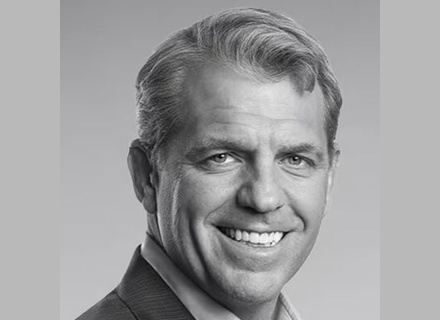

US billionaire Todd Boehly has signed an agreement with Russian oil major Lukoil to acquire its international energy assets through a consortium that includes the US International Development Finance Corporation (DFC), a major milestone in the restructuring of Russia’s overseas energy interests following Western sanctions.
The proposed transaction, which follows more than a year of negotiations, involves exchanging Lukoil securities worth USD 10 billion for the company’s international assets.
The deal, if approved by the Donald Trump administration, would give the consortium control of an extensive energy portfolio spanning approximately 40 countries.
The international assets are valued at around USD 16 billion and include oilfields in Azerbaijan, Kazakhstan and nine other countries, producing approximately 350,000 barrels of oil per day.
The portfolio also comprises refineries in the Netherlands, Bulgaria and Romania, along with a large network of service stations, including outlets in the United States.
Boehly confirmed the agreement on Wednesday, while a DFC official said the Trump administration would receive a share of future profits through its participation in the consortium.
The US Treasury Department will review the proposed transaction to ensure it safeguards American national security interests, having imposed sanctions on Lukoil in October 2025 over Russia’s war in Ukraine.
Approval from the Treasury’s Office of Foreign Assets Control (OFAC) remains necessary before the deal can proceed.
A person familiar with the regulatory process said the review could take time because of the size and geographical spread of Lukoil’s international portfolio.
“Moving strategic energy infrastructure assets into US or allied partners’ hands is a key policy priority of the administration,” a DFC official told Reuters.
The DFC’s participation gives Washington a direct financial interest in the proposed acquisition, reflecting the Trump administration’s growing involvement in strategic investments across the energy sector.
Although the exact ownership stake has not been disclosed, the DFC will receive a share of future profits after the consortium’s private investors recover their initial capital and an agreed rate of return.
The US government will also secure representation on the company’s governing board.
The consortium’s structure has reportedly been designed to ensure that the transaction does not provide an immediate financial windfall to Lukoil, which remains subject to US sanctions.
According to people familiar with the arrangement, the Lukoil securities being exchanged were purchased from US and British investment funds and US depositary banks that held them on behalf of retail investors.
Many international investors had owned Lukoil shares because the company was included in major emerging market indices.
However, those investments were frozen following the beginning of the Ukraine war in February 2022 and subsequently written down.
Boehly described the arrangement as an exchange of securities that had become effectively worthless to American investors for a portfolio of tangible energy assets.
He also highlighted the strategic importance of the assets, particularly their location along the Middle Corridor, a trade and transport route connecting Central Asia with Europe while running south of Russia and north of Iran.
The exchanged securities will be placed in an escrow account in the United Arab Emirates (UAE) rather than transferred directly to Lukoil.
The arrangement is intended to address US Treasury concerns about preventing sanctioned Russian entities from receiving proceeds from the transaction.
Boehly said completing the acquisition could take up to a year and indicated that the acquired business would operate under a new name.
The consortium includes Boehly’s investment interests, US bank Xtellus Partners and UAE-based Catena Investment Holding.
Two other prospective partners, the Syrian-Qatari Al-Khayyat brothers and Abu Dhabi-based International Holding Company (IHC), withdrew from the group last week, as per the reports.
Boehly described the consortium as fluid but said the group currently assembled was moving forward with the transaction.
The billionaire, who owns stakes in the Los Angeles Lakers and Los Angeles Dodgers, previously held a minority interest in English football club Chelsea.
He is also the chief executive and owner of Eldridge, an asset management and insurance holding company with approximately USD 75 billion under management.
Lukoil co-founder Vagit Alekperov said on Thursday that the company’s withdrawal was driven primarily by political considerations rather than a voluntary business decision.
“Lukoil did not decide to withdraw from international markets on its own. This was driven more by political factors,” Alekperov told Russian state television programme Vesti.
Alekperov, who served as Lukoil’s chief executive for nearly three decades, stepped down in April 2022 after Western countries introduced sanctions against him.
He added that the company had not completely abandoned hopes of returning to international markets.
“However, we are not shutting the curtain completely. We still hope to return,” he said.
Unlike Lukoil, Russia’s largest oil producer, state-controlled Rosneft, has not placed its overseas assets up for sale.
Rosneft is also subject to US sanctions and is headed by Igor Sechin, a longtime ally of Russian President Vladimir Putin.
Germany placed Rosneft’s local subsidiaries under trusteeship in 2022 after the Ukraine war disrupted its longstanding energy relationship with Russia.
Boehly’s consortium is not the first group to pursue Lukoil’s international portfolio.
Several potential buyers have previously attempted to acquire the assets, but none managed to complete a transaction.
Gunvor, which was subsequently renamed Centalion, said in 2025 that Lukoil had accepted its offer.
However, the company withdrew after US Treasury Secretary Scott Bessent described it as the “Kremlin’s puppet.”
The Carlyle Group also announced in January that it had signed an agreement to acquire the portfolio but failed to secure the necessary OFAC licence.
A DFC official said the agency had held discussions with several potential buyers, including Chevron, Glencore and Carlyle.
Private sector investors had sought the additional assurance provided by having a US government institution involved in the transaction.
The DFC has increasingly focused on energy, critical minerals and telecommunications during Trump’s second term, reflecting Washington’s broader strategy of securing influence over strategically important industries.
The agency also made certain equity investments under former President Joe Biden, although its participation in the Lukoil transaction highlights the current administration’s more direct approach to state involvement in commercial investments.
Image Courtesy: Eldridge Industries