
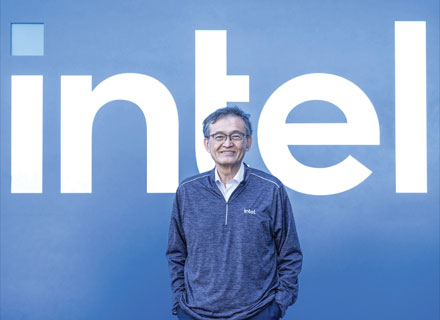

If you walked into Intel’s Santa Clara headquarters in late 2024, you could practically feel the anxiety vibrating through the linoleum. The company that had once defined Silicon Valley (the firm that put the “silicon” in the valley) was bleeding out. The ambitious “IDM 2.0” strategy championed by former CEO Pat Gelsinger had turned into a money pit, draining cash reserves to build massive factories in Ohio and Germany while the company’s actual products lost ground to AMD and NVIDIA. By the time the board accepted Gelsinger’s resignation in December, the company was staring down a fiscal abyss, reporting an annual net revenue loss that would eventually hit $18.8 billion.
The semiconductor industry loves a good comeback story, but what happened next was a total teardown. When the board appointed Lip-Bu Tan as CEO in March 2025, they handed the keys to a demolition expert. Tan, a venture capitalist and the architect of Cadence Design Systems’ 3,200% stock rise, had spent months on Intel’s board complaining about “bloat” and a “risk-averse culture” before resigning in frustration in August 2024. Now, he was back, and he wasn’t asking for permission to change things. He was demanding a revolution.
From his appointment in March through the closing days of December 2025, Tan orchestrated perhaps the most aggressive corporate restructuring in modern tech history. He slashed the workforce, sold off prized assets, nationalised part of the company, and even took money from his fiercest rival, all to fund a “Hail Mary” pass on a new AI architecture.
Breaking the frozen middle
To understand why Lip-Bu Tan’s arrival felt like an earthquake, you have to understand the soil conditions he inherited. For years, Intel had been plagued by what insiders called the “frozen middle,” layers upon layers of middle management that insulated decision-makers from engineering realities.
In his first town hall meeting in April 2025, Tan didn’t mince words. He stood on stage and told the assembled staff that the outside world was seeing the company as “too slow, too complex, and too set in our ways.” He urged them to be “brutally honest” about their failings, a shocking admission for a company that had spent decades drinking its own Kool-Aid.
Lip-Bu Tan’s philosophy was simple. Engineers should run engineering companies. He had been horrified to discover that some project teams at Intel were five times larger than comparable teams at AMD, yet produced inferior work. The problem was a proliferation of “meetings about work” replacing the actual work.
Managers were incentivised to grow their headcount rather than their output. Tan declared war on this metric immediately. In a memo titled “Our Path Forward,” he explicitly stated that the size of a manager’s team would no longer be a badge of honour.
The resulting purge was swift and painful. Throughout the spring and summer of 2025, Tan initiated a “systematic review” of the workforce that went far beyond the standard corporate trimming. By the end of the year, Intel had cut approximately 33,000 roles, bringing the headcount down from nearly 109,000 to around 75,000.
The marketing, HR, and administrative divisions were decimated, but Tan also took a scalpel to product management teams he felt were creating “roadmap noise,” generating requirements for products that would never be profitable.
Apart from firing people and rewiring the organisational chart, Tan elevated the leaders of process technology, design, and manufacturing directly to the “Executive Team,” bypassing the business unit general managers who had previously acted as gatekeepers. If you were building the chips, you now had a direct line to the CEO.
If you were managing the people who built the chips, you were likely looking for a new job. It was a brutal cultural reset, designed to reduce “decision latency” and force the company to move at the speed of the AI market, not the speed of an internal committee.
Selling silver to save the ship
While Lip-Bu Tan was fixing the culture, he also had to fix the bank account. The “Smart Capital” strategy of the previous era had left Intel cash-poor just as it needed to buy expensive High-NA EUV lithography machines for its new factories.
The company needed liquidity, and it needed it fast. Tan looked at Intel’s sprawling portfolio and decided to amputate everything that wasn’t essential to the core mission of making high-performance logic.
The biggest casualty was “Altera,” the programmable chip unit Intel had acquired in 2015. For a decade, Intel had clung to the “integrationist” philosophy that Field Programmable Gate Arrays (FPGAs) would eventually be merged into the CPU package for every data centre server. Lip-Bu Tan saw this for what it was: a distraction.
In April 2025, he pulled the trigger on a deal to sell a 51% controlling stake in Altera to the private equity firm Silver Lake for $8.75 billion. This deal was significant for the cash it generated and for what it signalled. By turning Altera into an independent entity, Tan was effectively admitting that the integration strategy had failed. It freed Altera to partner with whoever it wanted (even ARM or RISC-V vendors), and it also rescued Intel from the operational headache of managing a completely different silicon architecture. The $8.75 billion injection was a lifeline, allowing Intel to keep the lights on in its Arizona and Ohio construction sites without resorting to high-interest debt that would have crippled its balance sheet.
Lip-Bu Tan further used the fiscal year 2025 to “kitchen sink” every bit of bad news he could find. The company took massive write-downs and restructuring charges, leading to ugly quarterly earnings reports that would have panicked a less experienced CEO. But Tan knew that to rebuild, he first had to clear the rubble. He was willing to sacrifice short-term stock performance and endure the headlines about “record losses” to reset the baseline for 2026. It was a classic private equity move executed on a public market stage, and it stripped the asset down to its studs so as to rebuild it properly.
Goodbye Falcon, hello Jaguar
Financial engineering can save a balance sheet, but only product engineering can save a tech company. And in early 2025, Intel’s product roadmap was a mess. The company had missed the generative AI boat entirely.
Its “Gaudi 3” accelerator, launched to compete with NVIDIA’s H100, was a commercial dud. Despite offering decent specs on paper, it lacked the software ecosystem to break NVIDIA’s CUDA moat, and enterprise customers largely ignored it.
Worse, the next big hope, a chip called “Falcon Shores,” was dead on arrival. Originally billed as a revolutionary “XPU” that would combine CPU and GPU cores on a single die, Falcon Shores had suffered from shifting specs and delays. By the time Tan took over, it was clear that even if they launched it, it would be a “me-too” product arriving too late to matter. In a move that shocked industry watchers, Tan cancelled the commercial launch of “Falcon Shores,” relegating it to an “internal test vehicle.”
He decided to skip a generation. Instead of fighting NVIDIA’s current lineup, Tan pointed the company toward late 2027 and a new architecture called “Jaguar Shores.” This was a bet on “rack-scale” computing. Tan realised that in the age of massive Large Language Models (LLMs), the unit of compute wasn’t the chip anymore. It was the entire server rack.
“Jaguar Shores” is designed to be a beast. Leaked specs reveal a massive 92.5mm x 92.5mm package, suggesting a complex multi-tile design stitched together with Intel’s advanced packaging technology. But the real secret sauce is the light. Under Tan, Intel doubled down on Silicon Photonics, a technology that uses light instead of electricity to move data.
The bottleneck in modern AI clusters isn’t usually the speed of the processor. It’s the speed at which you can move data between processors. NVIDIA solves this with heavy, power-hungry copper cables. Intel’s Jaguar Shores is designed to use Optical Compute Interconnect (OCI) chiplets that can shoot data across the data centre at the speed of light. Lip-Bu Tan is betting that by 2027, the power limits of copper wire will hit a wall, and Intel’s optical solution will be the only way to build larger AI brains.
To feed this beast, Tan also made a surprising play in memory. He partnered with SoftBank’s subsidiary, Saimemory, to develop a new type of memory called Z-Angle Memory (ZAM). Unlike the standard High Bandwidth Memory (HBM) that is currently in short supply, ZAM uses a diagonal vertical stacking method to pack more density into a smaller space. Intel claims it could offer two to three times the capacity of current memory at half the power. It’s a long shot (prototypes aren’t due until 2028), but it showed that Tan was done playing catch-up. He was trying to change the rules of the game.
Capital restructuring
By August 2025, even with the Altera money and the layoffs, the math wasn’t adding up. Building the world’s most advanced chip factories costs hundreds of billions of dollars, and Intel was running on fumes. Lip-Bu Tan realised he couldn’t do it alone. He needed partners, and he wasn’t picky about where they came from.
What followed was a capital restructuring so complex and unprecedented that it blurred the lines between private enterprise, national security, and industrial policy. First came the US government. In a historic move, Washington converted $8.9 billion of promised “CHIPS Act” grants into a direct 10% equity stake in Intel. This was a crossing of the Rubicon. Intel was designated a “National Champion,” too big to fail and partially owned by the taxpayer. Critics called it “State Corporatism,” warning that political pressure could now dictate where Intel built its factories or who it hired. But for Tan, it was survival.
Then came Masayoshi Son. The SoftBank CEO, seeing an opportunity to secure a supply chain for his own AI ambitions, poured $2 billion into Intel stock. This tied Intel’s manufacturing future to the Japanese tech ecosystem and gave Tan a vote of confidence from one of the world’s most aggressive tech investors.
But the real shocker came in September. In a twist that felt like the Yankees investing in the Red Sox, NVIDIA agreed to buy a $5 billion stake in Intel. Why would Jensen Huang prop up his dying rival? It was a calculated hedge, as the chipmaker needed to keep regulators off its back by showing that the market was competitive, and it needed a strong x86 CPU ecosystem to host its GPUs. If Intel collapsed, the data centre market might shift entirely to ARM-based processors, where NVIDIA faces stiffer competition. For Tan, taking money from NVIDIA was a humbling pill to swallow, but it stabilised the stock price and signalled to customers that Intel wasn’t going anywhere.
The new Intel workforce
What Lip-Bu Tan’s revolution actually felt like inside Intel was less strategic pivot than controlled demolition. Engineers who had spent careers navigating bureaucracy through weekly syncs and quarterly reviews arrived one Monday to find their entire management chain gone. Directors who once oversaw thirty-person teams now report directly to VPs. Mid-level managers, the connective tissue of old Intel, vanished in weeks, not months.
Lip-Bu Tan deliberately shattered Intel’s foundational social contract. For decades, joining Intel meant trading startup lottery tickets for something steadier: job security, incremental promotions, the quiet prestige of building the world’s processors. Engineers are expected to retire with the company. Tan replaced that implicit promise with volatility marketed as meritocracy.
Performance reviews became surgical. Teams were evaluated by taped-out silicon and working chips, not roadmap presentations. Engineers who had optimised for political navigation suddenly found the game unrecognisable.
The response split along generational and temperamental lines. Long-tenured Intel lifers discovered their institutional memory (knowing which VP to cc, which process to invoke) had transformed overnight from asset to liability.
“Everything I knew about how to get things done here became irrelevant,” said a fifteen-year veteran who left for AMD. For them, Tan’s Intel felt like chaos wearing a reform badge.
But others described it as liberation. Younger engineers, frustrated by layers of approval for simple decisions, suddenly had direct access to executives who wanted problems solved, not processes followed.
“I shipped more in six months under Tan than in three years before,” one hardware designer said.
Intel became attractive again, but to a different archetype. It was the place for risk-tolerant designers who wanted massive R&D budgets without startup instability, AI systems engineers lured by foundry ambitions, people energised rather than paralysed by existential stakes.
The talent exodus told competing stories. Senior architects departed for NVIDIA’s AI chip teams or AMD’s data centre divisions, taking decades of x86 optimisation knowledge with them. But Intel simultaneously pulled engineers from Apple’s silicon group, poached packaging experts from TSMC suppliers, and hired machine learning systems designers who had never considered Intel before.
The company was haemorrhaging institutional knowledge while injecting outside perspective, losing the people who knew why things were done a certain way, and gaining people who didn’t care about the old ways at all.
Compensation structures reinforced the shift. Stock grants became more aggressive but tied to specific chip milestones. Bonuses swung wildly based on quarterly execution. Engineers accustomed to predictable compensation discovered their total comp could vary by 30% year-over-year. This was intentional. Tan wanted people motivated by building winning products, not by optimising tenure. It attracted gamblers and builders. It repelled those who valued stability above intensity.
Intel’s old mantra of “constructive confrontation,” spirited debate within supportive structures, gave way to confrontation without cushioning. Town halls where leadership acknowledged uncertainty offered few answers. Slack channels that once buzzed with institutional gossip went strangely quiet. Fear permeated the campuses, yes, but so did clarity. Everyone understood the mandate. It was you who delivered or became irrelevant.
The unresolved question hanging over Intel’s reinvention is whether a company traumatised by mass layoffs and cultural upheaval can still innovate at the scale required to challenge TSMC and NVIDIA, or whether this kind of creative destruction, brutal as it feels, is precisely what competing in the AI-era silicon demands. Lip-Bu Tan bet everything that trauma and transformation are inseparable. Intel’s workforce is living the experiment.
The 18A gamble
All of these manoeuvres, the layoffs, the asset sales, the government bailout, were in service of one singular goal: getting the “18A” manufacturing process to work. This was the finish line of the “five nodes in four years” marathon. Breakthrough 18A was supposed to be the technology that finally put Intel ahead of TSMC, using new “RibbonFET” transistors and “PowerVia” backside power delivery to make chips faster and more efficient.
For most of 2025, it looked like a disaster. Rumours swirled in the summer that yields (the percentage of functional chips on a wafer) were as low as 10%. The industry whispered that the technology was too complex, that trying to introduce two major innovations at once was suicide. NVIDIA, which had been testing the node for potential use, reportedly “halted” its immediate production plans in December—a stinging rebuke.
Yet Tan kept the engineers focused. He refused to let the roadmap slip. And in a photo finish that saved the year, Intel officially announced in late December 2025 that 18A had achieved “High-Volume Manufacturing” readiness. They had done it. They had functional chips, the “Panther Lake” for laptops and “Clearwater Forest” for servers, rolling off the line.
The yield wasn’t perfect, and the external customer list was still thin, mostly Microsoft and AWS committing to specific designs rather than broad volume. But the technical milestone was achieved. Intel had proved it could still manufacture at the bleeding edge.
As 2026 dawns, Lip-Bu Tan presides over a fundamentally different company than the one he took over. It is smaller, leaner, and partially nationalised. It is tethered to a complex web of alliances with competitors and governments. It has bet its future on an optical AI architecture that won’t arrive for two years. But for the first time in a long time, the bleeding has stopped. The “Tan Doctrine” of 2025 was brutal, ugly, and necessary. He dismantled the old Intel to build a fortress that might just survive the AI wars.
Lip-Bu Tan tore Intel apart and rebuilt it in his own image. The layoffs, asset sales, and alliances with governments and competitors were ruthless, and they left scars. Intel is now a high-stakes, high-pressure machine built for the AI era. Tan has proven that survival requires speed, decisiveness, and a willingness to break sacred cows, but the human cost is enormous. Long-tenured engineers walked out, institutional memory was lost, and the culture is harsher and less forgiving. Yet, the gamble is paying off: 18A works, and the company can compete again. Tan has created a lean, dangerous Intel, one that can fight, innovate, and maybe win, but only if it can maintain focus and avoid imploding under its own intensity.