

In the final weeks of February 2026, ChatGPT creator OpenAI raised $110 billion in a blockbuster funding round, valuing itself at $840 billion. The development, which continued to reflect the accelerated pace of investment in artificial intelligence (AI), saw SoftBank pumping in $30 billion, followed by NVIDIA ($30 billion) and Amazon ($50 billion). Post this, OpenAI will be looking to complete the launch of its much-awaited IPO by the year-end.
However, in this article, International Finance will discuss in detail SoftBank’s rush to forge partnerships with OpenAI and the American tech industry in general, as the ongoing AI boom is also witnessing heavy spending on data centres. In January, OpenAI and SoftBank announced their roadmap to invest $500 million each in California-based SB Energy (a SoftBank-owned company) to expand data centre and power infrastructure for their Stargate initiative. SB Energy will build and operate OpenAI’s previously announced 1.2-gigawatt data centre site in Milam County, Texas.
Talking about Stargate, it is a $500 billion multi-year initiative to build AI data centres for training and inference, backed by major investors including Oracle. SoftBank’s aggressive spending spree on the data centre front comes amid the tech companies’ mad rush to secure their power infrastructure. Energy access is becoming a critical constraint on AI expansion, with the push for larger and more numerous data centres driving electricity demand higher.
SoftBank will also be acquiring Florida-based digital infrastructure investor DigitalBridge Group in a deal valued at $4 billion. Through this, the Japanese company will be penetrating the digital infrastructure segment further, aligning with the vision of its billionaire founder, Masayoshi Son, who has made the United States’ AI boom his investment target. He wants to capitalise on surging demand for the computing capacity that underpins AI applications.
DigitalBridge invests in digital infrastructure sectors such as data centres, cell towers, fibre networks, small-cell systems and edge infrastructure. The company, which as of September 2025 possesses around $108 billion in assets, making it one of the largest dedicated investors in the digital ecosystem, also has a Stargate link.
It, along with OpenAI, Oracle and Abu Dhabi-based tech investor MGX, is investing billions of dollars in the project, under which five new computing sites across Texas, New Mexico and Ohio will have a combined power capacity of about seven gigawatts.
Building an AI war chest
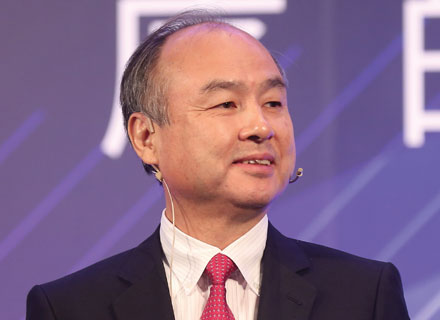
Masayoshi Son’s latest interview with The Times Magazine gave a sneak peek of what is going through his mind, in terms of SoftBank’s road ahead in the AI domain. After making a fortune in software and transferring that success into domains like telecoms and a raft of tech ventures, Son is now preparing SoftBank’s $180 billion war chest for AI.
Be it taking control of chip firms Arm, Graphcore and Ampere Computing, as well as self-driving car start-up Wayve, or the investments into Intel and OpenAI, all of them have one thing in common: Son’s emphasis on artificial superintelligence (ASI), which he envisions becoming “10,000 times smarter than humans within a decade.”
“ASI combined with physical AI (including humanoid robotics) will comprise 10% of global GDP in 10 to 15 years, followed by 30% over 30 years,” Son predicted.
Masayoshi Son is known for following a high-risk, even higher-leveraged investment style that has courted both success and disasters. While the $20 million investment in Chinese e-commerce giant Alibaba (worth close to $200 billion at its peak) gave the SoftBank boss a sort of legendary status, the $18.5 billion he pumped into the now-bankrupt office-sharing venture WeWork also got listed among history’s most bizarre moves.
However, the ongoing AI boom has given Son another opportunity to be a risk-taker. SoftBank shares hit a record high in October 2025, briefly propelling Son to once again become the richest man in Japan. However, he has got a bigger role now: spearheading Silicon Valley’s bet to scale up US data centres and AI infrastructure, thereby writing the rulebook of the Fourth Industrial Revolution (Industry 4.0).
The SoftBank boss has also reportedly proposed a vast $1 trillion AI and robotics complex in Arizona, dubbed “Project Crystal Land,” that will also incorporate a free-trade zone alongside Taiwan’s chipmaking giant TSMC. By tapping into the Donald Trump Administration’s appetite for big numbers, as well as the clamour to reshore chipmaking and reassert American tech leadership against China, Son has pivoted SoftBank as an essential partner toward revamping US AI infrastructure.
And the investment vehicle supercharging SoftBank’s AI pivot is its “Vision Fund.” The entity, apart from being a steady investor in AI companies, including OpenAI, holds stakes in chip designer Arm, along with companies involved in robotics and autonomous vehicles. As of December 2025, through the fund’s strategic investments, the Japanese tech conglomerate has remained a profit-making machine, that too for four consecutive quarters.
In the October-December quarter alone, the venture reported a net profit of 248.6 billion yen (USD 1.62 billion), in a stark reversal of the net loss of 369 billion yen which it had to undergo in the same quarter in 2024. It seems like OpenAI’s rising valuation will also bode well for the conglomerate’s earnings, despite market worries about the risk of overexposure to a single firm.
In March 2026 itself, S&P Global lowered its outlook for SoftBank Group to negative from stable, saying further investments in the Sam Altman-led firm may hurt the Japanese conglomerate’s liquidity and the credit quality of its assets. However, it seems Son doesn’t have immediate plans to move away from the OpenAI bet.
However, the same bet comes at a cost. In November 2025, the SoftBank boss had to take the hard call of liquidating the entire stake ($32.1 million to be precise) in American chipmaking giant NVIDIA to free up investment worth $5.83 billion, along with part of a T-Mobile stake worth $9.17 billion. It wasn’t an easy call for Son, given that Vision Fund was an early backer of NVIDIA, apart from both ventures having a deep relationship, with the tech conglomerate involved in several AI ventures that rely on NVIDIA’s technology, including the Stargate one.
When Masayoshi Son broke his silence on the NVIDIA stake sale, he said, “I respect Jensen (NVIDIA CEO), I respect NVIDIA so much, I don’t want to sell a single share. I just had more need for money to invest in OpenAI, invest in our opportunities, so I was crying to sell NVIDIA shares. If I had more money, of course, I would want to keep NVIDIA shares, all the time, any time.”
Maverick since childhood
Born as the grandchild of Korean immigrants in a small town on Japan’s southernmost island of Kyushu, Masayoshi Son had a humble childhood, living in a shack on a plot of unregistered land. At the age of 16, he read a book written by legendary Japanese businessman Den Fujita, the iconic figure who brought McDonald’s to Japan.
Then he made 60 long-distance phone calls with one intention: to meet the businessman himself. Despite repeated rejections, Son went to Tokyo and turned up uninvited at the McDonald’s head office. He was eventually given a 15-minute audience with Fujita, who gave one piece of advice to the teenager that changed his life forever, which was “focus on future technologies like computers.” It is worth mentioning that Fujita later sat on the SoftBank board.
Masayoshi Son then moved to the United States, completing his high school education at California High School, followed by a course in economics at the University of California, Berkeley. However, one task was quietly shaping Son’s entrepreneurial destiny, dedicating five minutes every day to thinking about inventions and filling hundreds of notebooks.
Son eventually ended up collaborating with Berkeley tutors to invent the world’s first electronic translator, which he later sold to Sharp Corporation. He then started a business importing second-hand arcade game machines from Japan.
Despite setting up a successful business in the United States, Son returned to his homeland to keep a promise he made to his mother. In 1981, the 24-year-old Son established SoftBank. While SoftBank started as a software wholesaler to support the then-upcoming PC industry, in 1982, TIME named the computer its “Machine of the Year,” giving the youngster’s business a solid purpose.
However, he was diagnosed with Hepatitis B. Given three to five years to live, Son took the challenge head-on and underwent pioneering treatment that saved his life. The whole episode only made him more self-confident. And it showed in his rapid rise since then.
In the 1990s, Masayoshi Son invested $3 billion in 800 tech start-ups. In 1996, he paid $100 million for 33% of Yahoo! Three years later, he sold off a chunk of the shares for a huge profit but still retained a 28% stake worth $8.4 billion. He zeroed in on one investment strategy, which is issuing SoftBank bonds to borrow money at rates cheaper than banks.
Then arrived the ill-famed dot-com bubble. During the phase, Son’s net worth used to surge by $10 billion every week, so much so that in February 2000, the SoftBank boss briefly unseated Microsoft co-founder Bill Gates to become the world’s richest person for three days. However, when the bubble burst later that year, SoftBank shed 97% of its value, and Son had to suffer losses worth $70 billion.
However, the beauty of time is that it changes. Alibaba, now an established Chinese conglomerate, was a relatively unknown e-commerce startup in 2000. It got a $20 million bet from Son, and as the company went public in 2014, the same stake became worth $75 billion. As Son sold it, it doubled again, becoming one of his most profitable investments of all time, apart from creating the “Midas Touch” narrative about Son’s bet-taking capabilities.
Telecom investments and blunders
After recovering from the dot-com bubble disaster, Masayoshi Son set his eyes on the broadband segment. However, things weren’t smooth initially, as SoftBank had to struggle to get regulatory approvals in Japan to set up its industry subsidiary.
Things went to the extent where Son stormed into an official’s office at Japan’s telecommunications ministry, clutching a cheap cigarette lighter. While recollecting that episode in an interview with the Wall Street Journal, Son remembered saying to the official, “This is the end. If you don’t help me, I’m going to pour gasoline all over myself right here and set myself on fire with this $1 lighter.”
The situation got better in 2006 when, after acquiring Vodafone’s Japanese subsidiary, the rebranded SoftBank Mobile emerged as a key player in Japanese telecoms. Son successfully persuaded Apple co-founder Steve Jobs to give him the exclusive rights to market the iPhone, history’s most successful consumer electronic product, when it debuted in 2007.
In 2013, he purchased Sprint and turned things around for the struggling US telecom provider before merging it with T-Mobile in 2020, disrupting the AT&T and Verizon duopoly. Although Son is known as a hands-off investor, the Sprint episode was the best example of him rolling up his sleeves and getting things done.
In 2017, he formed the SoftBank Vision Fund with over $100 billion in capital. The entity still maintains its position as the world’s largest private equity fund. He secured some $45 billion from Saudi Arabia’s Public Investment Fund (PIF) following a 45-minute meeting with Crown Prince Mohammed bin Salman.
The fund’s strategy was simple: invest a minimum of $100 million to juice each startup to market dominance by blowing competitors out of the water, and Masayoshi Son called it “blitzscaling.” The entity, by 2019, pumped $76.3 billion into companies like NVIDIA, Uber, WeWork, Paytm, Ola and Flipkart, most of which are market giants in their respective fields.
In 2019, SoftBank launched Vision Fund 2 with a touted value of $108 billion. However, there was a setback, as the entity reportedly managed to secure a paltry $30 billion, mostly self-funded. The original Vision Fund also underperformed, as in 2021 it posted record losses of $27.4 billion amid the haemorrhage of tech stocks. The Ukraine war, COVID-19 lockdowns, and Beijing’s crackdown on its tech giants, many of which were backed by SoftBank, pulled down investor confidence.
And who can forget the WeWork disaster? During his high-profile visit to the United States in December 2016, in which Son met President-Elect Donald Trump, he also interacted with Adam Neumann, the founder of the co-working venture. The deal, famously drawn up during a 12-minute meeting followed by a car ride, saw the SoftBank boss handing Neumann $4 billion. The Japanese conglomerate then went on to pump in another $14.5 billion.
However, in 2023 the bet backfired as WeWork declared bankruptcy, after a planned IPO went awry, followed by investor doubts about its governance, business model and profitability.
The episode affected Masayoshi Son, as he announced SoftBank would adopt a “defensive” position by being conservative when it came to the pace of new investments. Not only did the Japanese conglomerate witness an exodus of executives, but Son also ended up telling investors that he was “embarrassed and ashamed of himself for being so elated by big profits in the past.”
WeWork was not the only failed bet for SoftBank, as it also faced criticism for unsuccessful investments in dog-walking service Wag, robot pizza chain Zume and, most importantly, payments service Wirecard, which collapsed in 2020 after being named in Germany’s biggest post-war accounting fraud, where €1.9 billion in reported cash was found to be non-existent.
Around the same time, Greensill, a SoftBank-backed supply chain finance firm in the United Kingdom and Australia, also shut down amid illegal lobbying accusations.
The big gamble
Stargate is a huge bet for Son and the wider American tech sector, as through this, the world’s largest economy is looking to enhance its AI infrastructure to 10 gigawatts by 2029, with Texas, Michigan, New Mexico and Wisconsin being key data centre hubs.
However, economists and investors believe that the current AI infrastructure, far cheaper than Stargate, already fails to generate adequate revenue compared to its cost. Also, newer AI models will likely be more power-efficient, rendering massive data centres obsolete.
Data centres are also known for straining energy grids, leading to higher operational as well as environmental costs, undermining economic viability.
Masayoshi Son disagrees with the detractors, as he envisions 10 times more AI chips being deployed in each three-year cycle. Over time, these chips themselves will become 10 times more potent, while AI models, on their part, will ramp up productivity by a factor of 10.
“That’s 1,000x in three years. Nine years with three generations is 1,000,000,000x. It’s a huge, huge difference,” he told TIME.
Another concern of critics is that the collaboration between OpenAI, Oracle and SoftBank could result in a cartel that stifles innovation while inflating costs.
Taking a different view, Son remarked, “For the AI race, it requires hundreds of billions of dollars of investment into the data centres, buying chips, integrating chips and training the models. It’s very, very costly, so it will naturally be concentrated into several very capable companies in terms of talent and capitalisation.”
Stargate is also a prime example of geopolitical and technological rivalries finding a common link: Washington’s desire (spooked by DeepSeek’s rise) to beat Beijing in the so-called AI “arms race.” Korean-Japanese Son has picked his side here.
Or call it Son’s revenge, as Beijing’s regulatory crackdown on its tech industry in 2021 caused stocks to plummet, leading to a financial bloodbath for SoftBank.
He told TIME, “I have stopped investing in China. Zero. I’m now focused on investing in the US.”
However, he still has great admiration for Chinese business acumen, reflected in his words: “You cannot underestimate China’s crowd of young entrepreneurs, young scientists. They are for real.”
Talking about Stargate, out of the total $500 billion to be spent over four years, some $100 billion was to be invested “immediately,” to create 100,000 permanent jobs. However, only roughly $10 billion has so far been deployed in the Texas city of Abilene, where some 7,000 temporary construction jobs reportedly have been created, providing a mixed bag to the local economy in the form of growing job openings and a housing crisis.
Two elements from the dot-com era, fibre optic cable and 3G infrastructure, went on to prove invaluable over the years. However, the same can’t be said about data centres (warehouses packed with GPUs), as these infrastructures may not enjoy such longevity given the industry’s emphasis on developing next-generation AI that will be more energy-friendly.
Has Masayoshi Son, who has repeatedly risen like a phoenix after multiple investment failures, taken a big gamble about Stargate and American AI ambitions in general? Only time will tell.