
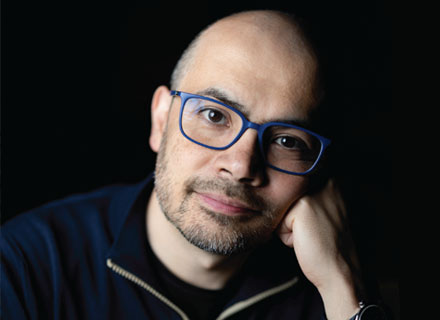

On a crisp October morning in 2024, the phone rang in London with a call that every scientist dreams of, yet few dare to expect. The Royal Swedish Academy of Sciences was on the line. Demis Hassabis, the CEO of Google DeepMind, along with his colleague John Jumper, had been awarded the Nobel Prize in Chemistry.
The accolade was not for a new chemical compound synthesised in a beaker but for code, specifically AlphaFold, an artificial intelligence (AI) system that had solved a 50-year-old grand challenge in biology. It predicted the complex three-dimensional structures of proteins accurately.
For Demis Hassabis, this moment was the culmination of a lifelong “100-year plan” to solve intelligence and then use it to solve everything else. It was the ultimate validation of the “Profound,” the belief that AI is fundamentally a tool for scientific enlightenment, capable of ushering in an era of “radical abundance” by curing diseases, designing new materials, and unravelling the mysteries of the universe.
While the scientific community toasted Hassabis as a pioneer of computational biology, the corporate world demanded something far more “Prosaic.” As the supreme commander of Google’s AI efforts, Hassabis was essentially a wartime general in the most brutal corporate conflict of the 21st century. His mandate was not just to win Nobel Prizes but to crush competitors like OpenAI and Microsoft in a race for chatbots, web browsers, and ad revenue.
In the same year he accepted the Nobel medal, his teams were pushing out products like “Nano Banana,” a viral AI image generator used for solving homework and creating 1880s-style portraits, and fending off OpenAI’s “ChatGPT Atlas,” a browser designed to dismantle Google’s monopoly on search.
International Finance will examine the duality of Demis Hassabis and the organisation he leads, exploring the tension between the high-minded pursuit of Artificial General Intelligence (AGI) for scientific discovery and the commercial imperative to dominate the consumer internet.
Polymath pursues intelligence
Demis Hassabis is a polymath whose career has been defined by a singular obsession with the mechanics of intelligence. He was born in London in 1976 to a Greek Cypriot father and a Singaporean mother.
Hassabis displayed a precocious talent for strategy games. By 13, he was a chess master with an Elo rating of 2300, the second-highest rated player in the world for his age, behind only Judit Polgar. Chess taught Hassabis the value of planning, the necessity of sacrifice, and the brutal objectivity of a win-loss record.
However, the game also exposed the limits of the human mind, the shackles of human cognition, and made the young boy realise that we as a species are bound by biology. He soon realised that to surpass his limits, he would need to build a machine that could think.
Demis Hassabis didn’t start with the mind. In the beginning, he built worlds. At 17, he joined Bullfrog Productions, a legendary video game studio founded by Peter Molyneux. There, he served as the lead programmer for Theme Park (1994), a simulation game that sold millions of copies and defined the management genre.
Theme Park was more than a game. It was an exercise in agent-based modelling. It required simulating the desires and behaviours of thousands of little digital visitors. It was a precursor to the complex environments DeepMind would later use to train its AI agents.
Demis Hassabis later founded his own studio, Elixir Studios. Its debut title, “Republic: The Revolution,” was an incredibly ambitious political simulator that promised to model the intricate social dynamics of an entire Eastern European nation. However, the game’s ambition outstripped the hardware capabilities of the time.
Though technically impressive, it was commercially disappointing. The experience was a crucible for Hassabis, teaching him a painful lesson: having a profound vision is useless if you cannot execute it within the constraints of reality. It was a lesson that would serve him well when navigating the corporate politics of Google decades later.
Realising that video games were an insufficient vessel for his ambitions, Hassabis pivoted to academia. He earned a PhD in cognitive neuroscience from University College London (UCL), focusing on episodic memory and the hippocampus. His research sought to understand how the brain encodes past experiences to imagine future scenarios.
It was a critical component of intelligence that was missing from the “brittle” AI of the time. In 2010, he co-founded DeepMind Technologies in London with Shane Legg and Mustafa Suleyman. Their mission statement was audacious in its simplicity.
Google acquisition
By 2014, DeepMind had caught the attention of the Silicon Valley giants. Facebook attempted to acquire the lab, but Google eventually won the bid, paying approximately £400 million ($650 million). For Google, the acquisition was a defensive move to secure the world’s best AI talent. For Hassabis, it was a means to access the massive computational resources required to train neural networks.
However, Hassabis was wary of Google’s corporate machinery. He famously negotiated a condition for the sale. He wanted them to establish an “Ethics Board” to oversee the deployment of DeepMind’s technology. The Ethics Board remains one of the most enigmatic chapters in AI history.
Initially heralded as a safeguard against the misuse of AGI, it became a symbol of the opacity of “Big Tech.” Years after the acquisition, investigative reports suggested that the board’s membership was never public, and it was unclear if it ever formally convened or exercised any real power.
Demis Hassabis later claimed the board had convened and was “progressing very well,” but dismissed enquiries by stating that discussions were confidential. DeepMind operated as a “state within a state” inside Google, shielding its academic culture from the commercial pressures of Mountain View. While Google sold ads, DeepMind played Go.
That independence bore fruit in 2016 when AlphaGo, a DeepMind program, defeated Lee Sedol, the world champion of the ancient board game Go. It was a watershed moment for AI, comparable to the Wright Brothers’ first flight. It demonstrated that deep reinforcement learning could produce intuition-like capabilities.
It was what Hassabis called “creativity.” But while AlphaGo was a scientific triumph, it made zero dollars. For nearly a decade, DeepMind was a financial black hole, burning through hundreds of millions in Google’s cash while generating negligible revenue.
Fragmented AI efforts
The luxury of operating as an ivory tower ended abruptly in November 2022. The launch of ChatGPT by OpenAI sent shockwaves through Google. Suddenly, the search giant looked vulnerable. Its primary revenue engine, the blue links of Google Search, faced an existential threat from conversational AI.
Google realised that its fragmented AI efforts, split between the product-focused Google Brain team in California and the research-focused DeepMind in London, were a liability. In April 2023, CEO Sundar Pichai announced the unthinkable. He declared the merger of these two rival fiefdoms into a single unit, “Google DeepMind,” with Hassabis as CEO.
It was a culture clash. Google Brain, led by Jeff Dean, had a culture of “shipping” and engineering scale. They were the team that invented the Transformer architecture (the “T” in GPT) but had failed to capitalise on it. DeepMind was academic, secretive, and focused on long-term AGI rather than consumer products.
No longer just a lab director protecting his scientists from product managers, Hassabis was now the “Product General” responsible for saving Google’s business. His mandate was clear. He had to ship a competitor to GPT-4, and do it fast. The merger forced a “shotgun wedding” of codebases and philosophies.
DeepMind’s researchers, accustomed to working on protein folding and plasma physics, were redeployed to build chatbots. The tension was palpable. Hassabis, who had once wished tech giants would move more slowly on AI deployment to ensure safety, was now the man pressing the accelerator.
Gemini generalist launch
While AlphaFold was winning prizes, the rest of Google DeepMind was fighting in the mud of the consumer market. The “Prosaic” reality of 2024 and 2025 has been defined by a relentless schedule of product releases, some revolutionary, others bizarre.
The flagship response to OpenAI was Gemini, a multimodal model family designed to power everything from Google Search to Android phones. Unlike the specialised AlphaFold, Gemini is a generalist, a jack of all trades designed to write emails, plan vacations, and code software. But the most peculiar skirmish in this war involved a model colloquially known as “Nano Banana” (Gemini 2.5 Flash Image).
In late 2025, this image generation tool went viral, not for curing cancer, but for a TikTok trend where users generated portraits of themselves across decades, from the 1880s to 2025. The model also gained notoriety for its ability to solve handwritten math homework, mimicking the user’s own handwriting style so perfectly that it sparked a debate about academic integrity. In one bizarre incident, an employee used it to generate a hyper-realistic image of an injured hand to fake a bike accident and get paid leave, prompting the viral tagline, “AI just broke HR verification.”
“Nano Banana” drives user engagement, locks people into the Google ecosystem, and demonstrates the “magic” of AI to the average consumer. The pricing models for these tools, ranging from free tiers to “Pro” subscriptions, are designed to monetise creativity at scale, a stark contrast to the open-science ethos of early DeepMind.
The threat to Google’s dominance intensified in October 2025 with the launch of ChatGPT Atlas, OpenAI’s AI-powered web browser. Atlas represents a paradigm shift. Instead of searching for links (Google’s model), users converse with the web. The browser features “Agent Mode,” where the AI can book flights, fill out forms, and summarise pages autonomously.
Atlas is a direct dagger at Chrome’s heart. If users stop searching and start “asking,” Google’s ad revenue, the lifeblood of Alphabet, evaporates. Hassabis’s team has responded with “Project Astra,” a universal AI assistant that can see and hear the world, integrated into Gemini Live.
AlphaFold solves mystery
Amidst the chaos of the chatbot wars, Hassabis delivered a reminder of why he started DeepMind in the first place. In 2024, the Nobel Committee recognised AlphaFold, DeepMind’s protein structure prediction system, with the Nobel Prize in Chemistry.
Proteins are the machinery of life. Their function is determined by their 3D shape, but predicting that shape from a string of amino acids is a problem of astronomical complexity. Levinthal’s paradox suggests it would take longer than the age of the universe to brute-force a solution.
AlphaFold 2, released in 2020, solved this. It predicted the structures of nearly all 200 million known proteins with atomic accuracy. The impact was immediate. Researchers used it to design malaria vaccines, understand antibiotic resistance, and develop plastic-eating enzymes.
For Hassabis, the Nobel was proof of his core thesis. He often said that the ultimate goal of AI is not just to create intelligent machines, but to understand intelligence itself.
AlphaFold was the perfect example of AI acting as a multiplier for human ingenuity, a “Hubble Telescope for biology.” In interviews following the award, Hassabis emphasised that scientific discovery was the true purpose of AI.
“I think we’re going to find… that some jobs get disrupted, but then new, more valuable, usually more interesting jobs get created,” he noted, framing AI as a tool for “radical abundance.”
However, the Nobel Prize also served as a shield. It gave Hassabis the political capital to push back against the complete commercialisation of his lab. It was a signal to the shareholders: “We are not just a chatbot factory. We are the Bell Labs of the 21st century.”
Transparency takes a hit
Training the next generation of AI models requires investment on a scale that rivals the “Manhattan Project.” This financial reality has escalated with the announcement of the “Stargate Project,” a massive $500 billion infrastructure initiative backed by OpenAI, SoftBank, Oracle, and the United States government.
This unprecedented capital injection into Google’s primary rival fundamentally alters the landscape. For Google to compete, it must match this investment dollar for dollar. Alphabet’s stock (GOOGL) has performed well, largely due to the perception that Gemini has stabilised the ship against the Microsoft-OpenAI alliance.
However, the transition from a high-margin search business to a high-cost AI compute business is risky. Every query answered by Gemini costs significantly more than a traditional Google search.
Demis Hassabis has had to make a devil’s bargain. To fund the “Profound” (AGI for science), he must win the “Prosaic” (commercial AI). “Commercial products fund science” is the unspoken mantra. The revenue from Google Cloud and Search pays for the TPUs that power “AlphaFold 3” and “AlphaProteo.” This reality has forced DeepMind to become less open.
The days of publishing every breakthrough in Nature immediately are gone. Now, technical reports are often withheld or redacted to prevent competitors like OpenAI and China’s DeepSeek from gaining an edge. The “Open” in OpenAI may be a misnomer, but Google DeepMind has also closed its doors.
Alchemist’s dilemma
Demis Hassabis stands at a crossroads. On one hand, he holds the Nobel Prize, a symbol of AI’s potential to elevate humanity. On the other hand, he holds the keys to the world’s most powerful ad-targeting engine, weaponised with generative AI.
The “Age of Paranoia,” fuelled by deepfakes and AI fraud, is rising alongside the “Age of Abundance” promised by AlphaFold. Hassabis’s challenge is to navigate this duality. He must ensure that the drive for profit does not corrupt the pursuit of discovery. The “Nano Banana” generated portraits and the “Atlas” browser wars are the noise of the present. They are the “Prosaic” tax that must be paid. But Hassabis’s eyes remain fixed on the horizon, on the “Profound.”
The young super-genius has come a long way from his early chess tournaments and video game development days. Hassabis has revolutionised how human beings think and act. His research in AI has also contributed to advancements in biology that would otherwise have taken another century.
No matter how things evolve from this point, Hassabis and his version of ethics will have a profound impact on how AI is used. He is the crusader fighting for the soul of Silicon Valley. Only time will tell whether science and human advancement will triumph against ads and corporate profits.
Demis Hassabis is one of the few individuals in history who simultaneously transformed science and business, which makes him both fascinating and concerning. On one hand, AlphaFold proves that AI can solve problems humans could not solve in decades. On the other hand, the commercial pressures of Google and the chatbot wars show that innovation is tied to profit.
Hassabis is balancing the desire to advance knowledge with the need to dominate markets. How he manages this will define whether AI truly serves humanity or becomes just another tool for corporate control. Right now, his choices are shaping the future of science, ethics, and the very way people interact with technology.