
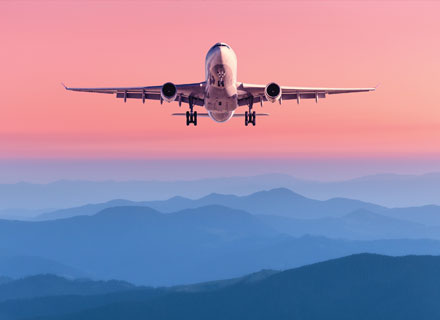

Recently, a study co-led by the University of Oxford, made a bold claim that global aviation emissions could be reduced by 50%-75% by combining three strategies to boost efficiency. Those include flying only the most fuel-efficient aircraft, switching to all-economy layouts, and increasing passenger loads.
Instead of cutting passenger journeys, the mentioned efficiency measures would be far more effective in ensuring an immediate 11% reduction in carbon footprint by using the most efficient aircraft that airlines already have more strategically on routes they already fly, rather than providing lip service to terms like sustainable fuels or carbon offsets.
The researchers analysed over 27 million commercial flights in 2023, covering 26,000 city pairs and nearly 3.5 billion passengers. The methodology revealed enormous variability in emissions efficiency, with some routes producing nearly 900 grams of CO₂ per kilometre for each paying passenger, almost 30 times higher than the most efficient, at around 30 grams of CO₂ per kilometre. Published in Nature Communications Earth & Environment, the study claims to be the first to assess the variation in flights’ operational efficiency around the world.
As aircraft become increasingly fuel-efficient, the amount of carbon dioxide per kilometre flown has been decreasing, but the increase in the number of flights has far outpaced this, leading to higher emissions that are contributing to the climate crisis. Aviation experts predict that by 2050, carbon dioxide emissions from aviation could double or even triple. The new analysis also revealed that more polluting flights were common from smaller airports in the United States and Australia, as well as in parts of Africa and the Middle East. In contrast, airports in India, Brazil, and Southeast Asia were dominated by less polluting flights.
Flights out of airports like Atlanta and New York were among the least efficient, nearly 50% worse than those at the most efficient airports, such as Abu Dhabi and Madrid. The UN aviation body, the International Civil Aviation Organisation (ICAO), is pinning its hopes on an “unambitious and problematic” offsetting scheme, known as CORSIA, to reduce emissions, but has not yet made any airline purchase a carbon credit.
In fact, Khaled Diab, the communications director at Carbon Market Watch, remarked, “No airline has yet been obliged to use a single carbon credit under the UN’s Carbon Offsetting and Reduction Scheme for International Aviation (CORSIA). And when they are, CMW research reveals the European Union’s Emissions Trading System (EU ETS) imposes a carbon price on aviation emissions that is 25 times higher. This clearly demonstrates that cap-and-trade systems are better for the climate and should be expanded.”
Prof Stefan Gössling at Linnaeus University in Sweden, who led the research, said, “We are currently stuck with a global situation where there is no hope that aviation will reduce its emissions.”
According to him, all-economy-seat planes, 95% flight occupancy, and using today’s most efficient aircraft could cut fuel use and therefore emissions by 50%-75%. It would also mean far less sustainable fuel would be needed to make flying nearly emissions-free in the future.
“I always thought air transport was already very efficient, and that is also what airlines like to tell people. But, in reality, it’s very inefficient because of three factors: using old aircraft, transporting people [in premium seats] with lots of space, and often having aircraft that are not fully loaded. In 2023, the average ‘load factor’, seat occupancy, was almost 80%,” Gössling added.
Crunching the details
The study also analysed the efficiency of 26,000 pairs of cities based on the amount of CO₂ emitted per kilometre per passenger, using data from 3.5 billion passengers who flew a total distance of 6.8 trillion km (145 trips to the sun, 577 million tonnes of CO₂ emissions, equivalent to the annual emissions of Germany).
The study found that US flights were 14% more polluting than the global average, China had efficiencies slightly above average, and the UK, the third-largest aviation polluter in the world, had efficiencies slightly below the 84.4g of CO₂ per passenger kilometre average.
The most efficient route was Milan, Italy, to Incheon Airport near Seoul, South Korea (31.6g CO₂/pkm). The least efficient route was in Papua New Guinea, with the second-worst from Ironwood Airport to Minneapolis/St Paul in the US (805g CO₂/pkm).
“While airlines often claim that fuel savings are in their own economic interest, the reality is that many airlines continue to fly with old aircraft, low load factors, or growing shares of premium-class seating,” the researchers noted.
“The most important factor was replacing premium seats with denser economy seating: First- and business-class passengers are responsible for more than three times the emissions of economy passengers, and up to 13 times more in the biggest premium cabins. Other policies that might encourage greater efficiency include softer policies like requiring airlines to disclose an efficiency rating for each route. You wouldn’t want to fly with an airline that is rated F. Market-based policies might include airports charging higher landing fees for more polluting aircraft, which also makes local communities’ air dirtier,” Gössling claimed.
While the efficiency gains that the study identified, such as replacing older, more polluting planes, would bring improvements, they would also confront the reality of an industry operating on low margins. However, Gössling argued that the sector was stuck in a business model that maximised passenger numbers to boost profit and that it could operate fewer, fuller flights with higher ticket prices.
He said that many flights are taken because they are so cheap, commenting, “We know that a lot of air transport demand is induced. If you increase the cost, people will just choose a different type of holiday.”
Facing the reality
The senior vice-president of sustainability at the International Air Transport Association, the trade association for the world’s airlines, Marie Owens Thomsen, told Reuters, “Airlines have a vested interest in reducing fuel burn and maximising load factors, but the order backlog for aircraft exceeds 5,000 planes due to supply-chain failures.”
She further added that real progress in reducing aviation emissions would come from the use of SAF, CORSIA, and the modernisation of air routes.
Aviation accounts for 3% of global greenhouse gas emissions. Still, flying is concentrated among wealthy passengers, with 1% of the world’s population responsible for 50% of aviation emissions, while only 10% of people fly at all in any one year, and 4% fly abroad.
An ICAO spokesperson said its analysis showed that operational improvements could account for 4%-11% of the carbon emission reductions required to achieve net zero, while factors such as cleaner fuel and innovative technologies will do the remainder.
Meanwhile, with the aviation sector racing to decarbonise, how much might the cost of a passenger ticket increase by 2050? Naomi Allen, Head of Research at RAeS (Royal Aeronautical Society), crunched the numbers to find out the reality.
Decarbonising aviation will make the sector more expensive and, therefore, ticket prices will rise, making flights less accessible to passengers. Assuming that 25% of the ticket cost is for fuel, by 2050, the industry will face another dilemma, like fuel cost, including the real value (CAF or SAF), along with the penalties due to non-compliance with the mandate and the cost of GGR (Greenhouse Gas Removal) for any remaining carbon emissions.
On the other hand, the University of Oxford report assumes that fuel (kerosene and SAF) costs and GGR costs are evenly distributed across tickets and are agnostic as to which flights use SAF or not. While the United Kingdom’s SAF mandate does not yet specify requirements for 2050, according to Allen, the industry has assumed that the requirement will be 70% of fuel being SAF, the same as the ReFuelEU mandate requirement.
“The average ERF of the SAF used is assumed to be 70%; this may be an underestimate for PtL SAF by 2050, but it is higher than the ERF typically seen for many other types of SAF at the current time. Assuming Net Zero for the sector in 2050, all net carbon emissions resulting from the fuel outside the mandate and the ERF of the SAF will have to be offset by GGR,” Allen told The Guardian.
The study also ignores inflation between now and 2050, assuming that the price of fossil-fuel-derived kerosene in 2050 will be $700/ton, although the actual price will depend on the pace of decarbonisation in other sectors. The report assumes that the supply of SAF is sufficient to meet demand up to the level of the SAF mandate and that the supply of GGR is unlimited. In reality, SAF and GGR may not be available to the aviation sector in the necessary quantities, as there will be competition for resources between other sectors and scaling constraints.
Greenhouse gas removals by 2050 are expected to be permanent. However, the estimated costs for these removals vary significantly. The World Economic Forum has stated that achieving a Direct Air Capture (DAC) cost of $150 per ton of CO₂ by 2050 is both necessary and feasible. In contrast, the recently published Independent Review of Greenhouse Gas Removals for the British government predicts that the costs for permanent removals in 2050 will be much higher. For the study, GGR prices of $100/ton and $600/ton are used; a midpoint of $350/ton CO₂ is used to capture the probable range due to alternative GGR methods and processes, and significant uncertainty. A midpoint of $350/ton CO₂ is used for some calculations.
It is anticipated that all decarbonisation will come from SAF and GGR, and that other decarbonisation options, such as electrification and hydrogen, will not have a significant impact on aviation emissions (either due to scalability or technology/infrastructure maturity) by 2050. Costs will be affected differently by other decarbonisation strategies. Moreover, the research found that, provided the price of SAF is about as expected or lower, and the cost of GGR is high, then meeting the SAF mandate will, on average, result in lower ticket prices than if Net Zero is achieved entirely through GGR.
On the other hand, if lower GGR costs are achieved, then meeting the SAF mandate is likely to raise ticket prices by 10%-15%. Note that this assumes that enough SAF will be available to meet the mandate, but it was also calculated that if the SAF mandate is not met, then non-compliance penalties could raise ticket prices by as much as 15% more, depending on the extent of the excess demand. The scenario is plausible, given doubts about the ability to scale up the supply of SAF.