
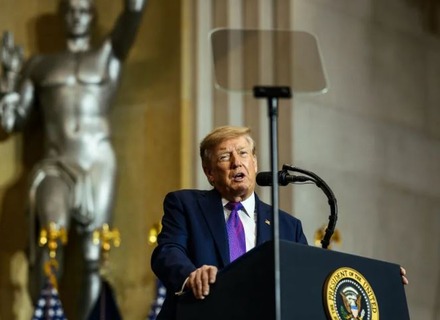

Notwithstanding the midterm setback, United States President Donald Trump has announced a fresh round of proposed tariffs targeting 14 major trading partners, including China, India, Japan and the European Union (EU), intensifying his administration’s protectionist trade agenda.
The US Trade Representative (USTR) has proposed headline tariff rates ranging from 20% to 40% under a new investigation into what Washington describes as unfair industrial practices and excess manufacturing capacity noticed across Uncle Sam’s 14 trading partners.
However, the proposed duties would be capped at lower levels for countries that have already reached trade agreements with the US or are continuing negotiations with the Trump administration, including India.
The proposals form part of a broader effort by Washington to protect domestic manufacturers and address what it considers market-distorting practices by major trading partners.
The latest measures follow an eight-month investigation under Section 301 of the Trade Act of 1974, which allows the US to impose trade restrictions in response to alleged unfair foreign trade practices.
US Trade Representative Jamieson Greer said the proposed tariffs were intended to counter industrial strategies involving manufacturing subsidies, wage and labour suppression, financial support and non-market economy inputs.
The measures will not take effect immediately. A public hearing is scheduled for January 25, after which the administration will consider the proposed duties.
The announcement nevertheless raised concerns across financial markets, particularly as investors were already dealing with renewed volatility in technology stocks.
ING analysts said the latest announcement highlighted the growing difficulty of reversing US protectionism, even as the legal justification for tariffs continues to change.
China faces the highest potential tariff exposure among the trading partners covered by the latest Section 301 investigation.
Under the proposal, Chinese imports would face a capped tariff rate of 20% if the existing trade truce between Washington and Beijing remains in place.
The rate would rise to 40% if the agreement breaks down.
The proposed 20% rate would be added to existing duties of approximately 25% imposed on Chinese products during Trump’s first presidential term.
The current US-China trade truce is scheduled to expire on January 10, making the coming weeks important for the future direction of bilateral trade relations.
ALSO READ | White House stalls copper tariff discussions as economy dominates midterm narrative
Greer said the proposed tariffs would not apply to approximately USD 30 billion worth of Chinese imports that are being considered for tariff reductions through a bilateral mechanism known as the Board of Trade.
The additional duties would also remain separate from the 10% and 12.5% tariffs introduced in July on a broader group of 60 trading partners over allegations of inadequate enforcement of anti-forced-labour laws.
Washington has repeatedly accused Beijing of subsidising domestic industries and flooding international markets with low-cost exports, particularly in sectors such as steel, electric vehicles and solar products.
China has rejected the allegations and reiterated its opposition to trade wars.
“The so-called ‘overcapacity’ is a false issue, and China opposes using it as an excuse for political manipulation,” Chinese Foreign Ministry spokesperson Guo Jiakun said.
He urged the world’s two largest economies to maintain stable bilateral relations.
Vietnam is another major Asian trading partner facing significant tariff exposure. Its proposed capped rate would stand at 20% if negotiations with Washington produce a trade agreement. If the talks fail, the rate could increase to 35%.
India remains among the countries facing uncertainty as New Delhi’s negotiations with the Trump administration continue without a final trade agreement.
According to Greer, the US would cap tariffs on Indian imports at 17% if New Delhi and Washington successfully conclude a trade deal.
ALSO READ | Trump administration weighs broader chip tariffs as AI boom tests supply chains
However, if negotiations fail, Indian goods would face a tariff rate of 25%.
The proposed rates reflect Washington’s concerns about India’s industrial expansion policies, labour protections, financial practices and restrictions on market access.
The USTR has also raised concerns about India’s role in global excess manufacturing capacity, particularly through imports and foreign investment originating from non-market economies.
According to the US administration, these policies disadvantage American manufacturers, exporters, workers and investors while creating economic security risks through dependence on non-market economy inputs.
The sectors specifically identified by Washington include pharmaceuticals, medical devices, steel, solar products and information technology.
The two countries agreed on a framework for a trade deal in February, which helped reduce the punitive tariff imposed on most Indian goods from 50% to 18%.
The earlier duties had been introduced in August 2025 after a previous round of negotiations collapsed.
However, a comprehensive agreement between the two economies remains elusive.
Indian officials, including the Commerce Minister Piyush Goyal, have maintained that discussions with Washington are continuing, although neither side has announced a final agreement.
The proposed 17% tariff ceiling could provide New Delhi with an incentive to conclude negotiations, while the possibility of a 25% rate adds pressure to the discussions.
For Indian exporters, the outcome could have implications across several industries, particularly those already identified by Washington in its investigation into industrial capacity and trade practices.
Apart from China and India, the latest US tariff proposals cover several major Asian and European trading partners.
The USTR has proposed capped tariff rates of 15%, including existing Most Favoured Nation (MFN) duties, for imports from Japan, South Korea, Taiwan, the European Union and Switzerland.
Meanwhile, Cambodia, Indonesia, Malaysia, Thailand and Bangladesh would face proposed capped rates of 18%.
Singapore would receive the lowest proposed rate among the trading partners covered by the announcement, with its tariffs capped at 10%.
These proposed rates are intended to reflect trade agreements already concluded or currently under negotiation with Washington.
Greer told CNBC that the Trump administration was seeking to maintain the tariff arrangements discussed with trading partners over the past year, particularly where agreements had helped address concerns about excess industrial capacity and barriers facing US exporters.
“We’re sticking to that in terms of our proposals because we think a lot of these deals we made actually solve a lot of the problems we see in excess capacity or can go toward it,” Greer said.
He added that Washington had already discussed the proposed arrangements with several trading partners and that much of the framework had been incorporated into ongoing negotiations.
Mexico and Norway were excluded from the latest proposals because investigations into their trade practices are still under way.
The proposed tariff structure therefore creates different levels of exposure across major US trading partners, depending on the progress of negotiations and the agreements already reached.
Separately, the Trump administration has proposed additional trade restrictions targeting Brazil, including a 10% tariff on finished commercial aircraft manufactured in the country.
The USTR has also proposed increasing duties on Brazilian raw and refined sugar imports that exceed existing US quotas.
The measures represent another escalation in Washington’s trade dispute with Brasilia and could have significant implications for Brazilian aircraft manufacturer Embraer.
Finished aircraft were previously exempt from Trump’s 25% tariffs on Brazilian goods introduced in July.
The proposed 10% duty would remove that exemption.
According to a senior US official, finished aircraft represent Brazil’s fourth-largest export category to the US.
The proposed measure could therefore affect Embraer’s access to one of its important international markets, depending on the final tariff arrangements.
Washington said the changes were necessary because negotiations with Brazil had failed to resolve what the administration considers unreasonable trade practices.
A senior US official said the two countries had held several rounds of discussions over the past year but continued to have substantial differences.
“In light of this lack of progress, USTR is proposing a modification to the existing Section 301 (trade action) to more effectively encourage Brazil to withdraw and change the acts, policies and practices at issue,” the official said.
The administration has also proposed new duties on Brazilian sugar entering the US outside existing import quotas.
The measure is intended to prevent Brazilian sugar from being routed through third countries to avoid restrictions.
Washington has raised concerns about several Brazilian policies, including illegal deforestation and the country’s instant payment system, Pix.
The US administration argues that Pix disadvantages American credit card companies. Brasilia has rejected the allegations.
Brazil’s Foreign Ministry said the government would assess the potential impact and consequences of the proposed tariffs.
The latest announcement is also likely to intensify trade tensions between the two countries at the World Trade Organization (WTO).
Brazil requested the establishment of a WTO dispute panel on Tuesday to examine the Section 301 tariffs introduced by Washington in July.
The US blocked the request on the same day.
The US official said Washington remained open to further negotiations and hoped to reach an agreement that would address its concerns while establishing what it considers a fair trading relationship.
Image Courtesy: White House