
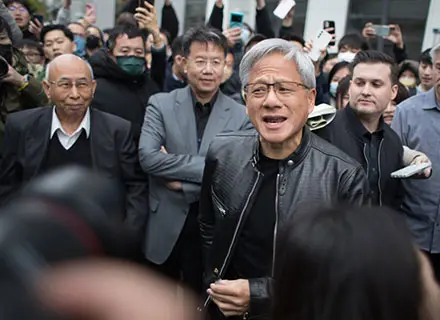

Nvidia has appointed its long-serving chief financial officer Colette Kress as interim chief executive following Jensen Huang’s sudden resignation, but the bigger question facing the world’s most valuable artificial intelligence chipmaker is who will permanently occupy the corner office.
The company’s board has initiated a search for a successor to Huang, who co-founded Nvidia in 1993 and spent 33 years transforming it from a graphics processor manufacturer into the dominant supplier of chips powering the global artificial intelligence industry.
Reports of extramarital relationships involving Huang and three women, including an Nvidia executive and a Chinese businesswoman suspected by US intelligence of being a Chinese spy, triggered the leadership crisis.
The allegations have also raised questions about the company’s exposure to potential security risks, particularly concerning the export of its advanced AI chips to China.
The board has said it will consider both internal and external candidates. While Kress is among the potential contenders, other names being discussed include Nvidia’s senior engineering executives, former company insiders, and leaders of rival technology businesses.
The challenge is considerable. Huang was not merely Nvidia’s chief executive. He was its chief strategist, chief technology evangelist, and most recognisable public face. His influence extended across product development, customer relationships, investment decisions, and the wider AI ecosystem.
His successor will have to preserve that technological momentum while reassuring investors, customers, and governments that the company can function without the founder who has been at its helm since inception.
Huang still eyes a comeback
Huang, however, is in no mood to give up, with the former CEO reportedly planning a return for his company’s leadership helm again.
According to a Financial Times report published, Huang has discussed the possibility of returning to the company’s leadership with several confidants.
The discussions come as a group of influential Silicon Valley executives prepares to lobby for his comeback, with efforts also expected to seek support from the White House.
One of Huang’s allies told the FT that a group was assembling a “war room” of technology executives to build momentum behind his return.
The person reportedly said the initiative had Huang’s backing, adding that influential figures across the technology industry remained supportive of the former Nvidia chief.
“Everyone that matters in tech outside the frontier labs loves Jensen,” the person said.
The reported comeback discussions come just days after the FT revealed that Nvidia’s board had approached Rene Haas, chief executive of British chip designer Arm Holdings, as a potential successor to Huang.
Huang stepped down last Thursday after more than three decades at the helm of Nvidia.
While the developments have placed Nvidia under intense scrutiny at a time when the company remains central to the global AI infrastructure boom, due to its processors powering a substantial portion of the computing infrastructure used by leading technology companies to develop and operate advanced AI models, Huang has reportedly sought legal assistance from Paul Weiss, a prominent New York-based law firm known for representing major corporations and executives facing regulatory investigations and reputational challenges.
According to the New York Times (NYT), Huang is working with Paul Weiss’s partners Melinda Haag and Walter Brown.
The legal developments surrounding Huang are unfolding alongside growing scrutiny from US lawmakers.
Republican leaders of several House committees, including the House Foreign Affairs Committee, sent a letter to Paul Weiss partner Walter Brown last week, indicating that they wanted to interview Huang in a closed-door session next month.
The inquiry could add another layer of pressure on Nvidia as US authorities examine the circumstances surrounding the allegations and their potential implications for national security.
Meanwhile, Nvidia’s board has appointed another prominent legal firm, Wachtell, Lipton, Rosen & Katz, to conduct an independent investigation into the matter. The investigation will be led by Joon Kim, a former senior federal prosecutor in Manhattan.
While Huang eyes a headline-grabbing comeback into Nvidia’s top post, possibilities are aplenty about the chipmaking giant being led by someone else.
Here are seven people who could potentially emerge in the succession race.
Colette Kress: The safe pair of hands
Kress, 59, is currently Nvidia’s interim chief executive and chief financial officer, making her the most obvious internal candidate for the permanent position.
She joined Nvidia in September 2013 after spending nearly 25 years in senior finance roles at technology companies, including Microsoft and Cisco. Her appointment came at a crucial point in Nvidia’s evolution, when the company was still primarily associated with graphics processors used in gaming, rather than the AI infrastructure powerhouse it has become.
Huang personally recruited her, recognising the importance of strengthening the company’s financial management as it pursued opportunities beyond its traditional markets.
Over the past 13 years, Kress has overseen Nvidia’s finances through an extraordinary period of expansion. She has also become one of its most familiar representatives on Wall Street, regularly appearing alongside Huang during quarterly earnings calls to explain revenue growth, margins, demand, supply constraints, and investment plans.
Her familiarity with the company’s finances and operations makes her particularly valuable during the transition.
Nvidia’s newly appointed board chairman, Harvey Jones, has praised her understanding of the company’s business, customers, operations, and financial position. The board has also expressed confidence in the existing leadership team.

More than just a typical CFO focused on numbers, Kress is seen as such. Industry analysts have pointed to her understanding of Nvidia’s product roadmap, including its networking and computing systems, as well as her ability to answer difficult questions from investors.
However, her biggest disadvantage could be her background. Nvidia is fundamentally a technology and engineering company, and the board may prefer someone with more profound experience in chip development and product innovation.
Kress could nevertheless prove difficult to overlook. She offers continuity, credibility with investors, and an understanding of the company’s financial commitments at a time when stability is essential.
Ian Buck: The engineer with deep AI credentials
If Nvidia’s board decides that its next chief executive must come from the technology side of the business, Ian Buck could be one of the strongest internal candidates.
Buck joined Nvidia in 2004 and has spent more than two decades working on its computing and software technologies. He played a significant role in developing CUDA, the company’s parallel computing platform, which helped transform its graphics processing units into essential infrastructure for artificial intelligence.

CUDA allows developers to use Nvidia’s GPUs for a wide range of computing applications beyond graphics. Its extensive developer ecosystem has become one of the company’s biggest competitive advantages, making it difficult for customers to shift to competing hardware.
Buck currently leads Nvidia’s hyperscale and high-performance computing business, overseeing important AI hardware and software products.
He holds a doctorate from Stanford University, where his research helped lay the groundwork for the GPU computing technologies that became central to Nvidia’s business.
Analysts have identified him as a particularly strong long-term internal contender because of his technical expertise and understanding of the company’s AI ambitions.
Shay Boloor, chief market strategist at Futurum Equities, has described Buck as a strong internal candidate for the next decade, pointing to his role in developing CUDA and leading Nvidia’s hyperscale business.
His appointment would signal that Nvidia intends to maintain its engineering-led approach rather than prioritise financial management or corporate restructuring.
The question is whether Buck has the broader executive experience required to manage a global corporation with enormous commercial, regulatory, and geopolitical responsibilities.
Chris Malachowsky: The co-founder who knows Nvidia inside out
Chris Malachowsky is another potential internal candidate with an unusually deep understanding of Nvidia’s technology and corporate history.
He co-founded Nvidia with Huang and Curtis Priem in 1993. The three engineers established the company with the ambition of developing specialised graphics chips, eventually building it into one of the most influential semiconductor businesses in the world.

Malachowsky has been instrumental in defining and driving Nvidia’s core technologies over three decades. His background is rooted in engineering and technical leadership, giving him considerable institutional knowledge.
He has witnessed the company’s transformation from a graphics chip start-up into a major supplier of computing infrastructure for gaming, data centers, autonomous vehicles, and artificial intelligence.
His familiarity with Nvidia’s technology, culture, and long-term strategy could make him a credible choice if the board wants someone who understands the founder’s vision.
However, his current responsibilities are less focused on day-to-day corporate management. Moving into the chief executive’s position would require a significant shift in his role.
It is also unclear whether he would want to take on the demands of running the company at this stage.
Nevertheless, his association with Nvidia’s founding and technological evolution gives him a profile few other candidates can match.
Jeff Fisher: The veteran who knows the business
Jeff Fisher is another long-serving Nvidia executive whose name has surfaced in succession discussions.
Fisher joined the company in 1994, shortly after its establishment, and has spent more than three decades working across its business.
He has held senior responsibilities in software sales and graphics products, eventually becoming a senior executive overseeing Nvidia’s GeForce business.
GeForce is one of Nvidia’s best-known product lines, covering graphics processing units used by gamers and PC enthusiasts. Fisher played an important role in developing the business and shaping the company’s GPU strategy.

His experience provides him an understanding of Nvidia’s commercial operations, customer relationships, and product development, as well as the company’s evolution across different technology cycles.
Unlike an outside appointment, Fisher would not need an extended period to understand Nvidia’s organisational culture or its competitive position.
However, his profile is less prominent than that of Kress or Buck, and he would have to demonstrate that his experience in graphics products and sales translates into the wider leadership requirements of an AI infrastructure business.
He remains a possible internal option, although there is no indication that the board has formally shortlisted him.
Rene Haas: The former Nvidia executive now running Arm
Among the potential external candidates, Rene Haas stands out because of his experience at both Nvidia and another major semiconductor company.
Haas is the chief executive of Arm Holdings, the British chip designer whose processor architecture is used extensively in smartphones, computers, data centres and other connected devices.
Before joining Arm’s leadership, Haas spent several years at Nvidia, giving him first-hand knowledge of the company’s operations and the semiconductor industry.
He took over as Arm’s chief executive in 2022 and has overseen its expansion into new computing markets, including data centres and artificial intelligence.
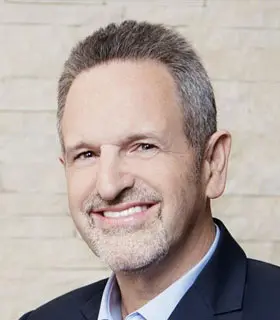
His experience managing a major technology business, combined with his familiarity with Nvidia, could make him an attractive candidate if the board looks outside the company.
He also brings considerable public-facing experience, something Nvidia may need as it navigates scrutiny from regulators, investors, and governments.
The two companies have a complicated history. Nvidia attempted to acquire Arm in a USD 40 billion transaction, but the deal was abandoned in 2022 after encountering significant regulatory opposition.
Haas would therefore be familiar with both the strategic opportunities and competitive sensitivities surrounding the businesses.
A move to Nvidia, however, would require him to leave a company he currently leads. There is no indication that he has expressed interest in the position.
Nevertheless, analysts and industry observers have identified him as one of the more logical external possibilities.
Lisa Su: The rival who knows the chip business
Lisa Su, chief executive of Advanced Micro Devices (AMD), is another prominent name being mentioned in discussions about Nvidia’s future leadership.
Su has led AMD since 2014, overseeing its transformation into a formidable competitor in the semiconductor industry.
An electrical engineer by training, she has extensive experience in chip design, manufacturing partnerships, and the commercial realities of the global semiconductor business.
Under her leadership, AMD has strengthened its position in processors for personal computers and servers while expanding its data centre GPU business to compete with Nvidia.
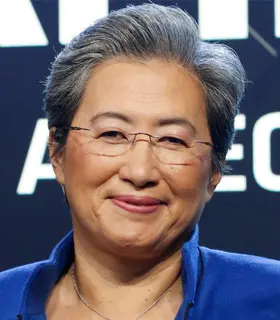
Her experience in navigating intense competition and executing long-term technology strategies could make her a compelling candidate.
She also understands the challenges of competing in an industry where product performance, manufacturing capacity, and software ecosystems can determine market leadership.
However, there is an obvious complication: AMD is one of Nvidia’s biggest rivals.
Su has spent more than a decade building AMD’s competitive position against Nvidia. Leaving that company to take over its principal competitor would be an extraordinary development.
She has also been recognised for her leadership at AMD and may have little incentive to take on the challenges of replacing Huang.
While her name has surfaced in succession speculation, there is no evidence that she is being considered as part of a formal recruitment process.
Johny Srouji: Apple’s chip architect
Johny Srouji, Apple’s senior vice-president of hardware technologies, is another possible outside candidate whose experience could appeal to Nvidia’s board.
Srouji has been central to Apple’s development of its custom silicon strategy, overseeing the engineering teams responsible for designing chips used across its products.
His work includes Apple’s transition to its own processors for Mac computers, replacing Intel chips with its in-house M-series silicon.
He also played a significant role in the development of Apple’s A-series processors used in iPhones and other devices.

The success of Apple’s custom silicon programme has demonstrated how control over chip design can give a technology company greater influence over performance, power efficiency, and product development.
Srouji’s engineering background and experience managing large hardware development teams could be valuable at Nvidia, particularly as the company expands beyond GPUs into complete AI computing systems.
However, there are important differences between leading Apple’s hardware organisation and running Nvidia as a whole.
The chief executive’s role would require overseeing global sales, finances, investor relations, government engagement, and a vast ecosystem of technology partners.
Srouji has not previously led a company of Nvidia’s scale, and there is no public indication that he is interested in leaving Apple.
His name nevertheless illustrates the possibility that Nvidia could look beyond its existing management ranks for a technology-focused successor.
Can anyone really replace Jensen Huang?
The seven names represent different approaches to Nvidia’s succession problem. Kress offers financial stability and institutional continuity, Buck brings deep technical knowledge, while Malachowsky and Fisher offer decades of experience within the organisation.
Haas, Su, and Srouji, meanwhile, represent the possibility of bringing in an experienced technology leader from outside.
But the board’s decision will involve more than comparing professional credentials.
Huang built Nvidia around a distinctive management style. The company has operated with an unusually flat organisational structure, with dozens of executives reporting directly to him. This allowed the founder to maintain close oversight of several business divisions while remaining deeply involved in product strategy.
It also means that identifying a single executive capable of taking over all his responsibilities may prove difficult.
The transition comes at a time when Nvidia is dealing with intense scrutiny over its business relationships, its exposure to geopolitical tensions, and the enormous expectations surrounding the AI boom.
Its next CEO will have to maintain relationships with some of the world’s biggest technology companies, including Microsoft, Amazon, Google, and major AI developers, while ensuring that Nvidia retains its technological lead.
The company is also facing growing competition from AMD and custom AI chip programmes being developed by large technology customers.
There is no official shortlist, and Nvidia has not indicated when it expects to appoint a permanent chief executive.
For now, Kress has the responsibility of maintaining business continuity while the board considers its options.
The company has said its product roadmap, customer commitments, and operations will continue without interruption. Its next quarterly results announcement is scheduled for November 17, giving Kress an early opportunity to reassure investors and demonstrate that the leadership transition has not disrupted the business.
Huang’s departure marks the end of an extraordinary founder-led era. His successor will inherit a company with enormous technological influence and a commanding position in the AI industry.
But replacing the man who built Nvidia will be a different challenge altogether. The board must find someone who can protect the company’s existing strengths while deciding what Nvidia should become next.