
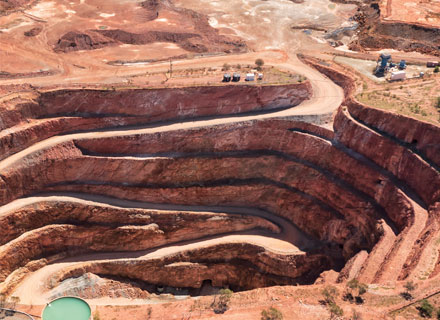

As global powers compete to secure the future of manufacturing and technology supply chains, Latin America’s unique reserves of rare-earth elements and critical minerals are emerging as a strategic battleground.
Henry Ziemer, an associate fellow at the Centre for Strategic and International Studies (CSIS), says the region is rich in minerals, especially copper and lithium, whose demand is expected to soar, as well as more specialised minerals like nickel, rare-earth elements, and niobium, which are used in steel and aerospace manufacturing.
The International Energy Agency (IEA) predicts that over the next 15 years, the world’s demand for lithium will grow by a factor of 40, and by 2028, S&P Global Market Intelligence estimates that it could surpass current worldwide production output.
Additionally, according to the IEA, demand for copper would increase by 40% over the next five years, surpassing current production by 2030.
Demand for lithium is more susceptible to shifting market conditions in the green energy sector, especially if the Trump administration reduces carbon emission targets and withdraws the US from the Paris Agreement.
However, Ziemer contends that this is not the case for copper, which is “almost certain to remain high in demand as it will be critical for applications ranging from green energy and electric vehicles to the wiring needed to power AI data centres.”
According to IEA data, Latin America is home to seven of the top ten most productive copper mines in the world and has about 60% of the world’s lithium and 40% of its copper reserves. Furthermore, the region is home to the majority of the world’s top producers of the two metals, with Chile and Peru leading the list for copper and Bolivia, Argentina, and Chile leading the list for lithium.
Supply chain diversification
Diversifying mineral supply chains is becoming a major corporate and geopolitical concern as the United States and China compete more fiercely, especially in the technology sector, and as rising demand further strains global metal supplies.
According to United Nations data, over 40% of the world’s capacity for smelting and refining of copper, lithium, rare earths, and cobalt is in China.
The World Bank noted that China was responsible for a staggering 65% of Chile’s mineral exports in 2021, which amounted to almost 6% of Chile’s GDP in Latin America.
Melissa Sanderson, a board member of American Rare Earths, said, “China’s market dominance allows it to exert significant influence over global pricing, whether by increasing or restricting exports of key commodities or by implementing other restrictions on key materials.”
Canadian Prime Minister Justin Trudeau recently stated that the nation’s mineral and metal resources are a major factor in US President Donald Trump’s ambition to annex Canada. Given China’s dominance of vital minerals worldwide, he noted, “this is a strategic vulnerability for the US vis-a-vis China, as it is for much of the Western world.”
Trump vowed to further divorce from China’s midstream supply chain and announced a national energy emergency as one of his first actions as president in his second term. Beijing replied to his announcement of a 10% global levy on Chinese imports by, among other things, limiting the export of minerals that it utilises in its supply chain.
Companies are also being prompted to disengage from their existing mineral supply networks due to the growing threat of a trade war.
Tim Heneveld, country director for Pergolux in North America, said, “Trump’s early signals have supply chains on edge, especially in industries that rely on manufacturing and critical materials. Businesses are reconsidering their material sourcing practices; many are trying to find new suppliers or move their operations to areas with lower geopolitical risks.”
However, there will be a price to pay for creating more robust mineral supply chains, according to Laura Dow, Business Director at CPG Buying, a company that focuses on buying goods and materials from China.
“Businesses that put a strong emphasis on a supply chain that is balanced and future-proof will be the most successful in the long run. This dynamic has prompted the US and Canada to seek stronger partnerships in Latin America to diversify and secure their critical mineral supplies,” says Iggy Domagalski, CEO of Wajax, a Canadian distributor of industrial products and services.
Reaching maximum potential
Although some of the world’s largest reserves of rare-earth elements and essential minerals are found in Latin America, much of this remains unexplored. Additional expansion might be a crucial remedy for the world’s supply networks, which are becoming more stressed.
According to a study co-authored by Economist Impact and JP Morgan Private Bank, “The region, with a few exceptions, has not yet been able to realise its full potential in the value chains for critical minerals, and therefore in those for clean energy and digital components.”
“The environmental and physical costs of increasing mining are being borne by many communities. However, given competing local and global geopolitical objectives and growing environmental concerns, boosting the sector may prove to be a challenging task. Furthermore, local interest in creating sourcing networks is also constrained by a historical discrepancy between the region’s midstream output and raw material production,” CSIS’s Ziemer commented.
Isabel Al-Dhahir, senior analyst at GlobalData, parent company of Mining Technology, believes that China has become a major force in the midstream copper and lithium market in Latin America over the past 20 years, thriving in the void created by the governments of the region’s lack of investment.
She cautions that this reduces Latin America’s geopolitical clout and restricts the area to selling raw minerals to the Chinese and other international investors.
As per Economist Impact and JP Morgan Private Bank, this disparity is ascribed to “a multitude of factors, including an increasingly complex regulatory environment, lack of critical infrastructure, and low extraction and processing capacity, to name a few.”
“By 2030, global demand is expected to outpace production for key inputs like lithium and copper, making the opening of new mines an ongoing challenge. New projects must be developed as quickly as possible to avoid a global shortage of certain essential minerals, since it can take years or even decades from the time a mining claim is staked to the first output,” Ziemer noted.
Redressing past inequities
Due to these conflicts, the local populace mistrusts the industry’s efforts to promote regional growth, especially the opening of new mines, which is a crucial prerequisite for increasing output.
Ziemer said that “many communities in Latin America find themselves bearing the environmental and physical costs of increased mining, so the increase in demand (for critical minerals) has come with a price.”
Local governments have responded to this by increasing state support and forming more public-private partnerships, which have led to a diversification of supply chains for production and output.
The largest economy in the region, Brazil, which has the third-largest nickel and rare-earth element reserves in the world, has committed $815 million to supporting projects in the field “in the context of sustainable and technological development,” according to a statement made last month by Aloizio Mercadante, president of Brazil’s National Development Bank.
In an effort to further domesticate the midstream lithium industry, Chile’s government-run copper mining company, Codelco, and lithium manufacturer Sociedad Química y Minera de Chile signed a 35-year contract to jointly develop the vast lithium resources in the Salar de Atacama salt flat between 2025 and 2060.
To further diversify the country’s long-term sourcing away from China, the government of lithium-rich Argentina recently signed a cooperation agreement with the US.
These actions follow strong opposition to foreign mining ventures in countries such as Bolivia, Chile, and Panama, most notably leading to the recent closure of the Cobre Panamá mine amid environmental concerns and widespread public unrest.
“The incident further highlights that countries and their citizens are not willing to accept an unrestricted expansion of mining based solely on demand for critical minerals,” Ziemer warns.
Changing partnerships
The worldwide competition for vital minerals is a complicated geopolitical struggle in addition to an economic one. Latin America, which is caught in the crossfire of geopolitical interests, is significantly impacted by the fierce competition between the US and China.
China has long influenced global pricing and supply chains by using its hegemony in the smelting and refining of minerals. However, the United States and its allies are now looking for alternate sources of vital minerals due to recent trade conflicts and tariffs, including those imposed by the Trump administration. As a result, Latin America, with its vast reserves, has emerged as a crucial theatre in which these superpowers compete for influence.
Many Latin American countries are seeking to exert greater control over their mineral resources in response to growing external demand. Efforts such as negotiating more favourable trade agreements with major economies and forming regional alliances are gaining traction. In an era where political power and resource control are increasingly intertwined, these measures aim to safeguard national sovereignty while securing economic benefits.
ESG factors and investment risks
Environmental, social, and governance (ESG) factors are becoming important to investors as they assess possible projects. This change poses an opportunity for the mining industry in Latin America.
Global investors are closely monitoring mining companies, demanding responsibility, sustainability, and transparency in their operations. Mining-related social and environmental hazards, including ecological harm, community uprooting, and regulatory uncertainty, can have a big financial impact. Investors now prioritise businesses that integrate strong ESG processes and show a dedication to long-term sustainability above those that only focus on short-term profits.
For investors, the current geopolitical environment adds another level of risk. The stability of mineral markets can be impacted by trade disputes, shifting alliances, and erratic governmental changes. As a result, many investors are becoming wary about depending heavily on one area or provider.
Diversification is becoming a crucial tactic for reducing these risks, geographically and in terms of production methods. Businesses that make investments in diverse supply chains, local processing capacity, and environmental practices have a better chance of surviving future market turbulence.
We are at a turning point in the search for critical minerals. On one hand, the twin forces of digital transformation and the transition to green energy are expected to drive a global surge in demand for copper, lithium, and other key resources. On the other hand, the race to secure these materials has exposed long-standing challenges related to social inequality, environmental degradation, and geopolitical instability.
Development in Latin America must be sustainable and inclusive if the continent is to reach its full natural riches potential. This entails making certain that local communities gain from resource exploitation by investing in public services, creating jobs, and sharing revenue.
At the same time, businesses need to embrace more environmentally friendly technologies and follow global guidelines that safeguard human rights and the environment. Long-term success in the area can only be attained by finding a balance between social responsibility and economic progress.
Technological developments present encouraging answers to many of the problems the mining sector faces. Technology may significantly increase operating efficiency and sustainability, from more effective extraction methods to the incorporation of renewable energy and digital monitoring systems. Governments and corporations in Latin America must cooperate to fund R&D, creating an innovation ecosystem that can adjust to changing international norms.
Latin America now plays a crucial role on the world scene as a result of the ongoing US-China conflict. However, by creating its own value chains and regulatory frameworks, the region must also demonstrate its strategic autonomy.
The Latin American nations can reduce their dependence on any single foreign power by strengthening ties with both long-standing partners and emerging markets. Beyond enhancing national security, this balanced approach provides the flexibility needed to navigate an increasingly complex global landscape.
Final thoughts
Latin America’s mineral wealth is positioned to be a key factor in the world’s ongoing transition to a more technologically advanced and connected future. But wisely utilising this potential is the difficult part. The region can transform this new battlefield into a global paradigm for how natural resources can propel revolutionary economic and social advancement with careful policymaking, inclusive practices, and a dedication to sustainability.
The competition for essential minerals is more than just a matter of supply and demand in a world characterised by swift technological advancements and shifting geopolitical alliances. Environmental stewardship, cultural rights, and economic imperatives interact in a complicated way.
A microcosm of the greater global fight for sustainable development is Latin America’s quest to benefit from its mineral wealth while making sure that the expenses are fairly distributed.
A more resilient and responsible future may be modelled after the lessons learnt here, which include investing in cutting-edge technologies, rethinking conventional resource extraction strategies, and striking a balance between local and global demands.
The stakes have never been higher, yet the road ahead is certainly difficult. Latin America’s vital minerals will continue to be at the forefront of this revolutionary change as countries across the world rearrange their supply networks and reevaluate their strategic goals.
The region has a rare chance to change not just its own fate but also the direction of global manufacturing and technology, whether through increased community involvement, progressive regulatory changes, or the adoption of cutting-edge green technologies.
Acquiring raw resources is only one aspect of the conflict over Latin America’s vital minerals, while the other is the fair allocation of rewards and obligations. A balanced strategy that incorporates economic, social, and environmental factors is crucial as the globe moves toward smarter technologies and greener energy.
Only by doing this will Latin America be able to turn its abundant but frequently underutilised resources into a driving force for long-term development, guaranteeing that the promise of mineral wealth is fulfilled in ways that benefit local communities, protect the environment, and strengthen the region’s position in a world growing more multipolar.