
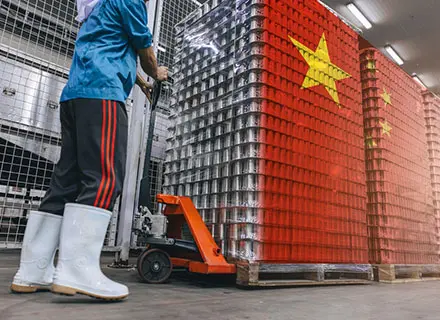

China’s trade surplus exceeded USD 1 trillion in the first 10 months of 2026, reaching the milestone a month earlier than last year as an artificial intelligence-led export boom helped offset weak domestic demand and a prolonged property downturn.
The surplus stood at USD 1.04 trillion between January and October, according to data released by the General Administration of Customs on Tuesday. China crossed the threshold for a second consecutive year and is on course to surpass the record of about USD 1.2 trillion recorded in 2025.
Exports rose 35.2% year-on-year to USD 412.3 billion in October, beating economists’ expectations of 33.5% growth, while imports increased 41.6% to USD 307.1 billion.
The faster rise in imports narrowed the monthly surplus to USD 105.3 billion from USD 133.5 billion in September.
The export performance was driven partly by demand for products linked to the global build-out of artificial intelligence (AI) infrastructure, including semiconductors, data-centre servers and networking equipment.
Semiconductor exports jumped 111.1% in the first 10 months, while shipments of high-tech products rose 47.9%, Reuters reported, citing customs data.
“Exporters have been the key driving force behind China’s economy this year,” Zhiwei Zhang, president and chief economist at Pinpoint Asset Management, said.
The trade figures offer an important source of support for the world’s second-largest economy, where domestic consumption remains subdued and the property sector continues to struggle.
Beijing is targeting growth of 4.5% to 5% this year. Weak household spending and low inflation have made exports an increasingly important contributor to economic activity.
However, the widening surplus is adding to concerns among trading partners that Chinese manufacturers are exporting excess capacity and lower-priced goods into overseas markets.
China’s surplus with the European Union reached USD 310.7 billion in January-October, up from USD 241.6 billion in the same period last year, according to customs figures.
The imbalance is likely to increase pressure on Brussels to protect European manufacturers. The widening gap is likely to fuel further diplomatic friction.
Talks in Beijing last month between EU trade chief Maros Sefcovic and Chinese commerce minister Wang Wentao resulted in an agreement to restrict exports of Chinese hybrid vehicles to Europe.
Trade with the US is another potential flashpoint. Chinese exports to the US rose 32.9% in October, according to customs data.
President Xi Jinping and US President Donald Trump are expected to meet at the Asia-Pacific Economic Cooperation summit in Shenzhen on November 18-19.
The latest figures could complicate efforts to preserve a fragile trade truce, with Washington likely to face renewed pressure to address the imbalance and the competitive challenge posed by Chinese manufacturing.
Imports also showed strength in October, rising faster than exports and accelerating from 31% growth in September.
Higher purchases included a recovery in crude oil shipments from the Persian Gulf, with imports reaching their highest level since March, Reuters reported.
The increase helped narrow the monthly trade surplus, although the cumulative gap remained above USD 1 trillion.
China’s domestic vehicle sales fell for a 12th consecutive month, according to Reuters, prompting automakers to seek growth in overseas markets.
Analysts warn that reliance on overseas demand leaves China vulnerable to a slowdown in global trade or a fresh wave of protectionist measures.
Tariffs, anti-subsidy investigations, and restrictions on strategic goods could make it harder for exporters to sustain their recent pace of growth.
For now, demand for high-tech products and AI-related equipment is providing a powerful cushion.