
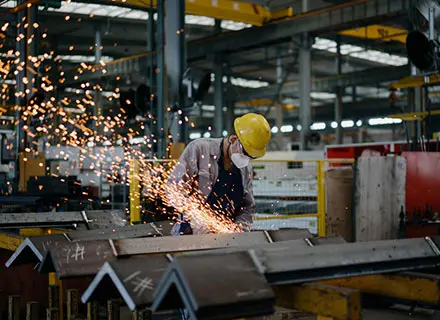

As per the African Development Bank’s (ADB) “Africa Industrialisation Index 2025”, Morocco has surpassed South Africa as the continent’s most industrialised economy.
Citing the combination of steady Moroccan improvement and slow South African decline, ADB stated, “While South Africa remains a continental industrial powerhouse, it continues to experience a steady decline in industrial competitiveness.”
Morocco scored higher than South Africa in most of the ADB’s metrics, including the manufacturing sector’s contribution to overall GDP, education levels of the population, gross capital formation, the level of foreign direct investment, the ease of doing business and various indicators of macroeconomic stability, such as inflation and total debt owed by the country.
Morocco was assigned a score of 0.8415, against South Africa’s 0.8396.
The ADB said, “South Africa’s 2024 score was its highest level since 2020, yet still below its pre-COVID performance of 0.8518.” While this reflects the significant impact of recent shocks, it also confirms a longer-term downward trend, with performance declining from 0.8819 in 2010 and reaching a low of 0.8301 in 2016.”
The top ten were completed by Egypt, Tunisia, Mauritius, Algeria, eSwatini, Senegal, Namibia, and Cote d’Ivoire.
While three Southern African countries were in the top ten, two other countries on the continent had seen significant declines. Lesotho, which was ranked as the 16th-most industrialised country in Africa in 2010, slipped to 26th in the ADB’s latest ranking, while Botswana, ranked 9th in 2010, got demoted as the 15th-most industrialised country on the continent.
While Morocco has emerged as Africa’s most industrialised economy, a strong agricultural rebound and sustained investment in major infrastructure projects are projected to help the country grow by 5% in 2026, up from an estimated 4.6% in 2025.
The Organisation for Economic Co-operation and Development (OECD), in its latest Economic Outlook, remarked, “GDP growth is projected to reach 5.0% in 2026 and 3.9% in 2027, after rising to 4.6% in 2025,” while noting Morocco’s resilience despite growing uncertainty in the global economy.
“Growth in 2025 was supported by private consumption and investment, benefiting from lower inflation, stronger consumer confidence, and major public infrastructure programmes,” OECD said.
The report further forecast a particularly strong recovery in agriculture after several years marked by drought conditions. The African country has benefitted from the heavy winter rainfall that has replenished reservoirs across its territory, supporting what the OECD estimates will be a 15% rebound in agricultural production during 2026 before conditions normalise in 2027.
At the same time, infrastructure spending is expected to continue boosting manufacturing and construction activity.
However, in order to remain a growth engine, the OECD suggests Morocco deal with the vulnerabilities to fluctuations in international energy markets due to its dependence on imported energy.
“Approximately 90% of Morocco’s energy needs are imported, making the country exposed to rising global prices and geopolitical tensions. The recent energy price shock is expected to temporarily increase both inflation and the current account deficit in 2026. Inflation, which averaged just 0.7% in 2025, is projected to rise to 3.2% in 2026 before easing again to 1.4% in 2027. Consumption growth is expected to moderate somewhat because of higher inflation but remain solid,” the OECD said.
However, the ongoing Iran war and the stalemate at the Strait of Hormuz have brought an opportunity for Morocco, as disruptions to fertiliser exports from competing producers could create short-term tailwinds for the African nation’s phosphate industry.
However, the OECD outlook also said, “A prolonged conflict could also disrupt supplies for domestic fertiliser production because Morocco depends on imports of ammonia and sulphur from Gulf economies.”
Talking about Morocco’s phosphate industry, fertilisers accounted for 21% of the country’s export revenues in 2025, helping offset some of the impact of higher energy import costs.
“Exports are expected to continue improving over the next two years, supported by stronger external demand and the country’s industrial expansion. However, the current account deficit is forecast to widen to 3.1% of GDP in 2026 and 3.3% in 2027 due to rising import prices. The labour market is also expected to improve gradually. After declining from 13.4% in 2024 to 13% in 2025, unemployment is projected to fall by a further 0.3 percentage points in 2026,” the OECD concluded.