
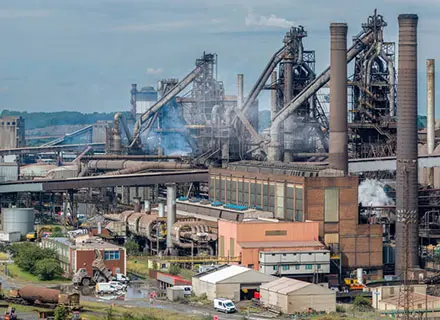

The nationalisation of British Steel, in which the ownership rights will be stripped from China’s Jingye Group, is all set to become a flashpoint in the United Kingdom-China bilateral relations.
While the Labour government has defended the move as a safeguarding measure to the European country’s last remaining primary steelmaking plant, along with thousands of jobs, Jingye Steel, calling the development something that “tramples upon international investment rules”, has urged the government to fully and effectively compensate the company for all investment losses incurred in the decision.
The government, headed by the caretaker PM Keir Starmer, said the decision was taken in the national interest after failing to reach an agreement with Jingye that would secure the future of the business while delivering value for taxpayers.
The legislation enabling the takeover received final approval on July 15, allowing the government to assume ownership of the company.
Starmer, who would be relinquishing his chair this week, said the move would secure the future of domestic steel production, preserve skilled employment and protect a strategic industrial capability essential to Britain’s economy.
An agitated Jingye said on Sunday (July 19), “The British side disregarded dedicated ongoing investment and significant contributions, offering almost zero compensation.”
The company also pointed out that the United Kingdom had spent 377 million pounds (USD 507.18 million) to operate British Steel as of the end of January 2026. As per the Chinese venture’s analysis, the amount would have exceeded 600 million pounds by the end of June, with expenditures possibly exceeding 1.5 billion pounds by 2028.
British Steel’s Scunthorpe works, which employs about 2,700 people directly and supports thousands more across the supply chain, is the United Kingdom’s only remaining producer of virgin steel made from iron ore. Its products are widely used in the rail, construction and automotive sectors.
The Labour government first seized operational control of the plant in April 2025 after Jingye warned it could shut the site. Since then, ministers have been funding operations while searching unsuccessfully for a private-sector solution.
Business Secretary Peter Kyle said maintaining primary steel production was critical to avoiding dependence on overseas suppliers for materials needed in key infrastructure projects. As per his estimations, the government had already spent around 640 million pounds to keep the plant operating, while current support exceeds 1 million pounds a day.
The takeover also reflects wider concerns about industrial resilience as global trade tensions and excess steel production continue to pressure European manufacturers. Britain has recently introduced tariffs and quotas to protect domestic producers from low-priced imports and agreed a steel tariff arrangement with the United States.
The Scunthorpe plant’s ageing blast furnaces remain central to the government’s strategy in the short term, although ministers intend to transition the industry towards lower-carbon electric arc furnaces over time. Such a shift may create an investment requirement of well over 1 billion pounds.
Industry body UK Steel welcomed the nationalisation, calling it the right decision to preserve an asset vital to national security and economic growth. It urged the government to move quickly with a long-term strategy that restores British Steel to commercial viability while investing in modern, low-carbon production.
An independent valuer will now determine whether compensation is payable to Jingye, which has argued the company remains a valuable asset despite years of mounting losses. The government has said it does not intend to retain ownership indefinitely but will seek a sustainable future for Britain’s steel industry under public stewardship.
However, China has jumped into the fray, with its Foreign Ministry now closely monitoring the situation while vowing to take appropriate measures to safeguard the legitimate rights and interests of Jingye Steel if warranted.
“The issue has drawn widespread attention in China. How Britain handles the matter will directly affect Chinese investors’ confidence in the UK’s investment climate and shape public perceptions in China of the British government’s credibility,” the ministry remarked, while urging London to seek a mutually acceptable solution, including arrangements for compensation.